Bill 212 — Bike Lane Removal & Liability Immunity
November 25, 2024
TL;DR
Ford's Bill 212 ordered the removal of 19 kilometres of protected bike lanes in Toronto — overriding the city's elected council — then added a clause barring any cyclist who is injured or killed as a result from suing the province. The Ontario Superior Court found this violates the Charter right to life. The judge explicitly cited the immunity clause as the government's own acknowledgment that people would be seriously hurt. On August 14, 2026, the Court of Appeal unanimously overturned that ruling, clearing the way for removals.
The Web
5 connections
Prabmeet Sarkaria
As Ontario's Minister of Transportation, Sarkaria heads the ministry responsible for the Bill 212 bike lane removals — roughly 19 kilometres on Bloor, Yonge and University — which the Court of Appeal cleared to proceed on August 14, 2026.
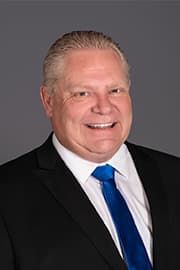
Doug Ford
As Premier, Ford's Bill 212 ordered the removal of 19 kilometres of protected Toronto bike lanes and barred injured cyclists from suing the province — a clause the Ontario Superior Court found violates the Charter right to life.

Olivia Chow
Mayor of Toronto. The roughly 19 kilometres of Bloor, Yonge and University bike lanes ordered removed by Bill 212 are City of Toronto infrastructure, removed over the objection of the city council Chow leads.
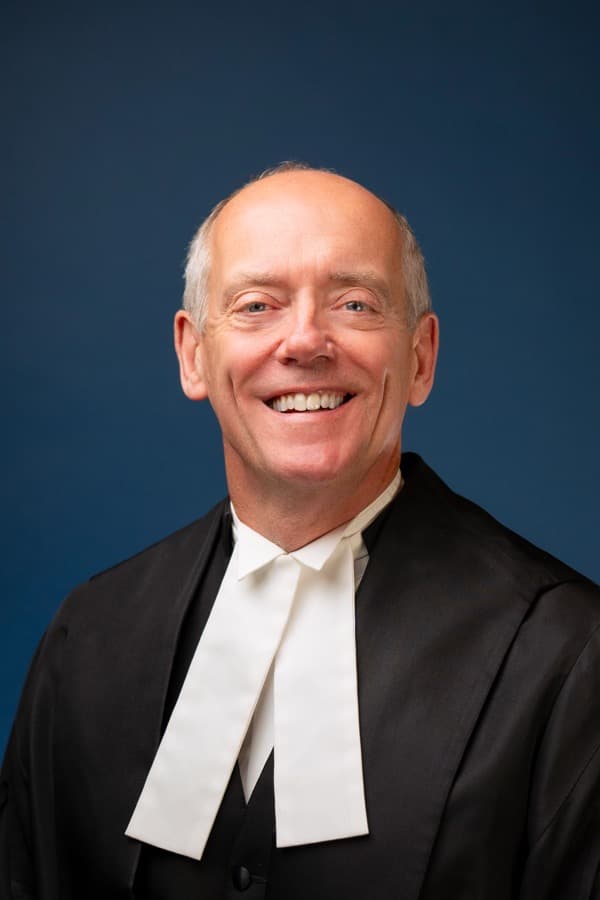
Grant Huscroft
Justice of the Court of Appeal for Ontario. Authored the unanimous decision released August 14, 2026 that overturned the lower-court ruling blocking the removal of roughly 19 kilometres of Toronto bike lanes on Bloor, Yonge and University. The reasoning was framed as "Policy is for politics." Included as the author of the ruling; a judge deciding a case is not a political actor in it.

Michael Longfield
Executive Director of Cycle Toronto, the organization behind the Charter challenge to Bill 212. After the Court of Appeal cleared the removals on August 14, 2026, Cycle Toronto said it will "keep pursuing this to the fullest extent of the law."
Why It Matters
The immunity clause is not just a legal technicality — it is a confession. When a government passes legislation and then immediately adds a provision shielding itself from lawsuits arising from that legislation's consequences, it is acknowledging, in legal form, that those consequences include serious injury and death. The Ontario Superior Court said exactly this. In its July 2025 ruling, Justice Peter Osborne explicitly cited the immunity clause as the government's own acknowledgment of the danger it was creating, using it as evidence that the bill violated Section 7 of the Charter — the right to life, liberty, and security of the person.
The court found that removing safe cycling infrastructure from roads where thousands of people ride daily, and then blocking any legal remedy for those who are harmed, constitutes a state-imposed threat to life that requires justification under the Charter. The government could not provide that justification. The ruling was a landmark: it established that Canadians have a constitutional right to safe cycling infrastructure — or at minimum, that the state cannot deliberately remove it while simultaneously immunizing itself from the deaths that result.
The policy's stated rationale was reducing gridlock. Transportation experts and the city's own data showed the bike lanes had a negligible impact on car travel times — and that removing them would not meaningfully reduce congestion. Toronto's own modelling found the lanes had minimal effect on traffic flow. The government did not commission or release any independent traffic analysis before introducing the bill. Its primary effect was not traffic relief but the removal of safe space for cyclists — and the signal to municipalities province-wide that the province could override any local transportation decision at will.
Bill 212 also contained a separate provision accelerating Highway 413 by exempting it from the Environmental Assessment Act, removing public access to environmental study findings, and allowing 24-hour construction. The bike lane removal and the highway fast-track were packaged together in a single bill — infrastructure decisions affecting millions of people, combined without any shared policy logic except that both benefit car traffic over everything else.
Legal Actions
In July 2025, Ontario Superior Court Justice Peter Osborne ruled that Bill 212 violates Section 7 of the Canadian Charter of Rights and Freedoms — the right to life, liberty, and security of the person. The court found that removing 19 kilometres of proven safety infrastructure while simultaneously immunizing the government from lawsuits constituted a state-imposed threat to the lives of cyclists. Crucially, the judge cited the government's own liability immunity clause as evidence that the province knew and accepted people would be seriously hurt — its own legislative acknowledgment of the danger it was creating. The Canadian Public Health Association was granted intervenor status, supporting the charter challenge.
In January 2026, a three-judge panel of the Ontario Court of Appeal heard the province's appeal of the Superior Court ruling. The Ford government argued the legislation was a valid exercise of provincial authority over transportation. Cycle Toronto and Ecojustice defended the Charter finding.
On August 14, 2026 the Court of Appeal for Ontario allowed the province's appeal, overturning the Superior Court and holding that there is no Charter right to bike lanes. The reasons, written by Justice Grant Huscroft, held that governments may reverse prior policy choices even against expert advice, and said of the lower court ruling that "something has gone wrong." The decision overturned the ruling of Superior Court Justice Paul Schabas and clears the province to remove bike lanes on Bloor Street, Yonge Street and University Avenue. Cycle Toronto was an opposing party. As of August 15, 2026 no application for leave to appeal to the Supreme Court of Canada had been reported.
During legislative review of Bill 212, the Ontario NDP identified and raised an amendment that barred any cyclist — or the family of a killed cyclist — from launching a legal action against the Ontario government or its contractors for injuries or deaths caused by the bike lane removals. The clause was not highlighted in government communications. The Trillium reported it in detail after it was flagged by the NDP. Two lawyers and cycling safety advocates publicly called the clause an attempt to immunize the government against the lethal consequences of its own policy, and noted it demonstrated the government anticipated serious harm would result.
In December 2024, Cycle Toronto, Ecojustice, and two individual cyclists launched a constitutional challenge to Bill 212, arguing it violated Section 7 of the Charter (right to life, liberty, and security of the person) by removing proven safety infrastructure while barring any legal remedy. Ecojustice represented the applicants. An interlocutory injunction was granted in April 2025, halting all bike lane removals pending the outcome. The full hearing was scheduled for July 2025. The province appealed to the Court of Appeal in January 2026. A final decision is pending.
On August 14, 2026, the Ontario Court of Appeal released a unanimous decision, authored by Justice Grant Huscroft, overturning the lower-court ruling that had blocked the removal of roughly 19 kilometres of bike lanes on Bloor, Yonge and University. The court's reasoning was framed as "Policy is for politics." As Global News reported, the government did not say when or whether removal would begin. Cycle Toronto said it will "keep pursuing this to the fullest extent of the law."
Rippling Effects
An injunction obtained by Cycle Toronto and Ecojustice in April 2025 has prevented the Ford government from removing the lanes pending the final court decision. As a result, the bike lanes remain in place — not because the government reversed course, but because the courts intervened. The Court of Appeal heard the province's challenge to the injunction in January 2026, and a final ruling on the constitutionality of Bill 212 is still pending as of March 2026. If the government prevails, removals will begin immediately.
The ripple effects extend far beyond Toronto. Bill 212 also granted the province power to prevent any Ontario municipality from installing new bike lanes where a motor vehicle lane would need to be reduced — a sweeping restriction that effectively requires ministerial approval for cycling infrastructure across the entire province. Cities planning protected lanes in Mississauga, Ottawa, Hamilton, and London all face provincial veto power over decisions their own councils vote for. The political signal was unmistakeable: build cycling infrastructure that reduces car lanes at your own risk, and expect the province to override it.
The liability immunity provision, if it survives legal challenge, would set a broader precedent for how Ontario governments can insulate themselves from the consequences of dangerous policy. If a government can remove known safety infrastructure, pre-emptively bar lawsuits from those who are killed or injured as a result, and survive constitutional challenge, that template becomes available for future governments to apply to other dangerous rollbacks. The Ecojustice legal team framing the case as a Charter Section 7 issue is precisely designed to prevent that precedent from being established.
On August 14, 2026, the Ontario Court of Appeal unanimously overturned the ruling that had blocked removal of the roughly 19 kilometres of Bloor, Yonge and University bike lanes. The decision was authored by Justice Grant Huscroft and its reasoning was framed as "Policy is for politics" — that is, the choice to remove the lanes belongs to elected government rather than the courts. The government did not say when or whether removal would begin, and Cycle Toronto said it will "keep pursuing this to the fullest extent of the law."