Endangered Species Plans Buried: Ontario Hides Recovery Strategies After Gutting the ESA
March 18, 2026
TL;DR
Internal government emails show Ontario completed years-long recovery plans for endangered wolves, butterflies, and bats — then secretly decided not to release them to the public, weeks after passing Bill 5 to eliminate the legal requirement to do so.
The Web
4 connections
Todd McCarthy
As Ontario's Minister of Environment, Conservation and Parks, McCarthy's ministry approved the June 2025 directive to complete recovery strategies for the eastern wolf, northern oak hairstreak butterfly, and three migratory bat species while withholding public posting on the Environmental Registry — a decision confirmed by internal emails obtained through freedom of information requests.

Stephen Lecce
As sponsor of Bill 5, Lecce introduced and steered through Queen's Park the legislation that repealed the Endangered Species Act, eliminated mandatory recovery strategies, and narrowed the legal definition of habitat — creating the legal framework under which the Ford government could suppress completed recovery plans without consequence.
David Piccini
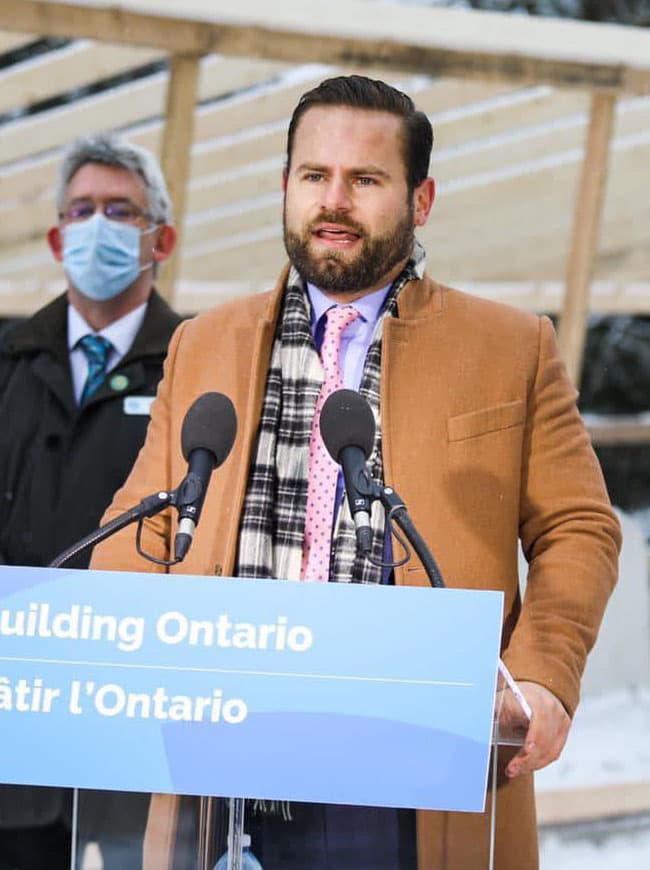
As Minister of Environment, Conservation and Parks in the years leading up to Bill 5, Piccini oversaw the ministry during the period the Auditor General documented a 6,000%+ increase in permits to harm protected species, zero permit denials, and an advisory committee dominated by industry lobbyists — setting the conditions for the eventual legislative rollback.
Doug Ford
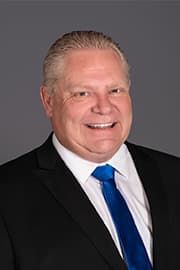
As Premier of Ontario, Ford championed Bill 5 and framed endangered species protections as barriers to housing and resource development. His government's legislation eliminated Ontario's 18-year-old Endangered Species Act and created the legal conditions under which the ministry could suppress completed recovery plans for at-risk species without public accountability.
Why It Matters
The Ford government's June 2025 passage of Bill 5 (Protect Ontario by Unleashing our Economy Act) didn't just eliminate Ontario's 18-year-old Endangered Species Act — it cleared the legal obligation to ever explain how the province intends to recover its most vulnerable wildlife. But internal emails obtained through freedom of information requests by The Narwhal revealed something more damning: the ministry had already completed draft recovery strategies for the eastern wolf, the northern oak hairstreak butterfly, and three migratory bat species — and actively decided not to release them.
On June 9, 2025 — just four days after Bill 5 received royal assent — a ministry coordinator sought approval to complete the draft strategies but withhold public posting on the Environmental Registry of Ontario. On June 17, that approval was granted. The ministry told staff it would withhold any public posting until further direction is given. As of March 2026, the Ministry of Environment, Conservation and Parks had not responded to repeated press inquiries. Environment Minister Todd McCarthy had previously defended the new law by saying "the days of making proponents wait years for approvals are over" — framing transparency as a burden rather than a safeguard.
Recovery plans are not bureaucratic formalities. Wildlife biology experts note they serve as guiding documents for research funding decisions and as reference points for government reviewers assessing development permit applications. The eastern wolf plan — a species with only 350–1,000 individuals left in Ontario — took nearly a decade to develop. Environmental lawyer Laura Bowman of Ecojustice stated the secrecy "tramples the right of public groups, including First Nations, researchers and conservationists, to know how Ontario is managing endangered species."
The decision sits within a broader pattern of democratic erosion on the species file. A 2021 Ontario Auditor General report found that permits to harm protected species had increased over 6,000 percent since 2009, that the province had never denied a single permit application, and that 10 of 15 members on the species advisory committee worked for industry — half as registered lobbyists. Rather than fix these failures, the Ford government used Bill 5 to make them permanent and invisible.
The new Species Conservation Act also places species listing and delisting entirely at cabinet's discretion — the minister can now override the Committee on the Status of Species at Risk in Ontario (COSSARO) by directing the expert committee to reconsider its scientific classifications. Combined with the suppressed recovery plans, this creates a system where the public cannot know which species the government is protecting, how it intends to protect them, or whether it is doing so at all.
Legal Actions
Nine Treaty 9 First Nations filed an urgent application in the Ontario Superior Court of Justice in July 2025 arguing that Bill 5 and the federal Bill C-5 violate Charter rights — including rights to life, liberty, security, and equality — and the Crown's constitutional duty of honourable dealing. An injunction was sought. A December 2025 hearing addressed Ontario's attempt to strike the case; by December 2025, fourteen First Nations were party to the challenge.
Michel Koostachin and Ramon Kataquapit of Attawapiskat First Nation sought intervener status in December 2025 to present Indigenous Natural Law perspectives and UNDRIP arguments in the Bill 5 constitutional challenge. The intervener application was supported financially by Ontario Nature and represented by LAND (Legal Advocates for Nature's Defence).
Rippling Effects
The secrecy around recovery plans has immediate legal and practical consequences. Developers, First Nations, and conservation organizations seeking permits for activities that affect endangered species typically rely on publicly available habitat guidance and recovery strategies to understand their obligations. With those documents suppressed, the permitting process becomes opaque — Ecojustice lawyer Laura Bowman warns this limits "anyone seeking permits and approvals for work that affects endangered species," potentially enabling harmful projects to proceed without proper scrutiny.
The legislation enabling this secrecy faces a constitutional challenge in the Ontario Superior Court of Justice. Nine Treaty 9 First Nations filed an urgent application in July 2025 arguing Bill 5 violates Charter rights and the Crown's constitutional duty to act honourably toward Indigenous peoples. By December 2025, five additional First Nations had joined the challenge, bringing the total to fourteen nations, with Indigenous grassroots interveners from Attawapiskat First Nation also seeking court standing.
At the species level, the consequences of abandoning recovery planning are not theoretical. The eastern wolf — with a global population concentrated in Algonquin Park and surrounding corridors — is genetically distinct from grey wolves and coyotes. Without a published recovery zone and expanded protections across park corridors, the population's long-term viability is at risk. The redside dace, an endangered minnow found along the planned Highway 413 route, lost 81% of its population between 2007 and 2017 and currently relies on federal Species at Risk Act protections that Ford has demanded Ottawa remove.
Ontario's rollback has also drawn scrutiny at the federal level. A November 2024 report by Canada's Commissioner of the Environment and Sustainable Development warned that federal species-at-risk assessment capacity is already insufficient to meet biodiversity commitments. With Ontario having eliminated its own recovery planning regime, any federal safety net faces an unprecedented and expanded workload it is not resourced to handle.
Beyond wildlife, the pattern established by Bill 5 — using omnibus economic legislation to permanently erode scientific accountability — has a chilling effect on all environmental law in the province. The same bill exempted the Ontario Place redevelopment from Environmental Bill of Rights review, terminated an Eagle's Nest mine environmental assessment, and created Special Economic Zones where Cabinet can exempt projects from any provincial law or municipal bylaw without a legislative vote. The suppression of endangered species recovery plans is a window into a broader governance philosophy: that accountability is a cost, and that public knowledge of government decisions is optional.