The FOI Transparency Scandal
March 13, 2026
TL;DR
After losing in court twice over his personal cellphone records, Doug Ford moved to retroactively rewrite Ontario's Freedom of Information law — exempting the Premier, all cabinet ministers, and their offices from public scrutiny, wiping out 38 years of access rights in one legislative stroke.
The Web
4 connections
Stephen Crawford
Tabled the FIPPA amendments in March 2026 that would retroactively exempt the Premier's office from FOI law — wiping out 38 years of access rights in direct response to the government losing two court challenges over Ford's cellphone records. Crawford's public justification was "the Westminster tradition of cabinet confidentiality."
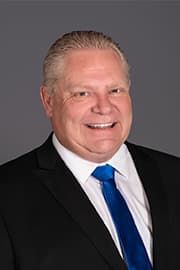
Doug Ford
After losing in court twice over his personal cellphone records, Doug Ford moved to retroactively rewrite Ontario's Freedom of Information law, exempting the Premier and cabinet from 38 years of public scrutiny.

Marit Stiles
Ontario NDP Leader; called Ford's justifications 'ridiculous excuses' and said the law change suggests he has 'something to hide.'

Patricia Kosseim
Ontario Information and Privacy Commissioner; called the retroactive FIPPA exclusions 'shocking' and 'alarming,' warning public accountability is 'eviscerated.'
Why It Matters
Ontario's Freedom of Information and Protection of Privacy Act (FIPPA) has been the cornerstone of government accountability since 1988. It is the legal mechanism through which journalists, researchers, opposition politicians, and ordinary citizens can access records of how public decisions are made and public money is spent. The Ford government's systematic campaign to subvert, delay, and ultimately gut this law represents the most sweeping attack on government transparency in Ontario's modern history.
The pattern of obstruction began well before any legislation. The IPC's 2024 Annual Report — released June 12, 2025 — documented that during the Greenbelt land-removal process, Ford government staff routinely used personal email accounts and personal devices for official government business, employed code words like "G*," "GB," and "Special Project" that were deliberately designed to be unsearchable (the wildcard character "*" renders text search impossible), and deleted emails in violation of the Archives and Recordkeeping Act. The IPC found that officials broke their "legal record-keeping obligations" — a formal finding that the government had violated provincial law. Over 30 FOI appeals were filed on Greenbelt-related records alone, each requiring years of proceedings before the IPC.
The most egregious individual case involves Premier Ford's personal cellphone. Ford publicly distributes his personal number while his official government device sits largely unused — call logs from official periods were found to be blank. Global News filed an FOI request for government-related call logs from that personal phone. The government denied it. The IPC ordered disclosure. The government appealed. A three-judge Divisional Court panel — appointed, not elected — upheld the IPC's order in January 2026, with government lawyers having admitted on the record that Ford uses his personal phone for official business. Ford then filed a further appeal, spending public funds to continue fighting disclosure of his own call logs, before pivoting entirely: announcing legislation that would make the question moot by retroactively exempting all such records from FIPPA.
The Skills Development Fund scandal was similarly exposed through FOI. The Trillium obtained records showing that nearly two-thirds of $200 million in fifth-round grants went to organizations led by Progressive Conservative donors who had collectively given at least $1.3 million to the party since 2014. Separate FOI requests revealed the government awarded $17 million to train restaurant workers at a company connected to Ford even after public servants scored its application as low-quality. The Auditor General's October 2024 special report called the $2.5-billion fund's selection process "not fair, transparent or accountable." Labour Minister David Piccini is now under investigation by the Integrity Commissioner over his handling of the fund. An OPP anti-rackets investigation into one recipient company is also active. These investigations only exist because FOI worked.
Government advertising is another area where FOI has been essential. A CBC News FOI request revealed the Ford government spent $40 million on a pre-election advertising campaign promoting Ontario to Ontarians — including prime placements during the Super Bowl and the Oscars. The Auditor General found the province spent a record $112 million on taxpayer-funded advertising in 2024–25, with 38% of campaigns designed to leave Ontarians with a positive impression of Ford's government ahead of the snap election. Without FOI, none of these figures would be public.
The proposed FIPPA legislation — set to be tabled March 23, 2026, when the legislature returns — would strip Ontarians of the right to access any record held in the offices of the Premier, all cabinet ministers, parliamentary assistants, and their political staff. This is not a minor administrative change. It would apply retroactively to 1988, voiding 38 years of legal access rights and immediately quashing hundreds of active FOI requests. The response deadline extension — from 30 calendar days to 45 business days (approximately 63 calendar days) — amounts to a more than doubling of the legally permitted delay. IPC Commissioner Patricia Kosseim was unambiguous: retroactively changing the law "sends a message that if oversight bodies get in the way, just change the rules."
Legal Actions
Global News filed an FOI request for government-related call logs from Premier Ford's personal cellphone — a device he publicly distributes while his official government phone sits unused. The government denied the request. The IPC ordered disclosure. The government challenged the order in Divisional Court. A three-judge panel upheld the IPC's ruling in January 2026, with government lawyers having admitted Ford uses his personal phone for official government business. Ford announced a further appeal. The Ford government subsequently announced legislation that would retroactively exempt all such records from FIPPA, effectively mooting the court ruling.
The IPC received 30 FOI appeals related to Greenbelt land removal records. One key proceeding involves emails held on former chief of staff Ryan Amato's personal email account. After Amato failed to provide a substantive response to the adjudicator's August 2025 request, the IPC issued a legal summons in October 2025 requiring him to appear under oath. On January 9, 2026, Amato filed a judicial review application challenging the summons. A separate IPC ruling ordered the Ministry of Municipal Affairs and Housing to work with Amato to retrieve the emails; Amato has not complied. A 2025 IPC order requires Amato to hand over the emails or swear an affidavit that none exist by June 2026.
Released June 12, 2025, the IPC's 2024 Annual Report formally found that Ford government officials violated their legal record-keeping obligations during the Greenbelt removal process. The IPC documented use of personal devices and email accounts for official business; use of code words including "G*," "GB," and "Special Project" (the wildcard character "*" renders records unsearchable by standard text search); deletion of emails in violation of the Archives and Recordkeeping Act; and failure to properly document key government decisions. The IPC called for legislative amendments requiring a duty to document and prohibiting use of personal devices for official business — recommendations the Ford government has not adopted.
Ontario Integrity Commissioner Cathryn Motherwell confirmed in December 2025 that she will investigate Labour Minister David Piccini over his administration of the $2.5-billion Skills Development Fund. FOI requests by The Trillium revealed that nearly two-thirds of $200 million in fifth-round grants went to Progressive Conservative-connected organizations. The Auditor General's October 2024 special report found the fund's selection process "not fair, transparent or accountable." The investigation follows complaints from both the NDP and Liberal parties regarding Piccini's attendance at a lobbyist's Paris wedding and rinkside seats with a grant recipient at a Maple Leafs game.
The OPP's anti-rackets branch opened a criminal investigation into at least one company that received Skills Development Fund grants following a forensic audit. The company has countersued the Ontario government for $100 million, alleging reputational harm. The investigation is ongoing as of early 2026. The original grants and their recipients were identified through FOI requests filed by journalists — the type of disclosure the proposed FIPPA amendments would prevent for ministerial office records.
On March 13, 2026, Minister of Public and Business Service Delivery Stephen Crawford announced the Ford government will table legislation when the legislature resumes March 23, 2026, to permanently exempt the offices of the Premier, all cabinet ministers, parliamentary assistants, and their political staff from FIPPA. The changes would apply retroactively to 1988 — the year FIPPA came into force — voiding 38 years of legal access rights and quashing hundreds of active requests. The bill also extends response timelines from 30 calendar days to 45 business days (approximately 63 calendar days). IPC Commissioner Patricia Kosseim issued a public statement condemning the proposed changes as a signal that "if oversight bodies get in the way, just change the rules." Opposition parties including the NDP and Liberals pledged to undo the changes if elected to government.
Democracy Watch announced a legal challenge to Bill 97's Plan to Protect Ontario Act provisions exempting the Premier, cabinet ministers, and their offices from freedom-of-information requests. The challenge targets the retroactive effect of the legislation, which nullified active requests dating back to 1988. Note: filing details unconfirmed — verify from Democracy Watch directly.
Rippling Effects
The most immediate and concrete harm is to the 30-plus active FOI requests that would be voided retroactively by the proposed legislation. Among them: requests for records about the Greenbelt decision-making process, requests related to the Skills Development Fund, and Global News's still-unresolved request for Ford's cellphone call logs. Ryan Amato — the former chief of staff to Housing Minister Steve Clark, at the centre of the Greenbelt land selection — has refused to cooperate with IPC investigators, failed to provide substantive responses to the adjudicator's requests, and challenged an IPC summons in Divisional Court in a judicial review filed January 9, 2026. His emails, which the IPC ordered produced by June 2026, may now never be disclosed if the FIPPA amendments pass.
The legislation would also formally remove the IPC's oversight role over data-integration provisions in FIPPA — provisions that give the government the ability to link personal records about every Ontarian across government departments, including health information. IPC Commissioner Kosseim warned that this creates an inherent conflict of interest: "Removing safeguards and oversight means that the government is effectively overseeing its own use of personal data." The government would gain the power to cross-reference Ontarians' health, tax, and social service records with no independent watchdog authorized to scrutinize how that power is used.
The proposed change to extend FOI response times from 30 days to 45 business days represents a structural disadvantage for journalists on deadline, researchers working on time-sensitive issues, and citizens trying to act on information about decisions that affect them. The current 30-day legal deadline is already routinely violated: in 2022, only 51.2% of provincial FOI requests were completed within 30 days. The figure improved to 67% in 2023 and 78% in 2024, suggesting the system was actually getting better at compliance — making the proposed extension appear less like a practical fix and more like institutionalized permission to delay. The IPC's average time to resolve FOI appeals remained 9.9 months in 2024, meaning Ontarians denied information often wait nearly a year before any resolution — a period that will effectively lengthen further under the new rules.
The proposed law would place Ontario in a category of minimal transparency shared primarily with jurisdictions known for limited accountability. Ontario has historically been one of only two provinces — alongside Nova Scotia — that subjects records from cabinet ministers' offices to FOI. The Ford government's own framing — that the change brings Ontario in line with other provinces — is contradicted by federal Information Commissioner Caroline Maynard, who told a House of Commons committee that records from the Prime Minister's and cabinet ministers' offices should be subject to federal access-to-information law. The Ford government is moving in the opposite direction from where federal accountability reformers want to go.
The chilling effects on journalism and public interest reporting are already visible. The Pointer, the Trillium, Global News, CBC News, the Toronto Star, and National Observer have all relied on FOI to break major Ford government stories. The Pointer filed FOI requests in November 2024 with the Cabinet Office seeking records from the Greenbelt decision period — and reported that the government deliberately delayed responses until after the February 27, 2025 provincial election, denying voters information directly relevant to the ballot. This is FOI used as a political delay tactic: slow-walk requests until they no longer matter electorally. The new law would effectively codify this: with no legal obligation to respond to ministerial office records at all, and 63 calendar days to respond to anything that is covered, the government gains near-complete control over the timing of any politically inconvenient disclosure.
Ford's stated justifications for the changes were publicly dismissed by experts. The government offered three rationales: protecting constituent privacy, preserving cabinet confidentiality, and shielding records from foreign actors including China. Veteran FOI journalist Dean Beeby called the privacy rationale "so much bull," noting that FIPPA already contains robust privacy protections for constituent information. The cabinet confidentiality argument was similarly dismissed: FIPPA already exempts Cabinet deliberations and advice given to ministers. As for foreign interference — the suggestion that China or other adversaries would exploit FIPPA to extract sensitive government information drew open derision from transparency experts, who noted that FIPPA already contains national security exemptions. "He's making a straw man argument," Beeby said. NDP Leader Marit Stiles was more direct: "The only person Doug Ford is protecting is himself."