Ontario's Secret Advertising Machine: $452 Million in Partisan Spending
December 2, 2025
TL;DR
The Ford government has spent $452 million in taxpayer-funded advertising since 2018 — repeatedly refusing to disclose campaign costs until forced by FOI — while the Auditor General found 38% of spending was designed to promote the governing party, and the firm behind the most controversial ad is run by Doug Ford's campaign manager's brother-in-law.
The Web
11 connections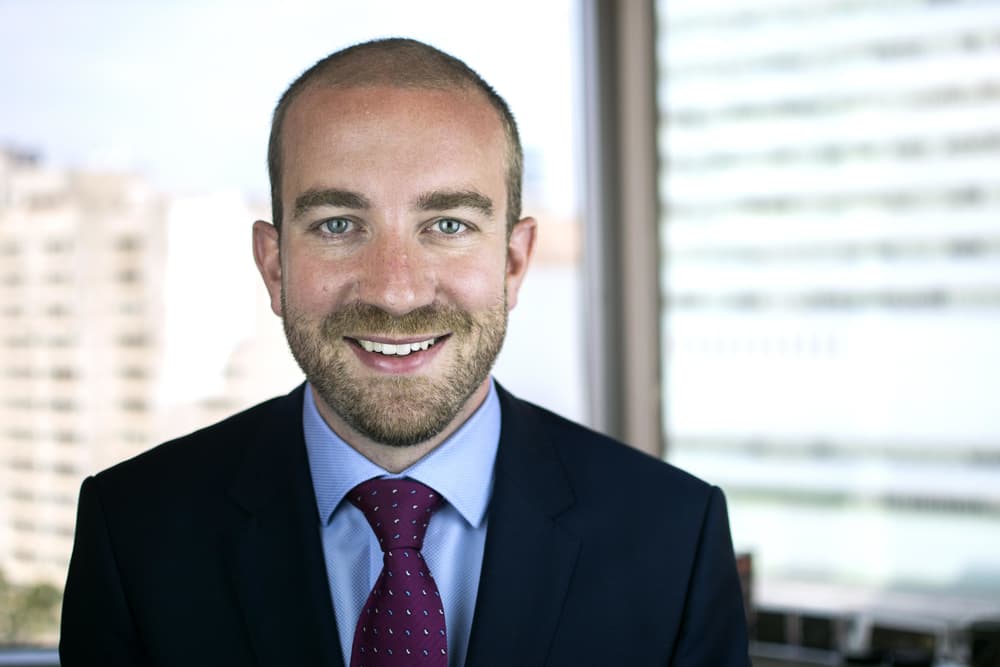
Dennis Matthews
Matthews' firm Creative Currency produced Ontario government advertising — including the $75 million Reagan anti-tariff commercial — while simultaneously receiving $4.8 million from the Ontario PC party. Matthews is the brother-in-law of Kory Teneycke, Ford's campaign manager, creating a documented overlap between government advertising contractors and the Premier's political network.

Lauren McDonald
McDonald moved directly from serving as Director of Marketing in the Office of the Premier of Ontario to VP Strategy at Creative Currency — the firm that subsequently received millions in government advertising contracts. She had previously managed PC party advertising in the 2018 election, concentrating government advertising decisions within a tightly connected political network.
Doug Ford
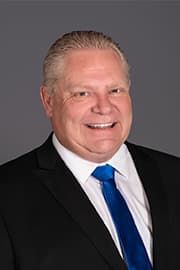
As Premier, Ford's government spent $452 million on taxpayer-funded advertising since 2018 — shattering provincial records — while routinely refusing to disclose campaign costs. The Auditor General found that 38% of spending was designed to foster a positive impression of the governing party. Ford's campaign manager's brother-in-law ran the firm that produced the government's most controversial ads.

Kory Teneycke
Ford's three-time election campaign manager whose brother-in-law Dennis Matthews runs Creative Currency — the advertising firm that received $2.2 million in government contracts and $4.8 million from the Ontario PC party while producing government advertising including the Reagan anti-tariff commercial. The overlap between Teneycke's role as the Premier's chief political operative and his family's firm receiving government ad contracts was confirmed by Global News.
Todd McCarthy
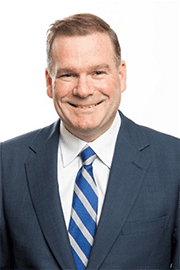
As Environment Minister, McCarthy defended the government's $40 million US-facing advertising campaign, stating "We've educated the American public with our ads" — characterizing a campaign the Auditor General flagged as partisan promotion as public information.
Peter Bethlenfalvy
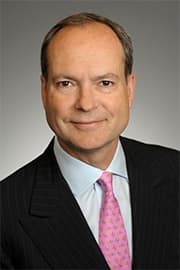
As Treasury Board President in 2019, Bethlenfalvy explicitly refused to disclose the cost of Ontario's anti-carbon tax advertising campaign — a $4 million spend later revealed by the Auditor General to be partisan. As Finance Minister, he has defended the government's record $111.9 million annual advertising budget and refused to acknowledge accountability concerns raised by the Auditor General.

Charlie Pinkerton
Co-bylined The Trillium's Aug. 11, 2026 story revealing, via freedom of information records, that the Ministry of Tourism, Culture and Gaming spent about $9.38 million on advertising in 2025-26, including at least $2.19 million on Ontario Place advertising — more than $1.1 million to Google Canada, $545,000 to GroupM Canada and more than $370,000 to Pattison Outdoor Advertising — with another $7 million going to the Ontario Tourism Marketing Partnership Corporation (Destination Ontario).

Tina Yazdani
Co-bylined The Trillium's Aug. 11, 2026 story on the Ford government's Ontario Place advertising spending, based on records obtained through a freedom of information request. The tourism minister's office did not directly answer the reporters' questions and instead sent a statement about the redevelopment, saying more advertising information would be released later in the year.

Stephen Lecce
As Minister of Energy and Mines, Lecce heads the ministry whose mines side spent $12.08M on advertising in 2025-26, the vast majority of it on the "Protect Ontario Ring of Fire" campaign, per FOI'd records reported by The Trillium on August 28, 2026. Questions to his office about the spending were referred to Treasury Board President Peter Bethlenfalvy's office.
Peter Bethlenfalvy
Questions about the $12.08M in mines advertising were referred from the Ministry of Energy and Mines to Bethlenfalvy's Treasury Board office, which replied in a single sentence: "As is the case every year, final spending on government advertising will be reflected in the province's public accounts."

Marit Stiles
Stiles has said the government is "(lighting) tax dollars on fire to gaslight the people of Ontario," responding to FOI'd records showing more than $77M in 2025-26 government advertising across the ministries disclosed so far.
Why It Matters
Ontario's Government Advertising Act was designed with a clear principle: public money cannot be used for the governing party's political benefit. Under Dalton McGuinty's original 2004 version of the law, the Auditor General had authority to block any campaign whose "primary purpose" was to foster a positive impression of the governing party. That oversight was gutted in 2015 when the Wynne Liberals narrowed the definition to only prohibit ads featuring politicians by name, face, or party logo. The Ford PCs campaigned in 2018 on a promise to restore the original rules. Once in power, they never did — and proceeded to exploit the loophole with unprecedented aggression.
The pattern of secrecy began in 2019. When the Ford government launched anti-carbon tax radio and TV ads called "One Little Nickel," Treasury Board President Peter Bethlenfalvy refused to reveal the cost, saying only: "We've got a budget for letting the people of Ontario know exactly what is going on." The Globe and Mail reported the refusal. Auditor General Bonnie Lysyk later confirmed the campaign cost $4 million and said she would have rejected it as partisan — but could not under the weakened law. The same pattern repeated with "Ontario Is Getting Stronger" in 2022 ($13.5 million), "It's Happening Here" in 2023-24 (eventually $40 million via two separate FOI requests), and "Protect Ontario" in 2025 — each time requiring journalists to file Freedom of Information requests to learn what public money was being spent.
In December 2025, Auditor General Shelley Spence reported that Ontario spent a record $111.9 million on advertising in 2024-25 — the highest in provincial history. She found that 38% of campaigns were "designed to foster a positive impression of the Progressive Conservatives, rather than give Ontarians information about government programs or services." The $43 million "It's Happening Here" campaign alone aired during the Super Bowl, the Oscars, the Emmy Awards, and NHL prime time. Spence was direct: "Some of the ads are quite promotional for the governing party. They aren't really providing really good, solid information to the citizens of Ontario."
The advertising machine also has a documented insider pipeline. The controversial Reagan anti-tariff commercial — which ultimately angered Donald Trump enough to halt trade talks — was produced by Creative Currency, an ad firm run by Dennis Matthews. Matthews' wife and PC campaign manager Kory Teneycke's wife are sisters. Creative Currency received $4.8 million from the Ontario PC party since 2022 and approximately $2.2 million in taxpayer-funded government contracts. VP Lauren McDonald previously served as Director of Marketing in the Premier's own office. Global News confirmed the ties between the firm and Ford's political network.
Beyond partisan content, the government has actively prevented accountability about spending before the public can act on the information. The government consistently stated that ad costs "will be released through public accounts" — a document published months after the spending occurs. The January 2025 snap election was called while a $40 million domestic ad blitz was still running, and only when the government entered caretaker mode were 15 of its own flagged campaigns paused. The combination of a weakened advertising law, routine refusals to disclose spending, and a contractor network connected to the Premier's political operation raises questions that Ontario's accountability institutions have consistently flagged but cannot currently enforce.
Legal Actions
Auditor General Shelley Spence's December 2025 annual report found Ontario spent a record $111.9 million on advertising in 2024-25 — the highest in provincial history. The report found that 38% of campaigns were designed to foster a positive impression of the governing party rather than inform the public, and would not have been approved under Ontario's original 2004 Government Advertising Act. The government acknowledged the findings and took no remedial action.
The Legislative Assembly's Public Accounts Committee recommended in October 2025 that the government restore the Auditor General's pre-2015 authority to block partisan advertising and extend oversight to digital advertising channels. The Ford government's formal response was to maintain "the status quo," rejecting all substantive recommendations.
NDP Leader Marit Stiles introduced Bill 54 to restore the Auditor General's pre-2015 authority to review and block partisan government advertising — including extending oversight to digital advertising platforms. The bill remained stalled at first reading as of early 2026. The Ford government has not indicated any intention to pass legislation reforming advertising rules.
Rippling Effects
The weakening of the Government Advertising Act in 2015 — done by the Liberals, exploited by the PCs — has created a structural accountability gap that cannot be fixed by the Auditor General alone. AG Spence's annual reports flag partisan spending but have no enforcement power: the government is informed, acknowledges the findings, and continues. The Public Accounts Committee recommended restoring the AG's pre-2015 authority and extending oversight to digital advertising — but the Ford government's response was to maintain "the status quo." Ontario's Auditor General cannot veto a single ad regardless of how partisan it is.
Digital advertising has become a parallel, unregulated spending channel. The government spent $12.8 million on digital ads excluded from the Auditor General's review in 2023-24 — a more than 250% increase from the year before. Ads placed on Meta platforms, X (formerly Twitter), and other digital channels fall entirely outside the Government Advertising Act review framework. The Auditor General has called for this gap to be closed. The government has not acted. This means a growing fraction of public spending on political self-promotion is invisible even to Ontario's watchdog.
The Creative Currency/Teneycke network illustrates how the advertising apparatus has been integrated into the Ford government's political infrastructure. The same organizational circle — campaign manager, his brother-in-law's ad firm, a VP who previously ran marketing out of the Premier's office — produces both partisan PC election materials and taxpayer-funded government advertising. Whether this constitutes a breach of any specific rule is a legal question that has not been formally examined. But it represents exactly the blurring of government and party that the original 2004 advertising law was designed to prevent.
The FOI barrier compounds the problem. Costs of major campaigns are routinely withheld until journalists file formal access-to-information requests — a process that takes 30 or more days and requires knowing what to ask for. The "It's Happening Here" campaign required two separate FOI requests to piece together the full $40 million cost. As recently as 2025, the government launched a new "Protect Ontario" commercial and again refused to reveal its cost, leaving the public no way to know how much of their money was being spent.
Until the law changes, Ontario taxpayers have no legal protection against their money being used to re-elect the government that spends it. NDP Leader Marit Stiles introduced Bill 54 to restore partisan advertising restrictions — it remains stalled at first reading. Finance Minister Peter Bethlenfalvy has offered the definitive government position: "I am never going to apologize for promoting Ontario."
Freedom-of-information records obtained by The Trillium show the Ministry of Finance spent $21,397,155.73 on advertising in 2025-26, with roughly $19.5 million of that going to the production and distribution of "Protect Ontario" ads. About $3.6 million of the ministry's spending went to Publicis Canada Inc. for the "creative" work on those ads.
Publicis is one of Supply Ontario's vendors of record. In November 2025, Alexandra Sutton, deputy minister of intergovernmental affairs and Cabinet Office communications, told a parliamentary committee that the government chose Publicis through "a competitive procurement." The firm's provincial work is not confined to Finance: eight ministries paid Publicis about $9 million combined in 2024-25. GroupM is described in The Trillium's reporting as the Ford government's preferred media-buying agency. On the distribution side, Google Canada pulled in roughly $4 million to carry the Finance ads, with LinkedIn and Meta playing smaller roles.
The auditor general found that the "Affordability" campaign seemed "designed to improve Ontarians' impression of the current state of Ontario, the subtext of which promotes the governing party." Asked about the figures, Sarah Chapin, communications director for the minister of finance, gave a one-sentence response: "The final expenditure on ad spending will be made available, as is the case every year, through public accounts."