Ford Won't Protect Ontario Shoppers From Grocery Surveillance Pricing
April 16, 2026
TL;DR
As grocery giants install AI-powered pricing systems that charge different customers different prices for the same food, Doug Ford told Ontarians he won't ban it — calling regulation "socialism" the same week his caucus voted down a consumer protection motion, while lobbyists for Loblaws enjoy direct access to his government.
The Web
9 connections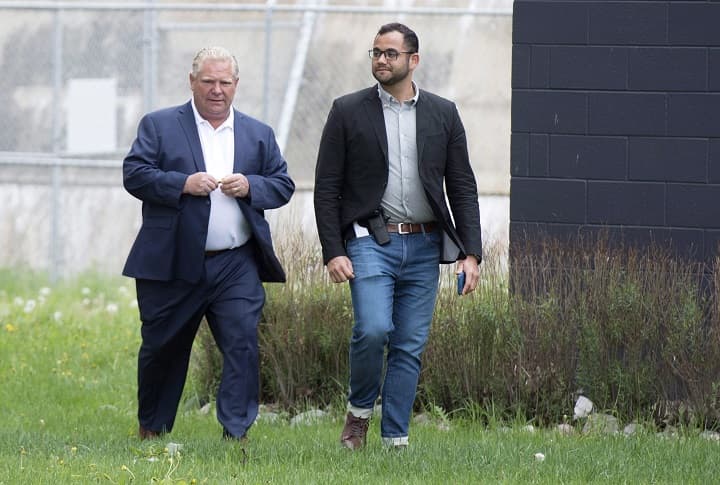
Amin Massoudi
As Doug Ford's Principal Secretary until August 2022, Massoudi registered his lobbying firm Atlas Strategic Advisors on his last day in government. He lobbied for the Convenience Industry Council of Canada — whose members include Loblaws — on alcohol expansion and red tape reduction. The Ford government is now declining to regulate Loblaws' surveillance pricing practices while Massoudi-connected lobbying interests remain active.

Galen Weston Jr.
As Executive Chairman of Loblaw Companies Ltd., Weston is the primary corporate beneficiary of the Ford government's refusal to ban surveillance pricing in Ontario. The PC Optimum loyalty program — with 17 million members — is the data infrastructure that underlies personalized pricing. Weston met with Ford in August 2018 after warning that minimum wage increases cost Loblaws millions; Ford froze the minimum wage weeks later. Ford is now refusing to regulate the pricing practices of the same company whose CEO enjoyed direct access to his government.
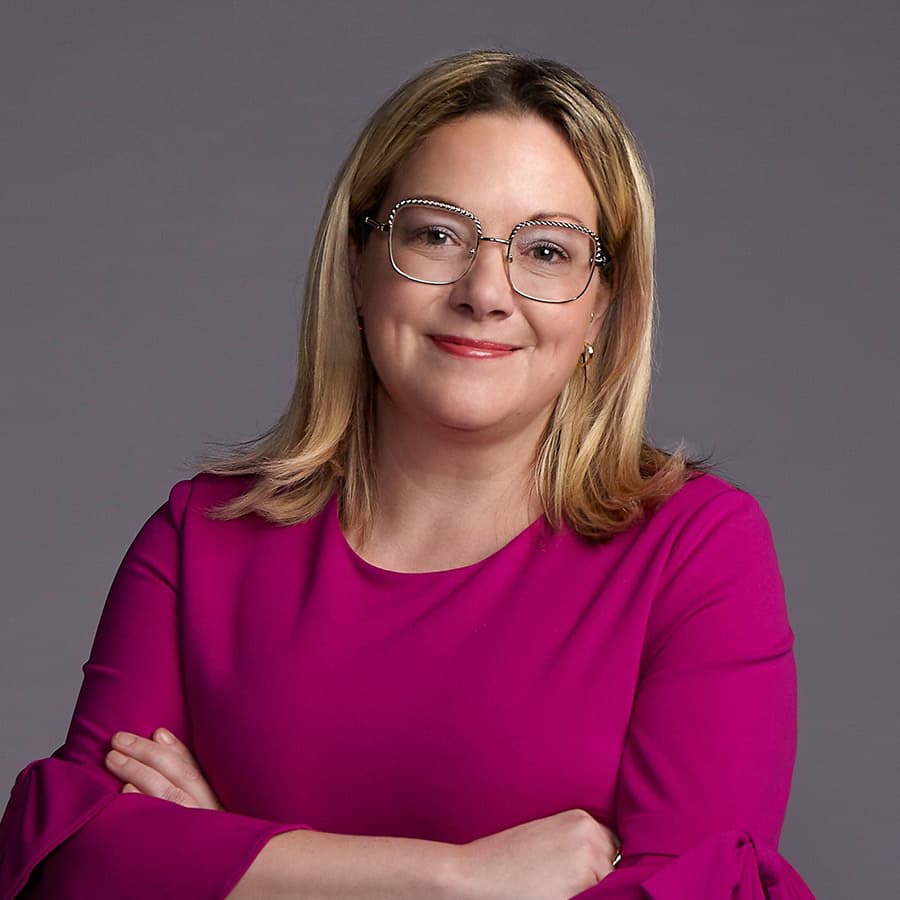
Jenni Byrne
Jenni Byrne + Associates — a firm founded by Ford's former Principal Secretary — registered six employees to lobby for Loblaws at the Ontario provincial level in September 2023. The firm worked on beer/wine retail access and red tape issues while the Ford government was simultaneously delivering major grocery sector policy wins. Ford is now declining to regulate Loblaws' surveillance pricing practices.

Marit Stiles
Stiles introduced the April 20, 2026 non-binding motion calling for a ban on grocery surveillance pricing. The motion was supported by 75,000 constituent emails and voted down 58-35 by Ford's Conservative caucus, with Ford and 20 other Conservatives absent. She said: "Families across Ontario are hurting under the pressure of rising food prices, and now, grocery giants and tech companies are teaming up to use people's data against them."
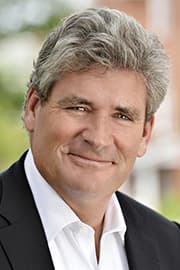
John Fraser
Fraser introduced a private member's bill to ban personalized algorithmic pricing in Ontario in April 2026. He asked: "You're up late one night and you're Googling the symptoms your child has. Should the price of children's Advil be based on the fact that you search that? I don't think so." The Ford government declined to advance the legislation.
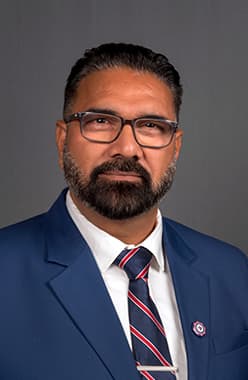
Mintu Sandhu
Sandhu introduced Manitoba Bill 49 — Canada's first ban on personalized algorithmic pricing — on March 17, 2026. When Doug Ford was asked why Ontario wouldn't follow Manitoba's lead, he said the other approach was "socialism." Sandhu's legislation provides the direct policy precedent that the Ford government rejected.
Avi Lewis
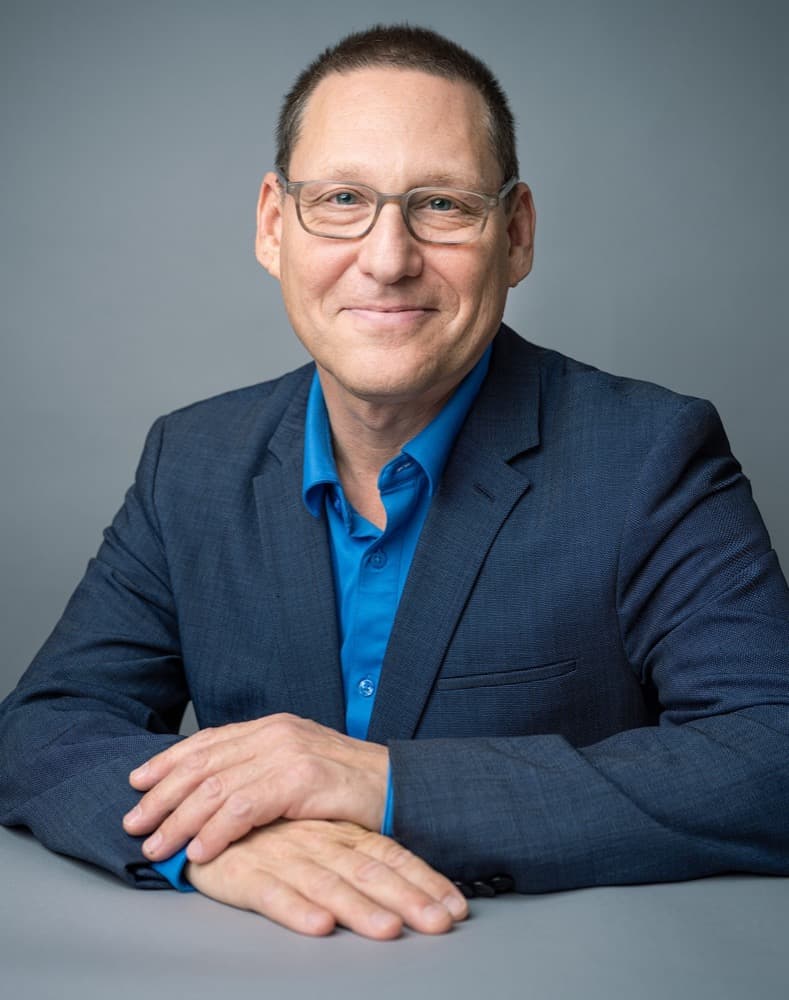
Lewis demanded federal action to ban surveillance pricing in April 2026, saying "Big Tech is teaming up with retailers to spy on Canadians and gouge them even more. This is unfair. It's a rip-off. And it's downright creepy." The federal motion was defeated and Ontario's Ford government simultaneously refused to act provincially.
Doug Ford
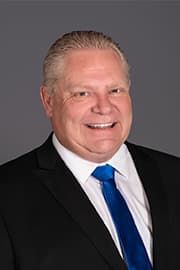
As Premier, Ford told Ontarians his government won't ban AI-powered surveillance pricing at grocery chains, calling regulation "socialism" the same week his caucus voted down a consumer protection motion.
Evan Solomon
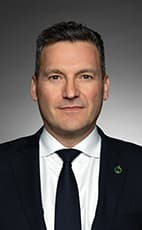
As federal AI Minister, Solomon declined to commit to banning surveillance pricing in April 2026, deferring to the Competition Bureau's monitoring posture. His non-committal response — "We're going to look at that" — closed off the federal regulatory avenue at the same time Ford was refusing to act provincially, leaving Ontario consumers without protection at either level of government.
Why It Matters
Surveillance pricing is not a hypothetical. In December 2025, Consumer Reports and Groundwork Collaborative documented that Instacart, using Eversight AI software, showed different shoppers different prices for the same items at the same store at the same time — with average price gaps of 13% and peaks of 23%. A family of four could pay up to $1,200 more per year. Sobeys is spending $51 million to deploy electronic shelf labels — which can change prices up to six times per minute — across 300–350 stores starting in May 2026. The system is not coming; it is here. Pricer and JRTech Solutions sign $51M digital store transformation deal with Sobeys in Canada — PR Newswire
Manitoba became the first Canadian jurisdiction to ban the practice when it introduced Bill 49 on March 17, 2026, amending its Business Practices Act to make personalized algorithmic pricing an unfair business practice — fines up to $1 million for corporate repeat offenders. The federal Competition Bureau launched a consultation in June 2025, received 103 responses, published a "What We Heard" report in January 2026 — and took no binding action. The federal NDP moved a motion at the House of Commons in April 2026; it was defeated. A March 2026 poll of 1,931 Canadians found 52% want a ban and 31% want strict regulation — 83% want some government action. Ford had a clear precedent in Manitoba's ban, clear public demand, and clear legislative tools. Ontario's Consumer Protection Act could be amended. Ford said no.
Ford's explanation reveals whose interests he is serving. He did not say surveillance pricing was acceptable — he said government action against it was "socialism." He did not say he needed more evidence — he said "the market dictates." He did not say he was studying it — he told consumers to shop elsewhere. In a province where three chains — Loblaw, Sobeys/Empire, and Metro — control roughly 80% of the grocery market, competition cannot solve AI-driven personalized price extraction. The same Ford who broke a $225-million contract to accelerate beer and wine sales to Loblaws stores, who froze Ontario's minimum wage weeks after meeting with Galen Weston, and whose inner circle includes lobbyists registered for Loblaws and the grocery industry, is now declining to regulate how those same companies price their goods to Ontario's most price-sensitive shoppers. Global News: Doug Ford nixes idea of grocery surveillance pricing ban in Ontario
The PC Optimum loyalty program has over 17 million Canadian members — roughly the entire adult population of Ontario. When someone scans their card, Loblaws records what they bought, where, when, and builds a profile of their purchasing behaviour, location patterns, device usage, and economic situation. The Office of the Privacy Commissioner found in March 2026 that when members tried to delete their accounts, Loblaws took unreasonable time to respond and retained transaction histories, IP addresses, and usage data indefinitely — including information the OPC said carried re-identification risks. This data infrastructure does not exist because Loblaws is generous with points. It exists because detailed consumer profiles are the feedstock for algorithms that can predict — and then extract — each customer's maximum willingness to pay. A significantly lower PC Optimum price for the same item is not a loyalty discount; it is a data toll — pay with your privacy or pay more at the register.
Consumer protection in Ontario is a provincial matter. Ontario updated its Consumer Protection Act in 2023. The legal architecture to regulate surveillance pricing already exists or can be extended. The Competition Bureau — a federal body — is in a "monitoring" posture, not an enforcement one. The result is a jurisdictional gap: the federal government says it is watching, Ontario says it is the market's job, and grocers are spending tens of millions deploying systems to charge Ontarians individually calculated prices for a loaf of bread. Manitoba filled the gap in seven weeks. Ford had the same option and declined.
Legal Actions
Rippling Effects
Surveillance pricing systems are designed to identify and target customers with the highest willingness to pay or the lowest ability to comparison shop. Food economists are consistent: the consumers most likely to be charged more are those in lower-income postal codes, those who shop infrequently, and those who rely on a single nearby store. In a province where food bank use has hit historic highs and grocery affordability is a front-page crisis, a pricing system calibrated to charge more to people who need savings most is not a neutral market mechanism — it is a transfer of money from Ontario's most economically vulnerable families to corporate shareholders.
Sobeys' $51 million ESL rollout is not a pricing experiment — it is a capital investment that will be amortized over a decade or more. Once electronic shelf labels replace paper tags across 300–350 stores, the cost of dynamic pricing drops to near zero: prices can be changed by algorithm, in real time, without a human touching a shelf. Every grocery chain with competitive pressure to match is now on the same adoption path. If governments don't act before this infrastructure is ubiquitous, the political economy of regulation becomes vastly harder — industry will argue that requiring uniform pricing imposes costs on already-deployed capital systems. Canadian grocer Sobeys to invest $51M in electronic shelf labels — Chain Store Age
When Doug Ford, the premier of Canada's largest province, calls a surveillance pricing ban "socialism," he hands the grocery lobby a talking point in every provincial capital. Manitoba is the outlier; Ontario has implicitly told the industry that its model is acceptable. Without binding federal action and with Ontario refusing to act, companies planning their Canadian surveillance pricing deployment now have a clear message: Ontario is open. Federal NDP motion to ban algorithmic pricing defeated — Global News
The companies whose pricing practices Ford is declining to regulate are the same companies whose lobbyists have direct access to his government. Jenni Byrne + Associates — a firm founded by Ford's former Principal Secretary — is registered to lobby for Loblaws at the Ontario provincial level. Amin Massoudi — Ford's Principal Secretary until August 2022 — registered his lobbying firm on his last day in government and lobbied for the Convenience Industry Council of Canada, which includes Loblaws. Ford's beer and wine expansion directly benefited these same companies at a net cost to Ontario taxpayers of $1.4 billion by 2030. The pattern is not subtle. Beer Store Privatization scandal
75,000 Ontarians sent emails to their MPPs supporting the NDP motion. 52% of Canadians polled want the practice banned. The motion was non-binding — it asked the Ford government to agree that surveillance pricing should be banned. The Progressive Conservative caucus voted it down 58-35. Ford didn't even show up to vote. This is what regulatory capture looks like: a practice that 83% of Canadians want either banned or strictly regulated, opposed by a government whose corporate relationships make action inconvenient. Votes and Proceedings, April 20, 2026 — Ontario Legislative Assembly