Highway 413 / Bradford Bypass
April 3, 2021
TL;DR
Ford revived two cancelled highway megaprojects — the $8.6–12 billion Highway 413 and the $2–4 billion Bradford Bypass — despite independent studies showing negligible traffic benefits. Developers who own thousands of acres along both routes donated over $800,000 to Ford's PCs. Both projects were shielded from meaningful federal environmental review.
The Web
4 connections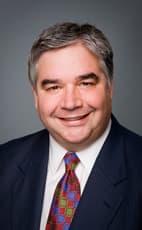
Peter Van Loan
Registered lobbyist for TACC Corporation, Argo Development, and a Fieldgate Homes-affiliated company — all of which own land along the Highway 413 corridor. His lobbying targeted Premier Ford and Transportation Minister Mulroney. Democracy Watch filed a complaint alleging he violated Ontario's Lobbyist Registration Act in connection with these activities.

Silvio De Gasperis
TACC Corporation and affiliated companies began acquiring land near the Bradford Bypass route immediately after the 1997 environmental assessment. With the Ford government reviving the project, those holdings stand to increase substantially in value. The DeGasperis consortium employed both Peter Van Loan and Frank Klees as lobbyists targeting Transportation Minister Mulroney and Premier Ford.
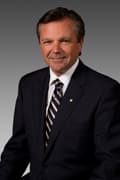
Frank Klees
Registered lobbyist for DeGasperis-controlled DG Group and Condor Properties, targeting Transportation Minister Caroline Mulroney's ministry. His lobbying on "highways" began in March 2020 — one month before the Ford government publicly announced its intent to revive the Bradford Bypass. The DeGasperis consortium held hundreds of acres along the Bradford Bypass corridor.
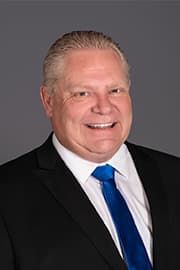
Doug Ford
As Premier, Ford revived two cancelled highway megaprojects worth up to $16 billion combined despite independent studies showing negligible traffic benefits, while developers along both routes donated over $800,000 to his party.
Why It Matters
The Highway 413 corridor runs through 2,000 acres of farmland, crosses 85 waterways, paves over nearly 400 acres of protected Greenbelt land, disrupts 220 wetlands, and threatens the habitat of 10 species at risk. The Bradford Bypass would cut through 27 waterways and 11 hectares of sensitive wetlands in the Holland Marsh — a region sometimes called "Ontario's vegetable garden" for its highly fertile soils and agricultural significance.
The developer connection is extensively documented. A 2021 investigation by National Observer and Torstar found that 3,300 acres of land along the Highway 413 route were owned by just eight major property developers, most of them prolific PC donors. Developers with land along the corridor donated at least $753,000 to Ford's Progressive Conservatives. The DeGasperis family and their company TACC Construction alone donated over $55,000, while employing former Conservative MP Peter Van Loan as a lobbyist registered specifically to influence "the impact of the proposed highway on client's lands."
Along the Bradford Bypass corridor, the pattern repeated: property records showed members of the DeGasperis family began buying up lands near Bradford shortly after Ford revived the project in 2019. January Properties — with three DeGasperis family members listed as directors — paid $20.5 million for 94 acres near Holland Landing just four months after the highway was announced.
The Ford government also sought to shield both projects from federal environmental oversight. After Canada's Impact Assessment Agency initially designated Highway 413 for review, the federal and provincial governments struck a deal in March 2024 to drop the federal assessment. In December 2024, the Impact Assessment Agency formally rejected requests from environmental groups and First Nations for a renewed review. For the Bradford Bypass, a federal court judge ruled in April 2023 that the federal government had acted "unreasonably" in denying an environmental assessment — but ultimately no meaningful review has been conducted.
Legal Actions
In April 2023, Federal Court Justice Angela Furlanetto ruled that Environment Minister Steven Guilbeault had acted "unreasonably" under the Impact Assessment Act when he declined to designate the Bradford Bypass for a federal environmental review. The court found the decision failed to properly account for the project's potential impacts on federal jurisdiction areas including fisheries and migratory birds. Despite the ruling, the project has continued to advance without a comprehensive updated environmental assessment — the existing EA dates to 1997.
In December 2024, Canada's Impact Assessment Agency formally rejected calls from environmental groups, First Nations communities, and hundreds of scientists for a federal environmental review of Highway 413. This came after the federal government struck a deal with Ontario in March 2024 to drop an earlier designation, agreeing instead to a weaker "collaboration" framework. Critics argued the federal government effectively abdicated its environmental oversight responsibilities under political pressure from the Ford government.
Ford's government passed Bill 5 in 2025, which critics described as designed to fast-track Highway 413 construction while further limiting environmental oversight and public challenge mechanisms. The legislation stripped away additional procedural protections and shortened timelines for reviews, enabling construction to commence before environmental and Indigenous consultation processes were fully resolved. Environmental groups challenged the law's compatibility with federal environmental obligations.
Government Activity on This File
via PoliMon · updated hourly…Highway 410 Extension. The province awarded the detail design contract for the Highway 413 central contract, including the 410 Extension to Parsons Inc. / Egis Canada Ltd…
Rippling Effects
In August 2025, Ford awarded the first construction contracts for Highway 413 — an embankment at the Highway 401/407 interchange and road resurfacing on Highway 10 in Caledon — formally beginning construction despite no completed independent cost-benefit analysis and unresolved concerns from environmental groups, First Nations, and scientists. A January 2026 internal government report obtained by journalists admitted the highway would have devastating environmental impacts, contradicting the government's own public messaging.
Transportation experts consistently warn that building new highways to relieve congestion triggers "induced demand" — the well-documented phenomenon in which new road capacity generates new car trips, filling the new lanes within five to ten years and returning congestion to pre-highway levels. The government's own internal traffic forecasts project "crushing gridlock" ahead even with Highway 413 built.
Both highways serve a secondary function beyond moving cars: they enable and accelerate low-density sprawl development on the urban fringe. The corridors open up Greenbelt-adjacent land for subdivision development, converting farmland and wetlands into subdivisions, and generating enormous profits for the developers who own land along the routes — many of whom, as documented, are major PC donors. This connects Highway 413 and the Bradford Bypass directly to the broader Greenbelt scandal as instruments of the same developer-first land-use agenda.
The combined cost of both projects — potentially $10–16 billion of public funds — crowds out spending on transit, healthcare, and education at a time of severe provincial fiscal pressure. Ontario's Auditor General and independent analysts have called both projects a misuse of public funds, noting the money could fund transformative transit expansions that would benefit far more commuters across a far greater area. Ford has committed tens of billions to roads, while repeatedly delaying, cancelling, or downloading costs for transit expansion across the region.