Ford's iGaming Expansion and the Rise of Online Gambling Addiction
March 2, 2026
TL;DR
Doug Ford's government launched Canada's first private online gambling market in 2022 — having first eliminated Ontario's only independent gambling research body in 2019, and immediately after handing lucrative lobbying contracts to his own campaign manager and vice-chair. A 2026 peer-reviewed study found a 317% surge in young men aged 15–24 seeking help for gambling addiction, while the province collects a quarter-billion dollars a year in gaming revenue.
The Web
5 connections
Troy Ross
Created the Canadian Online Gaming Alliance to lobby the Ford government on behalf of offshore gambling operators. Pushed industry contacts to attend a fundraiser with Treasury Board President Bethlenfalvy, telling them he would be "an important voice about the future of gambling in Ontario." Bethlenfalvy declined to attend after the Globe and Mail began inquiring.

Chris Froggatt
Ford's campaign vice-chair and transition team chief set up Loyalist Public Affairs within months of the Tories taking office and registered Stars Group (PokerStars) as a client. Stars Group had simultaneously dropped its Liberal-tied lobbyist and switched to the PC-connected firm, as reported by the Globe and Mail.

Kory Teneycke
Ford's campaign manager set up Rubicon Strategy after the election. His associate Patrick Harris — the 4th Vice-President of the PC Party — registered through Rubicon to lobby for the Canadian Online Gaming Alliance, which represented offshore gambling operators Bet365, GVS, and Microgaming, according to Globe and Mail reporting.
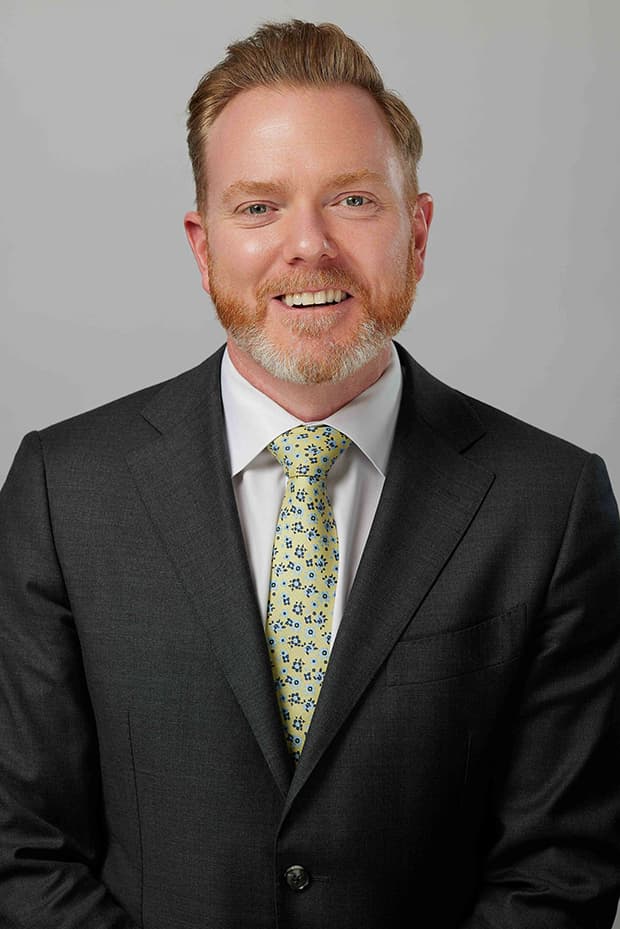
Patrick Harris
Registered lobbyist for the Canadian Online Gaming Alliance (representing Bet365, GVS, and Microgaming — offshore operators from Gibraltar and the Isle of Man) while serving as 4th Vice-President of the PC Party. His lobbying registration initially did not disclose the names of the three gambling companies COGA represented, according to the Globe and Mail.
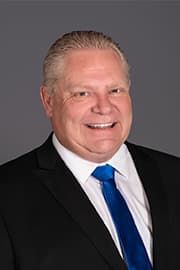
Doug Ford
As Premier, Ford's government eliminated Ontario's only independent gambling research body, then launched Canada's first private online gambling market and handed lobbying contracts to his own campaign manager and vice-chair.
Why It Matters
The Ford government did not stumble into this. Within months of the Tories taking power in 2018, Doug Ford's campaign vice-chair Chris Froggatt had set up a lobbying firm — Loyalist Public Affairs — and registered Stars Group (operators of PokerStars) as a client. Ford's campaign manager Kory Teneycke set up Rubicon Strategy; his associate Patrick Harris, the 4th Vice-President of the PC Party, registered to lobby for the Canadian Online Gaming Alliance, representing three offshore gambling companies — Bet365, GVS, and Microgaming — operating from Gibraltar and the Isle of Man. The province's gambling regulator was being shaped, in part, by the people who had just run the winning campaign.
In May 2019 — while that same government was designing the new iGaming market — Ford cut the entire $2.5 million annual budget of the Gambling Research Exchange Ontario (GREO), an independent research clearinghouse that had operated for 20 years and employed 14 people. The stated reason was a "focus on front-line services." The actual effect was to eliminate the province's only source of independent, publicly funded research into gambling harm — precisely as the government was planning to dramatically expand gambling. Carleton University researchers later noted that the Ford government "has not announced any funding for independent research" to monitor iGaming's impact.
The iGaming Ontario market launched on April 4, 2022, with 50 licensed operators and a 20% gross revenue tax — less than half the 55% tax imposed on land-based casinos. What followed was an advertising explosion: a peer-reviewed analysis of Ontario sports broadcasts in 2023 found 3,537 gambling messages across five NHL and two NBA games — an average of 2.8 per minute, occupying 21.7% of total broadcast time. Fewer than 3% of those messages contained any responsible gambling messaging. When the AGCO eventually banned athletes from iGaming ads in February 2024, public health advocates called it a cosmetic fix that left the underlying saturation untouched.
The province now earns approximately $253 million per year from iGaming operator revenue — up from $87 million in year one. The Globe and Mail's editorial board named this directly: Ontario has a financial addiction to gambling revenue that creates a structural conflict of interest in regulating the same market it profits from. The province's own Auditor General flagged five major recommendations on iGaming governance in 2022; none were fully implemented by the 2023 follow-up.
Rippling Effects
The human cost became measurable in March 2026, when a peer-reviewed study in the Canadian Medical Association Journal analyzed 745,700 contacts to Ontario's 24-hour mental health helpline from 2012 to 2025. It found a 317% increase in gambling-related contacts among boys and men aged 15–24, and a 108% increase among men 25–44 — comparing the pre-iGaming era to the post-privatization period. By 2025, 76% of all gambling helpline contacts were specifically for online gambling. The lead author, Dr. Daniel Myran of the University of Toronto, noted that most people with gambling disorders never seek help — meaning helpline data significantly underestimates the true scale.
The financial harms are documented and severe. A Cardus report found the average Ontario sports betting account spends $283 per month — more than three times the $89/month safe threshold set by the Canadian Centre on Substance Use and Addiction. Players exceeding that threshold are 4.3× more likely to experience financial harm, 4.7× more likely to experience relationship harm, and 3.9× more likely to experience emotional harm. Nearly 1 in 4 young online gamblers report high levels of gambling-related harm, including depleted savings, credit card debt, and compromised wellbeing. Mental Health Research Canada found that 22% of high-risk gamblers have planned suicide.
The political response has been negligible. The NDP introduced Bill 126 in 2023 — the Ban iGaming Advertising Act — which would have fined operators up to $1 million for targeted advertising. It died at first reading without a government vote. Ahead of the 2025 provincial election, all four major parties declined to answer questions about gambling harm policy. The province continues to collect its quarter-billion annually while the Canadian Centre on Substance Use and Addiction has called for a national strategy to address what it describes as a public health crisis driven by provincial governments that both profit from and are expected to regulate gambling.
Ontario's 11–16% problem gambling rate — up from 1.1% in 2018 — is not a side effect of a policy that otherwise worked. It is the foreseeable consequence of a market designed by and for the people who stood to profit from it, stripped of independent research oversight, and left to advertise without meaningful restriction to the young men who are now flooding the province's helplines.