Kara Ford's Runnymede Appointment
March 1, 2026
TL;DR
Premier Doug Ford's daughter Kara was quietly hired in 2022 at a provincially funded hospital with a two-year community college diploma and a background as a makeup artist — no healthcare experience. By 2025 she was earning $211,468 as Director of Strategy, outearning her own father's public salary, while her employer received tens of millions in Ford government capital funding.
The Web
2 connections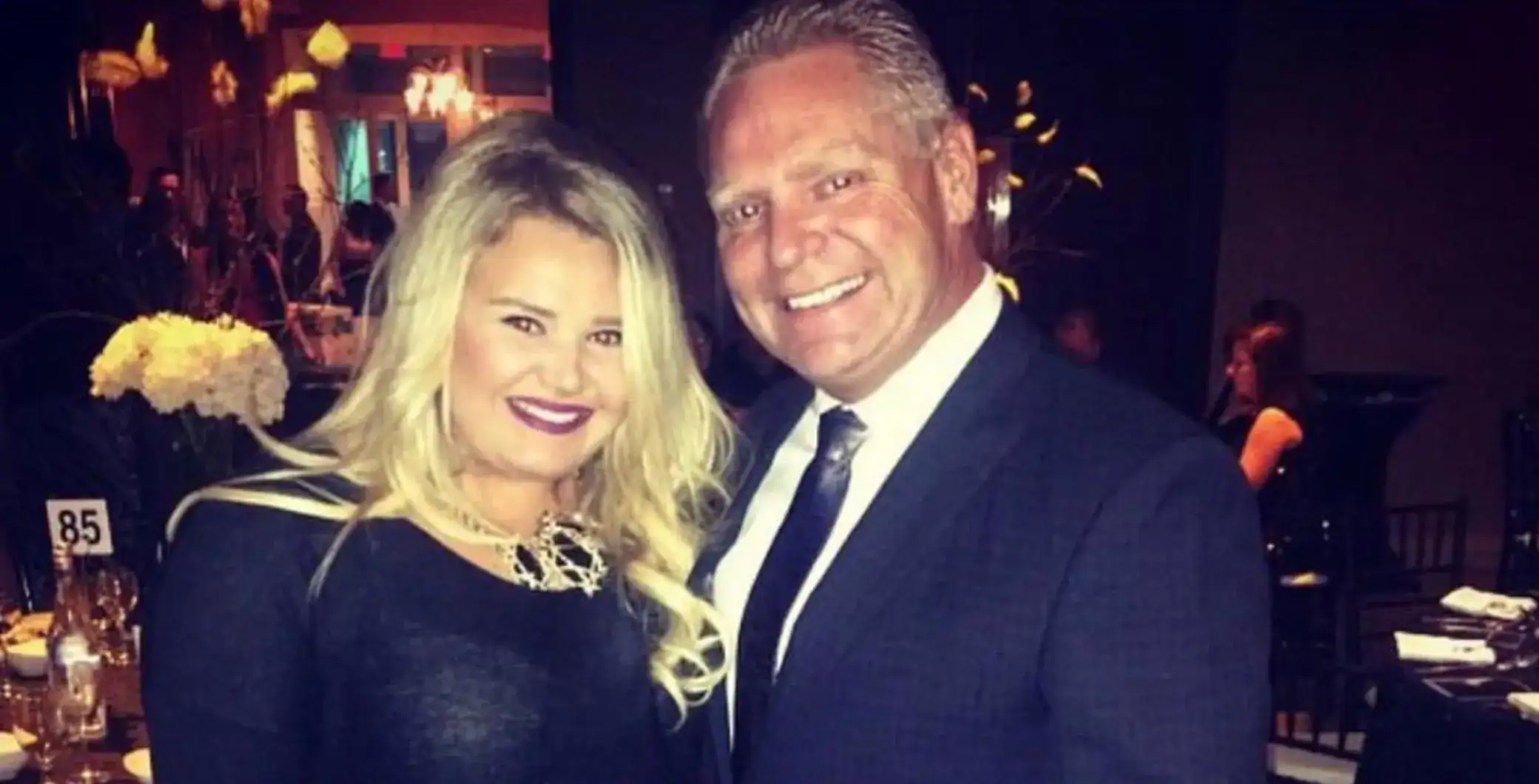
Kara Ford
Hired in 2022 with no healthcare background at Runnymede Healthcare Centre — a hospital substantially funded by her father's government — at $128,052. Promoted in 2024 to Director, Strategy and Stakeholder Engagement. By 2025 her salary reached $211,468, a 65% increase in three years, including a 33.9% single-year raise. The hospital received $1M in provincial funding the year she was hired, $10.7M in 2025, and a $15M federal-provincial agreement in 2026. Neither she nor the hospital responded to media inquiries.
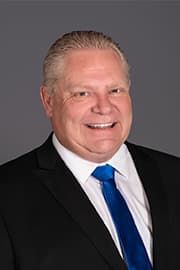
Doug Ford
As Premier, Ford leads the government that provides substantial capital funding to Runnymede Healthcare Centre, the publicly funded hospital where his daughter Kara Ford was hired in 2022 and rose to a $211,468 director role by 2025. The Ford government directed $1M to Runnymede in 2022, $10.7M in 2025, and $15M in 2026 — throughout the period of Kara's employment and rapid salary progression. Ford has not commented publicly on his daughter's employment.
Why It Matters
Runnymede Healthcare Centre is a publicly funded institution — its budget is substantially supported by Ontario Health, a Ford government body, through the Hospital Services Accountability Agreement. When Kara Ford, daughter of Premier Doug Ford, was hired in 2022 with no healthcare experience and a two-year college diploma, it raised immediate questions about whether the hospital's board was extending professional favour to the Premier's family, consciously or not. When the 2025 Sunshine List was released in March 2026, the public learned her salary had jumped 33.9% in a single year to $211,468 — making her the sixth highest-paid employee at the hospital and higher-earning than her own father's official Premier's salary.
Ontario's Members' Integrity Act governs conflicts of interest for MPPs — but it has no jurisdiction over the boards of publicly funded hospitals or the hiring decisions they make. The provincial Integrity Commissioner cannot investigate whether a hospital board made a hiring decision to curry favour with the government that funds it. This legal gap means the most obvious mechanism for government-adjacent nepotism — a friendly board hiring a Premier's unqualified family member — is effectively beyond accountability reach. Human resources analysts noted the episode highlighted structural risks of perceived nepotism in publicly funded organizations.
The pattern fits a documented Ford-era approach: Ron Taverner, Doug Ford's childhood friend, was nominated for OPP Commissioner despite not meeting published qualifications, forcing an emergency rewrite of the job posting. The Kara Ford situation follows the same template — qualifications quietly adjusted to the candidate, not the candidate adjusted to qualifications — but plays out in a hospital boardroom rather than a police service, where public scrutiny is thinner and accountability mechanisms are weaker.
The funding timeline is difficult to ignore. The Ford government announced a $1M PTSI planning commitment to Runnymede in 2022 — the same year Kara Ford was hired. A $10.7M follow-on announcement came in January 2025, the year her salary jumped by one-third. A $15M federal-provincial agreement for a Runnymede PTSI Centre of Excellence followed in April 2026. Whether or not there was any explicit arrangement, the financial relationship between the Ford government and this particular hospital creates a structural conflict that no Ontario body currently has the authority — or apparent will — to investigate.
Rippling Effects
The most direct consequence is the normalization of using publicly funded institutions as de facto sinecures for political families. Hospital boards across Ontario operate in a political environment where government goodwill translates into capital funding, bed allocations, and operating grants. Kara Ford's compensation trajectory — from $128,052 in 2022 to $211,468 in 2025 with a promotion — demonstrates that a hospital board can reward a Premier's family member handsomely, with no apparent consequence or oversight.
The episode also exposes a structural gap in Ontario's conflict-of-interest framework. The Members' Integrity Act covers MPPs. The Broader Public Sector Accountability Act covers executive compensation at hospitals — but only in aggregate, not in relation to any particular appointment. No single statute requires a hospital board to justify why it hired an unqualified candidate or why it awarded a 33.9% raise, provided the total compensation stays within government guidelines. The result is a system where the most politically sensitive appointments occur in precisely the zone with the weakest oversight.
For Ontario's healthcare workforce, the contrast is pointed. Front-line healthcare workers — PSWs, nurses, and nurse practitioners — spent years fighting the Ford government's wage suppression under Bill 124, which capped public sector salary increases at 1% annually and was ultimately ruled unconstitutional. While that legal battle played out, Kara Ford's salary increased by 65% over three years. The juxtaposition became a flashpoint in online commentary and will likely surface in the next provincial election campaign.
Longer term, this case strengthens the argument for extending conflict-of-interest disclosure requirements to hospital boards and requiring publicly funded institutions to demonstrate that senior appointments were conducted through open, competitive processes — a reform Ontario has repeatedly studied and repeatedly shelved. Until that reform happens, the structural incentive for boards to hire Premier's family members at premium salaries remains, and the public has no mechanism to find out when it occurs beyond reading the annual Sunshine List.