Ontario Patient Lab Specimens Shipped to U.S. as LifeLabs/Quest Centralizes Testing
June 15, 2026
TL;DR
On June 15, 2026, the Ontario Health Coalition issued an open letter demanding the province stop Quest Diagnostics / LifeLabs from shipping Ontario patients' laboratory specimens to Quest reference labs in the United States, citing privacy, specimen-quality, delay, and "dollars leaving Ontario" concerns — and calling for the restoration of public hospital outpatient labs.
The Web
2 connections
Natalie Mehra
As Executive Director of the Ontario Health Coalition, Mehra issued the June 15, 2026 open letter to Ontario's Health Minister demanding the province stop Quest/LifeLabs from shipping Ontario patient lab specimens to U.S. reference labs and calling for the restoration of public hospital outpatient labs.
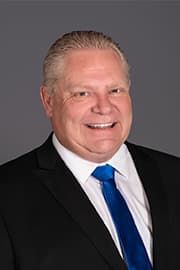
Doug Ford
As Premier of Ontario, Ford holds ultimate accountability for provincial health policy; his government has allowed Quest Diagnostics/LifeLabs to ship Ontario patients' lab specimens to U.S. reference labs, prompting the Ontario Health Coalition to demand it stop in June 2026.
Why It Matters
When an Ontario patient gives a blood or tissue sample, they have a reasonable expectation that it stays within Ontario's health system and under Ontario's privacy protections. The Ontario Health Coalition's June 15, 2026 open letter warns that Quest Diagnostics / LifeLabs is transferring patient specimens to reference labs in the United States, putting that expectation at risk. Specimens crossing an international border fall under a different legal and privacy regime, and the Coalition argues this exposes Ontarians' health information and degrades the quality and timeliness of the testing they depend on.
The Coalition frames this as the predictable consequence of consolidation in lab services. Quest Diagnostics completed its acquisition of LifeLabs in August 2024, and on March 9, 2026 LifeLabs/Quest notified external labs that reference testing would move to Quest Diagnostics — phase 1 beginning April 6, 2026, with phases 2–3 rolling out through July 2026. As testing is centralized into a U.S.-owned operator and routed to American reference labs, public dollars that once supported lab capacity in Ontario flow out of the province.
The remedy the Coalition demands is straightforward: the province should stop the cross-border transfer of patient specimens and restore public hospital outpatient laboratories. Ontario Health Coalition executive director Natalie Mehra and the Coalition argue that lab testing is core public health infrastructure that should not be handed to a foreign-owned private operator without the province intervening to protect patients.
Rippling Effects
Centralizing reference testing into a single U.S.-owned operator concentrates risk. When specimens are shipped to American reference labs, delays in transit and processing can push back diagnoses and treatment decisions — and the further a sample travels, the more opportunities there are for it to degrade before it is tested. The Ontario Health Coalition's open letter raises exactly these specimen-quality and delay concerns as direct consequences of routing Ontario testing across the border.
The privacy dimension extends beyond any single patient. Once Ontario health data is processed in the United States, it sits under a different jurisdiction's rules for access, retention, and disclosure. The Coalition's call to stop the transfer reflects a broader worry: that a structural decision made by a private operator — not by Ontario's legislature or its patients — quietly relocates sensitive health information outside the province's control.
The Coalition's demand to restore public hospital outpatient labs points to the longer-term stakes. As public lab capacity erodes and testing consolidates into private hands, the province loses the in-house infrastructure it would need to reverse course. Each phase of the rollout — through July 2026 — makes the public system more dependent on a foreign-owned operator and harder to rebuild.