Long-Term Care COVID Deaths
May 26, 2020
TL;DR
3,758 Ontario long-term care residents died of COVID-19 — many from neglect, not the virus itself. Ford's government had promised to fix the chronically understaffed, underfunded sector before the pandemic, did nothing, had no emergency plan when outbreaks began, delayed calling in the military, and then shielded the for-profit operators responsible from any legal accountability.
The Web
3 connections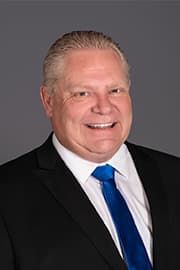
Doug Ford
As Premier, Ford's government had promised to fix Ontario's understaffed long-term care sector before the pandemic, did nothing, had no emergency plan when outbreaks began, and shielded the for-profit operators responsible from legal accountability.

Ryan Bell
CEO of the chain responsible for Ontario's worst individual LTC COVID death toll. Orchard Villa's catastrophic outcomes prompted a Canadian Armed Forces deployment and widespread calls for accountability. In 2023, rather than face licence consequences, Southbridge received a new 30-year operating licence and an 87-bed expansion — a decision the Ontario Health Coalition challenged in court.

Lois Cormack
CEO of Sienna Senior Living during the first wave of COVID-19, when at least 292 residents of Sienna's Ontario homes died. Sienna's death rate of 6.5 per 100 beds was among the province's worst. Cormack resigned under public pressure in June 2020. Sienna subsequently faced a $100-million class-action lawsuit from families of residents.
Why It Matters
When the pandemic hit, Ontario's long-term care sector was already broken. Chronic understaffing, underfunding, and a decades-long permissiveness toward for-profit operators had created conditions where basic care was routinely inadequate. Doug Ford had won the 2018 election in part by promising to fix this — to add 15,000 new LTC beds, raise the standard of care, and hold negligent operators accountable. Once in power, he did none of it.
When COVID-19 reached Ontario's LTC homes in March and April 2020, the government had no plan. The province's Long-Term Care COVID-19 Commission — a formal public inquiry that heard from more than 700 witnesses — found that Ontario was "making up its emergency response as it went along" and that LTC homes had been entirely absent from the province's pandemic planning. When Minister Merrilee Fullerton's own notes on April 17 read "Military plan needed, get them in within 24-48 hours," it took 12 more days before troops were actually deployed — a delay the commission called tragic.
The military's internal report, leaked in May 2020, documented conditions inside five Ontario homes that constituted elder abuse. At Orchard Villa in Pickering — where 77 of 233 residents died — troops found residents left for hours in soiled diapers, severely dehydrated and malnourished, being fed while lying flat (a practice that contributed to at least one choking death), cockroaches and flies near food preparation areas, and staff unable or unwilling to follow basic infection control. The report found that many residents had not died of COVID-19 itself, but of dehydration and neglect. As one nurse put it: "All they needed was water and a wipe down."
For-profit ownership was central to the crisis. All five homes named in the military report were owned by for-profit corporations. Research showed consistently that investor-owned homes had higher COVID death rates than non-profit or municipally run facilities — the inevitable outcome of a model that treats staffing as a cost to minimize. Ford's government knew this and did nothing to change the incentive structure. Instead, they passed the Liability for Damages Relating to COVID-19 Act, shielding long-term care operators from civil lawsuits — protecting the corporations, not the families.
By the end of the pandemic's first two waves, 3,758 Ontario LTC residents had died of COVID-19 — the worst toll in Canada, accounting for roughly half of all Ontario COVID deaths at one point. Ontario's rate of LTC COVID deaths was among the worst in the developed world.
Legal Actions
Established in June 2020, the Long-Term Care COVID-19 Commission was a formal public inquiry that heard from more than 700 witnesses over nearly a year. Its 322-page final report, released April 30, 2021, found that Ontario had no pandemic plan for long-term care homes, that the government's response was characterized by a "lack of urgency," and that the province was effectively improvising as homes descended into crisis. The commission made 85 recommendations covering staffing, accountability, and structural reform. The Ford government accepted the recommendations in principle while implementing few of the most consequential ones.
Rather than holding for-profit long-term care operators accountable, the Ford government passed legislation shielding them from civil liability for COVID-19-related deaths and injuries. The law effectively barred families of deceased residents from suing the operators whose negligence contributed to their loved ones' deaths. Critics called it a sweeping protection for corporations at the expense of victims' families — written in broad terms that covered not just good-faith pandemic decisions but systematic negligence.
Families of residents who died at Orchard Villa — where 77 of 233 residents perished and the Canadian military documented horrific neglect — challenged the Ford government's decision to renew the home's operating licence. They argued the province was rewarding a facility that had been the site of one of the worst LTC COVID outbreaks in Canada. Despite the military's damning report and the families' legal fight, the government renewed the licence and later approved millions in new beds for the same operator.
Rippling Effects
The Ontario government's response to the crisis — even after the military report shocked the country — was slow and insufficient. Ford announced a goal of 4 hours of direct daily care per resident (a standard advocates had sought for years) but committed only to reaching it by 2024-25, four years later and after another provincial election. The Canadian Union of Public Employees surveyed LTC workplaces and found that 94% of workplace leaders reported staffing had actually worsened since Ford promised to act.
The Ford government's response to the Orchard Villa scandal was particularly revealing. Despite 77 deaths and a devastating military report, the province allowed Southbridge Care Homes to renew Orchard Villa's licence and later awarded the company millions of dollars for new beds. Families who had lost loved ones inside the home fought the licence renewal in court, arguing the province was rewarding failure. The government pressed ahead regardless.
The Long-Term Care COVID-19 Commission's final 322-page report in April 2021 made 85 recommendations. The Ford government accepted them in principle while implementing few substantively. Staffing levels remained dangerously low. The structural reliance on for-profit operators was unchanged. The liability shield for operators remained in place.
The deaths in Ontario's LTC homes during COVID-19 were not an unforeseeable tragedy. They were the predictable result of decades of neglect, accelerated by a government that had promised reform, delivered nothing, and then protected the responsible parties from accountability. No one was charged. No operator lost their licence over the deaths. The sector that killed 3,758 Ontarians emerged from the pandemic largely intact.