Bill 98: Ford Moves to Strip Municipal Green Building Standards
March 30, 2026
TL;DR
Ford's Bill 98 would permanently strip Ontario municipalities of the power to require EV charging, tree canopy, bird-friendly glass, and energy standards from developers — handing a legislative victory to RESCON, the industry lobby already suing Toronto in court over the same rules. Cities have already frozen new green standard programs in anticipation.
The Web
12 connections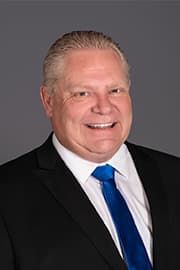
Doug Ford
As Premier, Ford's Bill 98 would permanently strip Ontario municipalities of the power to require green building standards from developers, handing a legislative win to the industry lobby already suing Toronto over the same rules.

Rob Flack
As Housing Minister, Flack introduced Bill 98 on March 30, 2026, which would permanently remove municipal authority to enforce enhanced green building standards across Ontario — a legislative gift to the Residential Construction Council of Ontario (RESCON), which was simultaneously suing Toronto in court over the same rules.

Richard Lyall
As RESCON president, Lyall led both the November 2024 court challenge against the Toronto Green Standard and publicly championed Bill 98 as the legislative culmination of that campaign. His explicit endorsement of the bill as the "final chapter" makes RESCON's role in driving this legislation unambiguous.

Mike Schreiner
As Green Party leader, Schreiner publicly opposed Bill 98's removal of municipal green building authority, framing it as prioritizing fossil fuel industry profits over homebuyer affordability and climate resilience.

Bryan Purcell
As TAF's VP of Policy and Programs, Purcell published analysis documenting how Bill 98 will increase energy costs, deepen natural gas dependency, and harm Ontario's green building sector — providing the technical substance behind criticism of the legislation.

David Miller
As the mayor who introduced the Toronto Green Standard in 2006, Miller has directly criticized Bill 98's removal of municipal green building authority, warning it will impose long-term energy costs on residents.

Phil Pothen
As Environmental Defence's Ontario Environment Program Manager, Pothen authored the organization's formal submission opposing Bill 98's removal of municipal green building authority, providing detailed legal and technical analysis of the bill's impact.

Adil Shamji
As the Ontario Liberal Housing Critic, Shamji publicly opposed Bill 98's rollback of municipal planning authority and green building standards, arguing the government's approach fails homebuyers while benefiting developers.
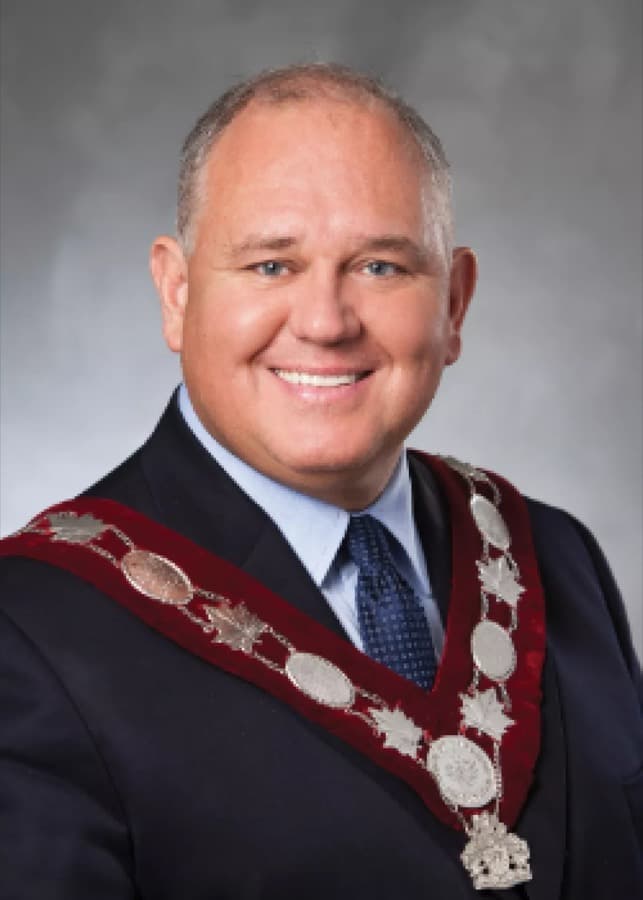
Frank Scarpitti
As Mayor of Markham — one of the municipalities that developed its own enhanced green building standards — Scarpitti publicly criticized Bill 98's removal of municipal authority to require higher environmental design standards from developers.

Michael Mesure
As co-founder of FLAP Canada, Mesure represents the conservation interest directly harmed by Bill 98's removal of municipal bird-friendly glass requirements — standards that Toronto and other cities had enacted specifically to reduce bird-building collisions.

Evan Wiseman
As TAF's Senior Climate Policy Manager, Wiseman has publicly challenged the Ford government's framing that green building standards are a significant housing cost driver, providing technical analysis of the long-term cost shift onto homebuyers.

Lara McKendrick
As OAA President, McKendrick publicly opposed Bill 98's removal of municipal green building authority, commissioning research showing that design standards are not the bottleneck in Ontario's housing supply problem and calling for standardization rather than elimination of higher municipal standards.
Why It Matters
Climate lock-in. Buildings constructed to lower standards today will operate for 50–100 years. Every apartment built without proper insulation, heat pump infrastructure, or passive cooling is a long-term liability as climate extremes intensify. Toronto's urban heat island effect is already measurable; tree canopy requirements are a frontline defence. Bill 98 turns those requirements into suggestions, at the request of an industry lobby that was simultaneously fighting them in court.
Energy independence. The Atmospheric Fund argues Bill 98 will increase Ontario's dependence on imported US natural gas — directly undermining energy independence at a moment when continental energy security has become a live political issue. Green Party Leader Mike Schreiner was direct: the Ford government is "putting the profits of oil and gas giants like Enbridge ahead of affordability for everyday people."
The cost shift onto homebuyers. The government frames Bill 98 as reducing upfront housing costs. The reverse is true over any meaningful time horizon. Buyers locked into gas-heated, poorly insulated units face higher utility bills for the life of the building. The retrofit reckoning eventually arrives — and when it does, it falls on residents, not developers. Former Toronto Mayor David Miller, who introduced the Toronto Green Standard, put it plainly: "Cutting corners on new construction locks in higher energy bills, greater risks from heat waves and flooding and expensive retrofits down the road — costs that will ultimately be borne by residents."
Democratic legitimacy. Halton Hills, Hamilton, Mississauga, Markham, Vaughan, Richmond Hill — these communities passed green standards through their own democratic processes, responding to their residents' priorities. Bill 98 overrides those local decisions from Queen's Park, at the request of an industry lobby group that was simultaneously fighting the same standards in court. This is a pattern: from MZOs to the Greenbelt to bike lane removals, the Ford government has repeatedly used provincial power to override local democratic decisions when developers prefer a different outcome.
Legal Actions
In November 2024, the Residential Construction Council of Ontario (RESCON) filed an application in Ontario Superior Court challenging the City of Toronto's legal authority to enforce the Toronto Green Standard — a package of enhanced design and energy requirements that go beyond the provincial Building Code. RESCON argues the City lacks statutory authority under the Building Code Act to impose material and construction-method requirements on developers. Toronto indicated it would respond in due course. The case remained active as of May 2026. Ontario's Bill 98, if passed, would legislate RESCON's position into provincial law — potentially mooting the lawsuit before a court issues a ruling. RENXHomes reporting on the lawsuit.
Rippling Effects
Municipal paralysis has already begun. Hamilton, Ottawa, Waterloo Region, Guelph, Clarington, and Oshawa all paused their green standard programs in early 2026, before the bill has even passed. The threat alone has been enough to freeze local climate action across much of the province. This chilling effect — six municipalities pausing programs they had been developing for years — is the legislation working as intended, before a single vote is cast.
The retrofit reckoning. Ontario will eventually need to decarbonize its entire building stock. Every building constructed to minimum code today becomes part of that future burden. Kingston has invested over $800,000 annually in climate leadership programs supporting 250 retrofit projects; Toronto has refunded nearly $120 million in development charges since 2010 to incentivize green building. Those investments in a better baseline are made worthless if future buildings are built to a lower standard. The Canada Green Building Council, whose sector contributes $33 billion to Ontario's GDP, warned that weakening standards risks hollowing out an industry critical to the province's future.
RESCON's legal case against Toronto remains active in Ontario Superior Court. If Bill 98 passes, it may effectively deliver RESCON's legal victory by statute — establishing in law what the court was asked to determine — before a judge rules. This sets a troubling precedent: industry groups can launch litigation against municipalities, then have a sympathetic government legislate away the dispute before it reaches judgment. The court case becomes moot, the municipality loses, and no judicial principle is established.
Bill 98 is part of a pattern. MZOs overriding local planning, the Greenbelt scandal, Bill 212 removing bike lanes, conservation authority mergers eliminating local environmental oversight — the consistent thread is provincial capture of powers that once belonged to communities. Green building standards were one of the last areas where Ontario cities retained meaningful authority over the built environment their residents inhabit. Bill 98 is the fourth attempt to take that authority away.