Niagara Amalgamation & the Bob Gale Appointment
December 1, 2025
TL;DR
Ford appointed a former PC candidate as Niagara Region's chair to push amalgamation of its 12 municipalities — bypassing elections entirely. Within weeks, Bob Gale was aggressively lobbying to collapse Niagara into one or four cities. He resigned on March 12, 2026, after anti-racism advocates revealed he owned a signed copy of Adolf Hitler's Mein Kampf. Ford said he remains "keen" on amalgamation regardless.
The Web
2 connections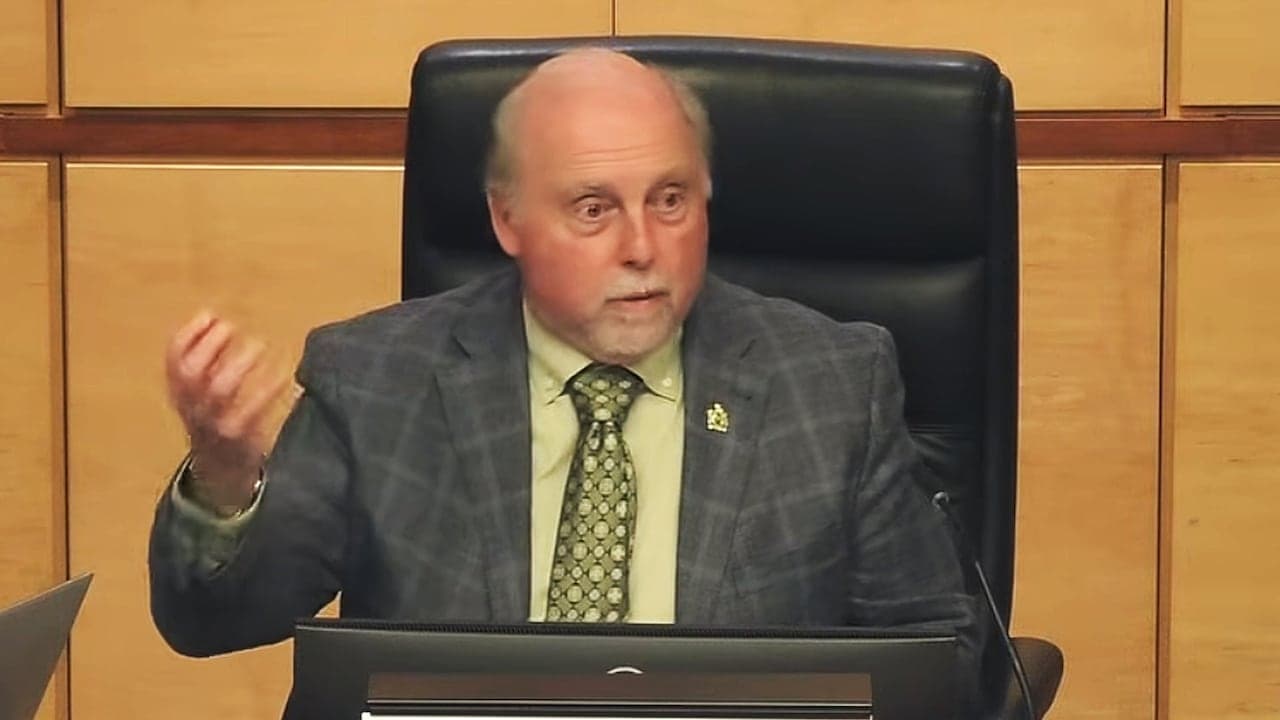
Bob Gale
Received an unelected appointment as Niagara Regional Chair from the Ford government despite being a 2022 PC provincial candidate — a position ordinarily filled by a council vote. The government bypassed democratic selection entirely. Gale resigned in March 2026 after the Mein Kampf ownership was made public, having lasted just 84 days.
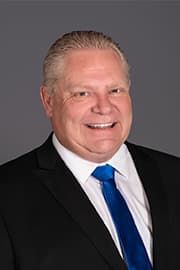
Doug Ford
As Premier, Ford appointed a former PC candidate as Niagara Region's chair to push municipal amalgamation without elections, and said he remains "keen" on the plan even after the appointee resigned over a Mein Kampf collection.
Why It Matters
The Niagara episode is a condensed illustration of how the Ford government approaches democratic governance: bypassing elections when an unelected ally can advance the government's agenda; imposing top-down restructuring without adequate analysis, public consultation, or democratic mandate; and using provincial appointment power to install politically connected figures in positions of institutional authority.
The amalgamation push itself has no verified economic justification. Every independent expert who has commented on it has noted that municipal amalgamations in Ontario have a documented track record of failing to deliver promised savings. The Ford government's own experience with Peel Region is the most direct cautionary example: legislation dissolving Peel was passed in 2023, reversed in 2023 after the government's own transition board found it would cost $1.3 billion extra over 10 years and trigger sharp tax increases. Ford cancelled the Peel dissolution — but is now pursuing the same model in Niagara, without conducting the analysis that proved fatal to the Peel plan.
The Ford government also suppressed a directly relevant independent study. In 2019, it commissioned Ken Seiling and Michael Fenn to conduct a regional governance review of 82 municipalities across Ontario — including Niagara — at a cost of $120,000 in public funds. The review received 8,500 written submissions from residents and stakeholders. The report was delivered to Minister Steve Clark in September 2019. The government then permanently buried it. Both advisors were required to sign non-disclosure agreements. The public paid for the research and cannot see it. Niagara Regional Council demanded its release in January 2024; the province refused. The Ford government now pushes amalgamation without disclosing the evidence base it collected at public expense.
The connection to developer interests is structural rather than directly documented in Niagara specifically. Ford's simultaneous "Destination Niagara" casino-tourism strategy — announced as a plan to draw 25 million visitors annually and generate $3 billion/year in GDP from a "Las Vegas of the North" development in Niagara Falls — requires massive construction and development approvals across multiple municipal jurisdictions. An amalgamated region with a single council and a Ford-friendly "strong mayor" would reduce the number of planning veto points from twelve to one, dramatically streamlining the approvals that ambitious development projects require.
Legal Actions
In December 2024, following the death of Regional Chair Jim Bradley, Minister Rob Flack directly appointed Bob Gale — a former Ontario PC candidate who ran against NDP MPP Wayne Gates in Niagara Falls in 2022 — as the new Regional Chair, bypassing any democratic election or nomination process. The appointment gave the Ford government an ally inside Niagara's governance with a mandate to pursue the province's amalgamation agenda from within. Critics noted the appointment process had no transparency requirements, no conflict-of-interest review, and no mechanism for public input.
On the night of March 11, 2026, anti-racism advocates revealed that Niagara Regional Chair Bob Gale — Ford's direct appointee and the primary driver of the amalgamation push — owned a signed copy of Adolf Hitler's Mein Kampf, reportedly purchased at auction in 2010 and authenticated in 2018. Gale sent a resignation letter to Minister Flack effective immediately. The revelation came while Gale was already under fire for his heavy-handed amalgamation campaign and his defiance of a regional council motion directing him to halt further action. Anti-racism advocates described his resignation as a "relief." Ford's government offered no explanation of how the appointment process had failed to surface this information.
In January 2024, the Ontario Standing Committee on Heritage, Infrastructure and Cultural Policy held public hearings in six Ontario cities on regional governance. A promised second series of hearings never occurred — the legislature was dissolved ahead of the February 2025 election and no final committee report was ever tabled. The public process was abandoned mid-consultation. The same government then pursued amalgamation via unilateral appointment and legislative threats, having cancelled the democratic process designed to inform such decisions.
Rippling Effects
Gale's resignation did not end the amalgamation threat. Ford told reporters on March 17, 2026 — five days after Gale left — that he remains "keen" on Niagara amalgamations and that his government plans to review regional governance. PC sources continued to suggest legislation could come in the spring 2026 sitting. The region now faces an indefinite period of uncertainty about its political future, with no elected chair, a contested governance review, and an absent democratic mandate for any restructuring — but ongoing provincial pressure to merge regardless.
The pattern in Niagara echoes Ford's approach to Toronto in 2018, when he unilaterally slashed Toronto city council from 47 to 25 seats mid-election — invoking the notwithstanding clause after an Ontario court ruled the move unconstitutional. It echoes the Peel dissolution (legislated, then reversed at the cost of years of chaos and administrative uncertainty). It echoes the broader use of "strong mayor" powers — now extended to over 169 Ontario municipalities — which allow mayors to override their own councils on provincial-priority matters. Each of these interventions reduces the number of elected voices, concentrates authority, and accelerates the speed at which development approvals can be obtained.
The Gale appointment also reveals a specific risk in how Ford uses provincial appointment powers: vetting appears to be cursory or political rather than substantive. A former PC candidate with a signed copy of Mein Kampf was appointed to reshape the governance of 500,000 people, in a region that includes large communities of Holocaust survivors and their descendants. The appointment process produced no public disclosure of his suitability, no conflict-of-interest review, and no public consultation. He was installed and began aggressively pursuing amalgamation before most Niagara residents were aware he had been appointed at all.