Ford Government's Use of the Notwithstanding Clause
September 10, 2018
TL;DR
Doug Ford's government has invoked or threatened the notwithstanding clause three times — more than any Ontario premier in history. In 2018, Ford threatened to override a court ruling that his mid-election Toronto council cuts were unconstitutional. In 2021, he pre-emptively buried an election advertising law inside Section 33 to shield it from Charter challenge. In 2022, he used the clause against 55,000 education workers before a single strike vote was held — the first time any Canadian government had invoked Section 33 against labour rights. Workers struck anyway. Ford backed down in four days. The clause is meant to be a mechanism of last resort for democratically exceptional circumstances. Ford has treated it as a first-response tool for policy he expects courts to reject.
The Web
2 connections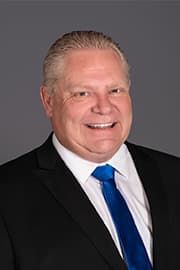
Doug Ford
As Premier, Ford has invoked or threatened Section 33 of the Charter three times — more than any Ontario premier in history — including pre-emptively against 55,000 education workers before a single strike vote was held.

Stephen Lecce
Introduced Bill 28 — the first use of the notwithstanding clause against labour rights in Ontario history. The bill threatened $4,000/day fines against individual workers and $500,000/day against their union. Ford repealed it within days after major unions threatened a general strike. The legislation was deemed "for all purposes never to have been in force" — but the threat itself had a documented chilling effect on public sector bargaining.
Why It Matters
The First Threat — Bill 5 and the Toronto Ward Reduction (2018): In July 2018, mid-election, Ford's government passed Bill 5 reducing Toronto's city council from 47 seats to 25 — cutting the number of wards while a municipal election campaign was already underway and ballots were being printed. Ontario Superior Court Justice Edward Belobaba struck the law down on September 10, finding it violated the free expression rights of candidates and voters under Section 2(b) of the Charter. Ford's response was immediate: he announced he would recall the legislature for a special session to invoke the notwithstanding clause. He called Section 33 "a tool given to us by the fathers of Confederation" and said he would use it to override the court. It was the first time any Ontario premier had threatened to use the clause. Before Ford was required to formally invoke it, the Ontario Court of Appeal granted an emergency stay of the lower court ruling, allowing the election to proceed under the new ward map. Ford ultimately passed the legislation without formally invoking Section 33 — but he had announced, publicly and deliberately, that he was willing to override the Charter rather than accept a court ruling that went against him.
The Quiet Pre-emption — Bill 307 and Election Advertising (2021): In June 2021, the Ford government passed the Protecting Elections and Defending Democracy Act (Bill 307), which reinstated third-party election advertising spending limits that had been struck down by the courts as violating Section 2(b) of the Charter. Rather than defend the limits on their merits — or revise them to be constitutionally sound — the government pre-emptively embedded Section 33 directly in the bill's text. There was no legal crisis, no court order to override. Ford's government simply expected the law would be found unconstitutional and used the notwithstanding clause as insurance. This invocation received less public attention than the Bill 28 episode, but it was legally significant: it was the first time the Ford government formally invoked Section 33 in enacted legislation, and it established that the government was prepared to use the clause pre-emptively and without public deliberation.
The Labour Weapon — Bill 28 and the CUPE Education Workers (2022): On November 3, 2022, the Ford government passed Bill 28 — the Keeping Students in Class Act. CUPE's 55,000 education support workers — educational assistants, early childhood educators, custodians, school secretaries — earned an average of $39,000 per year. After their collective agreement expired and years of wages falling behind inflation, CUPE members voted 96.5% in favour of strike action. Ford's government responded not with negotiation but with legislation that: declared any strike illegal before it had begun; imposed a four-year collective agreement without worker consent; set fines of up to $4,000 per day per worker and $500,000 per day for the union; and pre-emptively invoked Section 33 to prevent any Charter challenge from proceeding. It was the first time in Canadian history that any government had used the notwithstanding clause against labour rights. Prime Minister Justin Trudeau called it "wrong and inappropriate." Federal Justice Minister David Lametti called the pre-emptive invocation "exceedingly problematic." The Canadian Civil Liberties Association said it was unprecedented. Ford's stated rationale — keeping students in school — applied to workers who had not yet exercised their legal right to strike.
Legal Actions
On September 10, 2018, Ontario Superior Court Justice Edward Belobaba struck down Bill 5 — Ford's mid-election reduction of Toronto's city council from 47 to 25 seats — finding it violated the free expression rights of candidates and voters under Section 2(b) of the Canadian Charter of Rights and Freedoms. Ford immediately announced he would recall the legislature to invoke the notwithstanding clause to override the ruling. It was the first time any Ontario premier had publicly threatened to use Section 33. The Ontario Court of Appeal granted an emergency stay before the clause needed to be formally invoked, and the election proceeded under the new ward map. The Court of Appeal ultimately upheld Bill 5 on its merits in 2019. Ford did not formally invoke Section 33 but had announced publicly that he would override the Charter rather than accept a court ruling against him.
On November 3, 2022, the Ford government passed Bill 28 — the Keeping Students in Class Act — pre-emptively invoking Section 33 to ban a strike by 55,000 CUPE education support workers before it had occurred, imposing a four-year collective agreement without their consent, and setting fines of up to $4,000 per day per striking worker and $500,000 per day for the union. It was the first time in Canadian history that any government had used the notwithstanding clause against labour rights. Prime Minister Trudeau called it "wrong and inappropriate." CUPE workers struck anyway on November 4. Facing a threatened general strike involving millions of workers across Canada, Ford announced the repeal of the bill on November 7-8. Bill 35 — the repeal — passed unanimously on November 14, 2022, the same day it was introduced: the fastest repeal of a government bill in Canadian history.
In June 2021, the Ford government passed Bill 307 — the Protecting Elections and Defending Democracy Act — reinstating third-party election advertising spending limits that a court had already struck down as a Section 2(b) violation. Rather than revise the limits to pass constitutional scrutiny, the government pre-emptively embedded Section 33 directly in the bill's text, shielding it from Charter review for five years. It was Ontario's first actual invocation of the notwithstanding clause in provincial history — Ontario had never used Section 33 in 39 years before Ford. No court had ruled on this new bill; the government used the clause as insurance against a challenge it expected to lose. Critics including the Ontario Federation of Labour and Elementary Teachers' Federation argued the restrictions were designed to silence union-funded advertising critical of the Ford government before the 2022 election.
The notwithstanding clause failed. In March 2023, the Ontario Court of Appeal struck down Bill 307, ruling it "unjustifiably infringed" on rights to meaningfully participate in provincial elections. Critically, the Court found the law violated Section 3 of the Charter — the right to vote — which is expressly excluded from Section 33's reach. The notwithstanding clause cannot override Section 3. The Ford government appealed to the Supreme Court of Canada. On March 28, 2025, the Supreme Court upheld the Court of Appeal's ruling in a 5-4 decision, definitively striking down the election advertising restrictions. Ford's government lost the case at every appellate level, and the notwithstanding clause provided no protection because the wrong rights were infringed.
In November 2024, Ford's government passed Bill 212 — the Reducing Gridlock, Saving You Time Act — requiring the Transportation Minister to remove protected bike lanes on Bloor Street, Yonge Street, and University Avenue in Toronto. Ontario Superior Court Justice Paul Schabas struck down the bike lane removal provisions, finding they would put people at "increased risk of harm and death" and violated the Charter. Ford called the ruling "ridiculous" and publicly floated the possibility of invoking the notwithstanding clause to override it — the fourth time his government had threatened or used Section 33. As of early 2026, the matter was before the Court of Appeal for Ontario. Ford had not formally invoked Section 33, but his willingness to raise it as a response to a court ruling on public safety demonstrated the degree to which the clause had become a reflexive political instrument under his government.
Government Activity on This File
via PoliMon · updated hourlyRippling Effects
CUPE education workers struck on November 4, 2022 — defying Bill 28 and its fines. The Ontario Federation of Labour announced a general strike for November 14. Unions representing millions of Canadian workers mobilized: Unifor, the BC Teachers' Federation, national CUPE, and others. The BC Teachers' Federation sent $1 million in strike support. What Ford had characterized as a dispute over 55,000 education support workers became the largest labour mobilization Canada had seen in decades. Facing a general strike, Ford held a press conference and announced he would repeal the bill "as a sign of good faith." Bill 35 — the repeal — passed unanimously on November 14, the same day it was introduced. CUPE National President Mark Hancock stood with other labour leaders and said: "The government blinked."
Ford's first formal invocation of Section 33 — Bill 307 on election advertising — also failed, though by a different mechanism. In March 2023, the Ontario Court of Appeal struck down Bill 307, finding it violated Section 3 of the Charter — the right to vote. Section 3 is expressly excluded from the notwithstanding clause's reach: Ford's government had invoked Section 33, but invoked it against the wrong rights. The government appealed. In March 2025, the Supreme Court of Canada upheld the ruling in a 5-4 decision. Every court above the Superior Court that considered Bill 307 found it unconstitutional. The notwithstanding clause provided no protection. The law was void.
By 2024, Ford had threatened Section 33 a fourth time — after an Ontario Superior Court justice struck down provisions of Bill 212 requiring the removal of protected bike lanes in Toronto, finding they posed risks to public safety. Ford called the ruling "ridiculous" and raised the possibility of invoking the clause. The case was before the Court of Appeal as of early 2026. The pattern — court strikes down legislation, Ford threatens or uses Section 33 — had by then repeated itself enough times that constitutional scholars were describing it as a governing reflex rather than an exceptional constitutional response.
The constitutional implications of Ford's notwithstanding clause pattern extend beyond the individual bills. Legal scholars have noted that the Ford government has used the clause not in response to profound conflicts between legislative will and judicial overreach — the circumstances the clause was designed for — but as a pre-emptive shield for legislation the government expects to lose in court. This use has been called "weaponization" of Section 33 by constitutional law experts. It treats the clause not as an extraordinary override of last resort but as a routine policy insulation tool — or, when that fails, a political threat. Ontario had never used Section 33 in its 39-year history before Ford. He has invoked or threatened it four times in seven years. Both formal invocations have been reversed — one by the general strike threat that made it politically untenable, one by courts that found the clause couldn't protect the rights it claimed to override.