Ontario School Board Takeovers
June 27, 2025
TL;DR
The Ford government stripped elected trustees of all authority at 8 of Ontario's largest school boards — covering 750,000 students — installing politically-connected supervisors and passing legislation that removed the courts as a check on ministerial power.
The Web
4 connections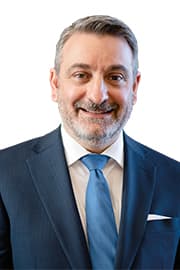
Paul Calandra
As Education Minister, Calandra personally directed all eight school board takeovers between April 2025 and March 2026, sponsored Bill 33 to expand and insulate ministerial takeover powers, and appointed all supervisors — including briefly serving as PDSB supervisor himself.
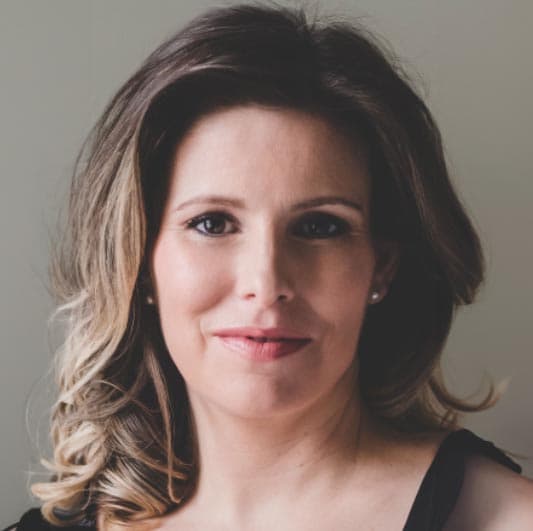
Heather Watt
Appointed PDSB supervisor in March 2026. Her appointment was flagged by The Pointer as reflecting political patronage — she was Chief of Staff to PC Health Minister Christine Elliott 2018–2022 with no education background. The Black Trustees' Caucus warned her appointment would erode anti-Black racism oversight.

Rohit Gupta
Appointed TDSB supervisor by Education Minister Calandra in June 2025. As supervisor, Gupta stripped all elected trustees of voting rights and in December 2025 fired TDSB Director of Education Clayton La Touche.
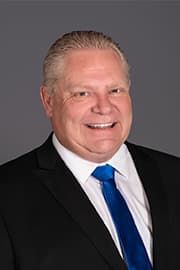
Doug Ford
As Premier, Ford's government stripped elected trustees of all authority at 8 of Ontario's largest school boards, covering 750,000 students, installing politically-connected supervisors with legislation removing courts as a check.
Why It Matters
The scale of the Ontario school board takeovers is without precedent in the province's history. Eight boards were placed under provincial control between April 2025 and March 2026, collectively serving approximately 750,000 students — roughly one-third of Ontario's entire student population. Elected trustees, accountable to local communities through the ballot box, were stripped of all governing authority. No previous Ontario government had removed democratic oversight from local school governance at anywhere near this scale.
Bill 33 (the Supporting Children and Students Act, 2025) fundamentally rewrote the rules for ministerial intervention in school boards. Where the previous threshold for a provincial takeover required a board to be in financial default, Bill 33 expanded the trigger to the vague and undefined standard of "public interest" — giving the minister broad discretionary power to take over any board for virtually any reason. More critically, the legislation explicitly removed the boards' existing right to apply to Divisional Court to have a Part 8 takeover order revoked. Legal analysts at Gowling WLG noted that this made judicial challenge of takeover orders extremely difficult, eliminating a key safeguard against arbitrary ministerial action.
The supervisors appointed to run the seized boards raised immediate conflict-of-interest concerns. Heather Watt, appointed to oversee the Peel District School Board, served as Chief of Staff to PC Health Minister Christine Elliott from 2018 to 2022 and had no substantive education administration background. Rohit Gupta, appointed to the Toronto District School Board, was a Harper-era federal policy advisor with similarly thin education credentials. The Pointer reported that community and equity advocates feared these appointments signalled an ideological agenda rather than a genuine effort to address governance problems.
Critics from the Ontario Secondary School Teachers' Federation and the provincial NDP argued that the Ford government manufactured the very crisis it used as pretext for the takeovers. The government removed over $6 billion from Ontario classrooms since 2018 through chronic underfunding, driving the structural deficits it then cited as justification for seizing control of boards. CP24 reported that parents and opposition politicians described the takeovers as a power grab that left communities with no voice over their children's education.
Bill 33 also introduced a mandatory requirement for police and school resource officer (SRO) programs in Ontario schools — a provision academic researchers described as entirely evidence-free. The Conversation published analysis from education scholars warning that mandatory SRO programs disproportionately harm Black, Indigenous, and racialized students, who are already overrepresented in school discipline statistics, and that the provision would entrench harms that equity-focused school boards had been actively working to reverse.
Legal Actions
Elected trustees from the Thames Valley District School Board filed a legal challenge against the province's April 2025 takeover order. The challenge was reported by CBC News. Legal experts note that judicial review of takeover orders is extremely difficult given the broad ministerial discretion in the Education Act, and that Bill 33 subsequently made it even harder by explicitly removing the right to apply to Divisional Court to revoke a Part 8 order. The outcome of this challenge has not been publicly confirmed as of March 2026.
Rippling Effects
The most alarming long-term question raised by the takeovers is whether elected school board trustees will exist at all in the next municipal election cycle. When asked directly whether trustees would appear on the fall 2026 municipal ballot, Premier Ford refused to give a clear answer. CP24 reported that Ford would not confirm whether Ontario would restore democratic governance to the boards before the election — raising the possibility that the province could permanently eliminate elected school boards, replacing a century-old institution of local democratic accountability with indefinite ministerial control.
Inside the seized boards, the supervisors have moved quickly to reshape leadership. In December 2025, TDSB supervisor Rohit Gupta fired the board's Director of Education, Clayton La Touche — a respected administrator — amid a broader pattern of institutional upheaval across multiple boards. The Canadian Press reported the firing as part of a series of leadership shake-ups as provincial supervisors asserted control over boards' administrative structures, overriding decisions that had previously required trustee input and community engagement.
Equity programs face an uncertain future under provincial supervision. The Black Trustees' Caucus warned publicly that the appointment of Heather Watt — a political operative with no education background — to oversee the Peel District School Board would marginalize the equity work the board had undertaken, including anti-Black racism initiatives developed in close consultation with affected communities. With no elected trustees to hold supervisors accountable, there is no democratic mechanism by which communities can protect programs the province disagrees with ideologically.
Bill 33's mandatory policing provisions remain in force regardless of how the governance crisis resolves. The legislation requires school boards to implement police and school resource officer programs despite substantial evidence from Canadian and American research that SRO programs increase the likelihood of racialized students being criminalized for ordinary adolescent behaviour. Academic critics have noted that the province cited no evidentiary basis for the mandate, and that it runs directly counter to the direction many boards had been moving — particularly the TDSB and PDSB, which had reformed or eliminated their SRO programs following community pressure and reviews.
The precedent established by these takeovers is the most durable consequence. The Ford government has demonstrated that any school board in Ontario can now be seized on "public interest" grounds — with no clear definition of that standard, no meaningful opportunity for judicial review, and no timeline for restoration of democratic governance. Any future government inherits this power. Boards that advocate for equity, push back on provincial curriculum changes, or challenge government priorities now operate under the implicit threat that non-compliance may trigger a takeover. The chilling effect on local democratic governance extends far beyond the eight boards currently under supervision.