OSAP Cuts & Post-Secondary Defunding — Two Waves, a COVID Clawback, and "Basket-Weaving Courses"
February 12, 2026
TL;DR
In January 2019, Ford cut OSAP by $670 million — eliminating free tuition for low-income families, dropping 24,000 students from the program, and shifting the system from grants to loans. When the federal government doubled student grants during COVID, Ontario clawed back $400 million instead of passing it to students. The tuition freeze Ford extended repeatedly was never accompanied by restored aid or compensated operating grants — Laurentian University went bankrupt in 2021, the first public university in Canadian history to do so. In February 2026, Ford announced a second wave: grants capped at 25% of OSAP packages (down from 85%), with 75% as loans — and told students choosing the wrong programs to stop picking "basket-weaving courses." Hundreds protested at Queen's Park.
The Web
3 connections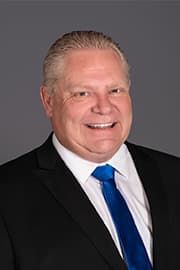
Doug Ford
As Premier, Ford cut OSAP by $670 million in 2019, clawed back $400 million in federal COVID student aid instead of passing it on, and announced a second wave of cuts in 2026 capping grants at 25% of aid packages.

Merrilee Fullerton
As the minister who announced and defended the January 2019 OSAP restructuring, Fullerton oversaw the elimination of free tuition for low-income students — replacing robust grants with a system that increased reliance on repayable loans. The changes disproportionately harmed students from the lowest-income families, who saw net costs rise despite the headline tuition cut.
Robert Haché
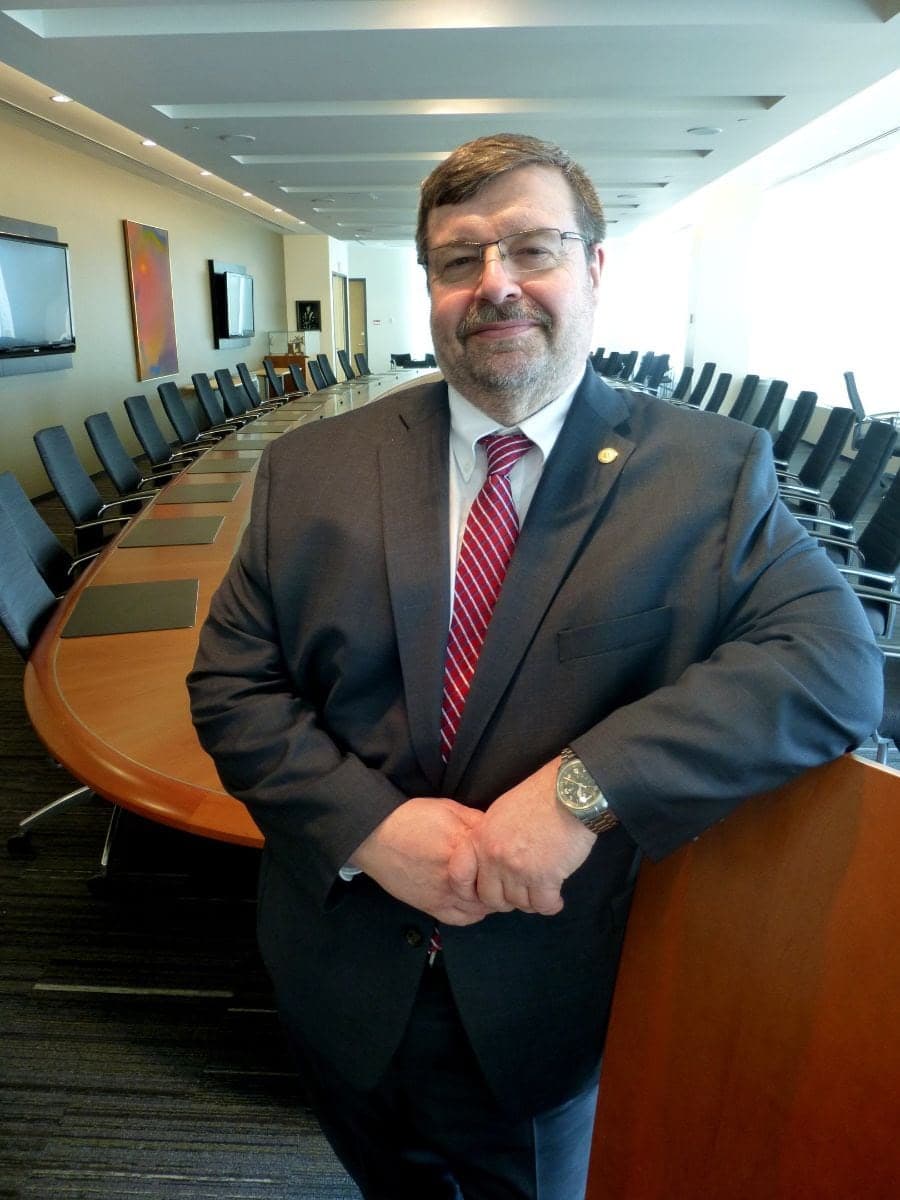
Led Laurentian University into Canada's first public university insolvency. The Auditor General found administration costs grew 75% over a decade under his watch, that the university refused provincial financial assistance that could have averted the crisis, and that the CCAA process was used strategically to shed faculty contracts. Over 100 positions and 69 programs were eliminated, and Laurentian's francophone and Indigenous programming was severely curtailed.
Why It Matters
The 2019 OSAP restructuring was designed to appear as generosity — a 10% tuition cut announced alongside the aid changes — while cutting the underlying program that made post-secondary education financially accessible for students who needed it most. The tuition cut benefited students not receiving OSAP; the aid restructuring hurt those who were. The net effect was a transfer of public investment away from the students with the least capacity to absorb costs and toward those who didn't need the help. That is not a reform — it is a redistribution upward, branded as the opposite.
The COVID clawback compounded this dynamic at the worst possible moment. The federal government invested in student relief. Ontario's government intercepted it. Students who were already navigating an economically disrupted labour market, remote learning environments, and housing cost spikes received no additional provincial aid — because the province quietly reduced its own contribution by exactly as much as Ottawa added. The clawbacks were never announced; they were documented only through fiscal monitors and financial accountability reports.
The institutional damage is real and permanent in some cases. Laurentian University's bankruptcy eliminated 69 academic programs — including French-language programs for one of Ontario's most underserved communities — and 195 positions. The programs that closed cannot simply be reopened. The students who lost access to French-language education in Northern Ontario cannot simply commute to another institution. Ford's government denied Laurentian COVID relief it provided elsewhere and obscured its correspondence about the crisis. The government-appointed expert panel that found the post-secondary sector "at serious risk" and named government policy as "a big part of the problem" was dismissed with a demand for "efficiencies."
The 2026 changes — capping grants at 25%, converting 75% of OSAP to loans — represent a structural transformation of how Ontario conceptualises student aid: not as a public investment in accessible education, but as a loan program with a small grant component. A student graduating with a four-year degree under the new system could accumulate $24,000 more in debt than under the 2019 rules — which were already worse than what existed before Ford. Combined with tuition increases from the lifted freeze, total four-year debt loads could reach $45,000–$50,000 for many students. Ford's "basket-weaving" comment made explicit what the policy implied: the Premier of Ontario believes students who choose certain fields of study don't deserve grant funding. The government is now in the business of deciding which education is worth subsidising and which isn't — based on the Premier's views about labour market alignment, expressed through quotas on non-repayable aid.
Legal Actions
The Student Choice Initiative — announced alongside the January 2019 OSAP changes — allowed students to opt out of "non-essential" ancillary fees, effectively defunding student unions, campus newspapers, peer support services, and student health centres. The Ontario Divisional Court struck it down unanimously on November 21, 2019, ruling the government had overstepped its authority. The Ford government appealed. On August 12, 2021, the Ontario Court of Appeal dismissed the appeal, fully affirming the lower court decision. The government was ordered to pay $20,000 in legal costs to the Canadian Federation of Students. The initiative was permanently quashed.
During the COVID-19 pandemic, the federal government doubled Canada Student Grants to provide emergency relief. Ontario responded by reducing its own provincial OSAP contribution by approximately the same amount — from $1.29 billion in 2019–20 to $895 million in 2020–21, a reduction of approximately $400 million. The province effectively intercepted the federal increase rather than passing it to students. This was documented in Ontario's Fiscal Plan and Outlook (March 2021, page 194) and confirmed by the Financial Accountability Office's Q1 2021–22 expenditure monitor. No government announcement accompanied the reduction. OUSA projected that if clawbacks continued, students were short-changed by up to $1.2 billion in total federal COVID student relief. No provincial action was taken to reimburse students.
On February 1, 2021, Laurentian University in Sudbury filed for creditor protection under the Companies' Creditors Arrangement Act — the first public university in Canadian history to enter insolvency proceedings. Laurentian cut 195 faculty and staff positions and closed 69 academic programs, including 29 French-language programs serving Northern Ontario's francophone community. Documents revealed Ford's government denied Laurentian the emergency COVID relief funding extended to other institutions, and withheld correspondence about its role in the crisis. CUPE reported the Auditor General's review showed the Ford government had other options to save the university. The government-appointed expert panel on post-secondary funding (2023) found Ontario's sector "currently at serious risk" and named government policy as "a big part of the problem." Government response: institutions must demonstrate "greater efficiencies" before more funding.
On February 12, 2026, Minister Nolan Quinn announced a second wave of OSAP restructuring effective Fall 2026: maximum grants slashed from 85% of a student's OSAP package to 25%; minimum loans increased from 15% to 75%. A student previously receiving $10,000 in OSAP with $8,500 in grants now receives $2,500 in grants and $7,500 in loans — approximately $24,000 in additional debt over a four-year degree. Grants for private career college students eliminated entirely. The seven-year tuition freeze lifted; universities may raise fees up to 2% per year. Ford told students on February 17, 2026: "You're picking basket-weaving courses, and there's not too many baskets being sold out there," and claimed he'd heard "nightmare stories" of students buying "fancy watches and cologne" with OSAP money. Hundreds protested at Queen's Park; ~1,000 students walked out at the University of Waterloo. Two people arrested. NDP's "Save OSAP" campaign gained 30,000 sign-ups in days. As of March 2026, the legislature had not yet voted on reversal motions.
Rippling Effects
Ontario domestic students already carry the highest student loan debt of any province. The 2026 changes — if they stand — will widen that gap substantially. Projections suggest average OSAP-receiving students will graduate with approximately $27,060 in debt for a four-year degree under the new structure, with some estimates reaching $45,000–$50,000 when tuition increases are included. The NDP opposition pledged to bring a reversal vote when the legislature returned on March 23, 2026; as of that date, the outcome remained unknown.
The per-student funding gap with the rest of Canada remains unaddressed. Ontario funds universities at roughly 55% of the national average. That gap does not only affect finances — it affects the ratio of professors to students, the availability of research funding, the state of campus infrastructure, and the quality of the learning environment. The tuition freeze ended without a corresponding investment in operating grants; universities can raise tuition up to 2% per year, but that 2% will not close a gap that has been accumulating since 2008.
The Laurentian bankruptcy cut 29 French-language programs from Northern Ontario. Those communities — already geographically isolated and historically underserved — lost irreplaceable educational infrastructure. The French Language Services Act guarantees the right to services in French; the closure of Laurentian's French-language programs was a practical failure of that guarantee in post-secondary education. No equivalent programs have been established elsewhere in the affected region.
The student protests of March 2026 — at Queen's Park, at Waterloo, at Brock, in Hamilton, in Oshawa — represent the latest mobilisation against a seven-year pattern of disinvestment. Whether the protests produce legislative reversal depends on the legislature Ford convened so rarely. The arc of the OSAP scandal is clear: two waves of cuts, a COVID clawback, institutional bankruptcies, and a Premier who told students their choices didn't deserve public investment. Whether that arc bends toward restoration is a political question Ontario has not yet answered.