Protect Ontario Fund Bait-and-Switch: $4 Billion in Tariff Relief Redirected to Private Investment Manager
March 26, 2026
TL;DR
Ontario promised $5 billion to protect workers and businesses from U.S. tariffs — then quietly redirected $4 billion of it into a privately managed investment fund with no named manager, no public accountability framework, and no commitment that the money will reach the tariff-hit workers it was meant for.
The Web
2 connections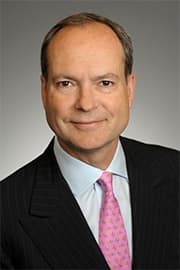
Peter Bethlenfalvy
As Ontario Finance Minister, Bethlenfalvy designed and tabled the 2026 budget that redirected $4 billion from the Protecting Ontario Account tariff relief reserve into a privately managed investment fund. He brings 25+ years of private capital markets experience — including roles at TD Securities, DBRS, and Manulife — to the design of a fund structure that defers all governance and transparency details until after an unnamed private general partner is selected.
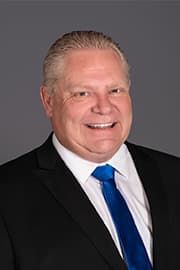
Doug Ford
As Premier, Ford's cabinet approved the 2026 budget decision to redirect $4 billion originally designated for tariff relief into a privately managed investment fund. The Protecting Ontario Account was announced under Ford as emergency protection for workers in steel, aluminum, and automotive sectors; the pivot to a private investment vehicle targeting AI and defence removes the direct link to tariff-impacted workers and businesses the fund was created to serve.
Why It Matters
The Ford government announced the Protecting Ontario Account in the 2025 budget with explicit language about shielding Ontario workers and businesses from U.S. tariffs. The budget document described it as "a fund of up to $5 billion designed to provide businesses with critical support to protect jobs." Stream 1 — up to $1 billion in emergency working-capital loans — was deployed in August 2025 through the Protect Ontario Financing Program, which required businesses to have been directly hurt by tariffs, employ at least 10 people, and have exhausted federal supports first. The remaining $4 billion was not disbursed — it sat in reserve, designated for future tariff-relief streams.
By the time Finance Minister Peter Bethlenfalvy tabled the 2026 Ontario Budget on March 26, 2026, that same $4 billion had been repurposed — not into more tariff relief, but into a commercially structured investment fund to be run by an unnamed private-sector general partner. The shift is fundamental: tariff relief loans went to Ontario manufacturers proving material harm from U.S. trade policy; the new investment fund will make equity-style investments in AI, defence, and advanced manufacturing — decided entirely by a private firm that has not yet been selected, under governance rules that will only be disclosed once that firm is named.
The Ontario Federation of Labour called out what the government left unsaid, warning the fund lacks "clear public accountability mechanisms" and operates as part of a pattern of decisions made "outside the spotlight." NDP Leader Marit Stiles gave the budget a failing grade, while the Canadian Federation of Independent Business argued the $4 billion should instead go to direct tax relief that small business owners could actually access.
Ontario's Auditor General Shelley Spence set an important precedent in October 2025 when she found that the province's Skills Development Fund — another discretionary program with ministerial flexibility — was "not fair, transparent or accountable." In that fund, the minister's office overrode civil servants in more than half of reviewed cases, and applicants with lobbyist connections saw their clients funded at dramatically higher rates. With the new investment fund explicitly removing government from day-to-day investment decisions and handing them to a private general partner, the formal accountability risk is even greater.
Finance Minister Bethlenfalvy brings 25 or more years of private capital markets experience — TD Securities, DBRS, Manulife, CST Consultants — to the design of a fund structure that mirrors the private equity world he came from. That expertise is real, but it also raises questions: who determines which private firm wins the general partnership role, what the mandate of that firm is, and whether it will be managed in a way that benefits Ontario workers and businesses or primarily the private partners? The government has pledged "guardrails" but has yet to specify what they are, who enforces them, or whether the Auditor General will have access to the fund's books.
Rippling Effects
The workers in steel, aluminum, and auto towns who were told this $5 billion was "for them" face a real risk that the bulk of it never reaches them. The original 2025 budget language described the Protecting Ontario Account as an "emergency backstop" for businesses harmed by tariffs. The 2026 version redirects that reserve into growth-sector investments that are more likely to benefit established tech and defence firms than laid-off autoworkers or shuttered parts suppliers in Windsor, Oshawa, or Sault Ste. Marie.
The choice to hand $4 billion in public capital to a private general partner is not inherently improper — Canada's pension investment boards use similar structures. But those institutions have legislated mandates, public disclosure requirements, and standing legislative committee oversight. The Ontario government has committed $4 billion to a fund while deferring all transparency until after a manager is selected — a sequence that inverts normal accountability, creating obligations before establishing safeguards.
The precedent from the Skills Development Fund — where lobbyist connections predicted funding outcomes more reliably than merit scores — raises a direct question about the general partner selection: will the competitive process for the $4 billion fund manager be governed by independent procurement rules, or will it be susceptible to the same ministerial discretion that compromised the Skills Development Fund? This is not a hypothetical risk; it is a documented pattern in Ford government programs.
Ontario's deficit ballooned to $13.8 billion in the 2026 budget — nearly double the prior year's projection. Committing $4 billion in public seed capital to a private fund — money that will be illiquid for years — while running the largest deficit in the province's recent history means the fiscal risk to taxpayers is compounded. If the fund underperforms or its investments fail to materialize in Ontario, there is no clawback mechanism currently in place.
The broader governance concern is about precedent: if this model is normalized, it creates a template where government announces money for a public purpose, holds it in reserve, then pivots it to a privately managed vehicle with limited legislative accountability. That model rewards whoever wins the general partnership far more directly than it rewards the workers and communities the money was ostensibly set aside to protect. Ontario's 2026 budget describes this as "an evolution in the relationship between government and the private sector" — critics call it a privatization of the province's tariff relief reserve.