Skills Development Fund — $750M Patronage Scandal
October 1, 2025
TL;DR
Ontario's Auditor General found that $750 million in Skills Development Fund grants were awarded in a process that was "not fair, transparent or accountable." Ford's own campaign manager Kory Teneycke runs a lobbying firm whose clients received over $100 million — nearly 3x any other firm. The Premier's nephew's former chief of staff registered as a lobbyist immediately after leaving the Premier's office, and his clients received grants. Labour Minister David Piccini's office overrode civil servants' recommendations in over half of cases reviewed.
The Web
14 connections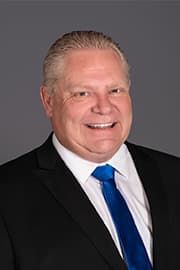
Doug Ford
As Premier, Ford's government ran a $750 million Skills Development Fund the Auditor General found was not fair, transparent, or accountable — his own campaign manager's lobbying firm collected over $100 million in client grants.
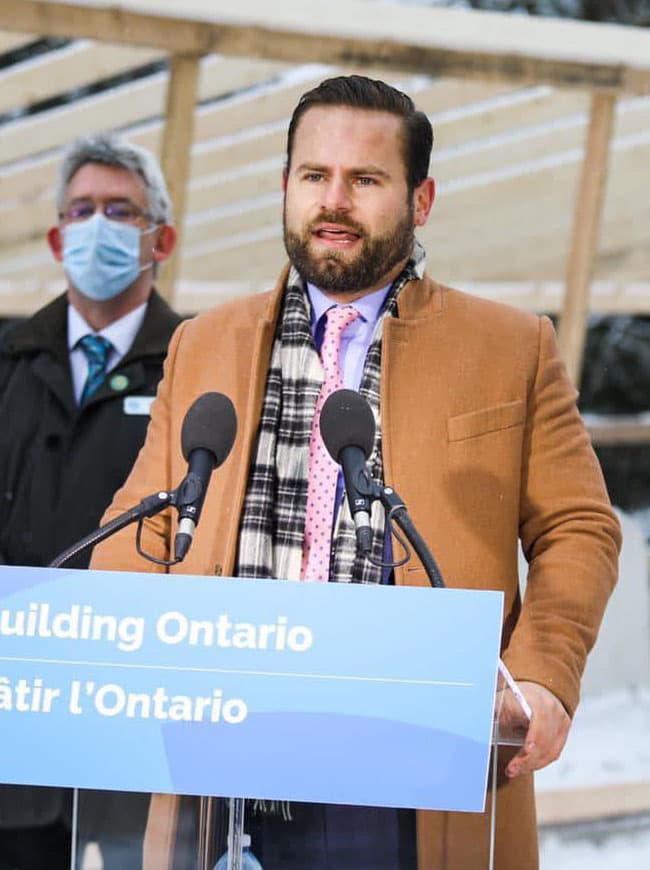
David Piccini
As the minister responsible for the Skills Development Fund, Piccini was personally and closely involved in selecting funding recipients. The Auditor General found the $1.3B selection process was not fair or transparent. The Integrity Commissioner opened a formal investigation in December 2025 following complaints from both the NDP and Liberals that Piccini may have contravened the Members' Integrity Act.

Rob Godfrey
Named defendant in Ontario's $25.7M civil fraud claim; president and CEO of Keel Digital Solutions, which allegedly inflated performance metrics tenfold to receive public Skills Development Fund money.

Jay Fischbach
Named defendant in Ontario's $25.7M civil fraud claim; COO of Keel Digital Solutions, alleged to have participated in misrepresentation of counselling session counts and improper billing.

Ahad Bandealy
Named defendant in Ontario's $25.7M civil fraud claim; CDO of Keel Digital Solutions, alleged to have participated in misrepresentation of performance metrics submitted to the province.

Charlie Pinkerton
Co-bylined the Aug. 5, 2026 report that National Bank of Canada had filed an application in Ontario's Superior Court seeking to put Keel Digital Solutions and a pair of associated corporations under the control of BDO Canada Limited as receiver, over more than $4.5 million the bank says the companies borrowed.

Alfonso Nocilla
Independent legal expert, not a party to the dispute. Reviewed National Bank of Canada's receivership application and said that if the claims are accurate the bank would likely succeed, because the companies breached their loan agreements. He said a receiver would have broad powers to trace funds, would decide whether to continue Keel's countersuit against the province, and that the province would likely not be first in line for repayment. None of the allegations by any party have been tested in court.

Jessica Smith Cross
Co-bylined the Aug. 5, 2026 report that National Bank of Canada applied to Ontario's Superior Court to place Keel Digital Solutions and a pair of associated corporations under BDO Canada Limited as receiver, citing more than $4.5 million borrowed and alleged events of default. The story also reported that the province has sued Keel for about $26 million and that Keel countersued for $100 million, with the next hearing in that case in October 2026.
Jay Fischbach
COO of Keel Digital Solutions, a Skills Development Fund grant recipient. National Bank of Canada has applied in the Ontario Superior Court of Justice to place Keel and two associated corporations under BDO Canada Limited as receiver, alleging over $4.5 million borrowed, events of default, and that the companies "diverted their banking activity to TD Bank." Fischbach responded: "there was no diverting of funds and we fully intend to repay National Bank all funds owed from our loan." The allegations have not been tested in court and no order had been granted as of August 30, 2026.

Marit Stiles
Responding to David Piccini's move to Infrastructure in the September 10, 2026 shuffle, Stiles said: "Instead of accountability, the premier just rewarded him with another job… His track record shows he can't be trusted with public dollars and contracts."

Anaïs Bussières McNicoll
On the Labour Ministry's "insufficient resources" explanation for missing Information and Privacy Commissioner deadlines on Skills Development Fund freedom-of-information requests, the CCLA's director of fundamental freedoms said: "this is not a convincing explanation."

Trevor Jones
Became Minister of Labour, Immigration, Training and Skills Development — the ministry that administers the Skills Development Fund — in the September 10, 2026 cabinet shuffle, taking over from David Piccini.

Monte McNaughton
The Skills Development Fund was launched under McNaughton in 2021, while he was labour minister, and he oversaw the selection of its first three rounds. Hammer Heads and Merit Openshop received grants in those rounds. Per The Trillium's analysis, the manager of the group that runs Hammer Heads gave over $2,000 to McNaughton's riding association while he was in charge of the fund, and Merit Openshop CEO Michael Gallardo gave over $6,000 supporting it. McNaughton also appointed Gallardo to a provincial agency board. No wrongdoing is alleged against the recipients.

Michael Gallardo
CEO of Merit Openshop, which received Skills Development Fund grants in rounds one through five, including roughly $5 million combined from rounds four and five. Per The Trillium's analysis, Gallardo gave over $15,000 to PC Party causes from 2015 to 2024, including over $6,000 supporting Monte McNaughton's riding association and almost $1,000 to David Piccini's. McNaughton appointed him to a provincial agency board, and Piccini reappointed him. No wrongdoing is alleged against Merit Openshop or Gallardo.
Why It Matters
The most striking finding involves Kory Teneycke — Doug Ford's own campaign manager for the 2018, 2022, and 2024 provincial elections, and the person most credited with Ford's electoral success. Teneycke owns Rubicon Strategy, a government relations firm. Rubicon's clients received over $100 million in SDF grants — nearly three times the next highest-performing lobbying firm. Teneycke simultaneously manages Ford's political campaigns and operates a lobbying business whose clients are funded by Ford government programs. This conflict of interest was not disclosed to applicants or to the public during the program's operation.
David DiPaul, who served as chief of staff to Michael Ford — the Premier's nephew and a Ford cabinet minister — registered as a lobbyist in June 2024, immediately after leaving the Premier's nephew's office. His clients subsequently received SDF grants. The revolving door between the Premier's family's offices and the lobbying industry — with the SDF program as the financial intermediary — demonstrates the systemic nature of the problem: it is not one bad actor but a network operating with apparent impunity.
The Auditor General's findings on the SDF mirror the documented pattern from the Greenbelt scandal: insider access to political staff determines outcomes, while the formal merit-based process is treated as advisory or easily overridden. In the Greenbelt case, Housing Minister Steve Clark's chief of staff directed billions in land-value windfalls to politically connected developers. In the SDF case, the Labour Minister's office directed hundreds of millions in grants to clients of the Premier's campaign manager. In both cases, the independent audit process caught what the government's own controls did not prevent.
Legal Actions
Ontario's Auditor General Shelley Spence released a special report in October 2025 finding that over $750 million in Skills Development Fund grants were awarded through a process that was "not fair, transparent or accountable." The report found that the Labour Minister's office overrode civil servants' recommendations in more than half of cases, that low-scoring applications backed by politically connected lobbyists received funding while higher-scoring applications were rejected, and that one application scored 41% and flagged for conflicts of interest was funded anyway. The AG recommended systemic reforms to application processes, conflict-of-interest controls, and ministerial oversight.
Following the Auditor General's findings, Ontario's Integrity Commissioner opened a formal investigation into Labour Minister David Piccini over his office's role in directing SDF grants against the recommendations of non-partisan civil servants. Opposition parties called for Piccini's resignation. The investigation was ongoing as of early 2026, with no findings publicly released. The Commissioner's jurisdiction covers whether Piccini breached the Members' Integrity Act in the exercise of his ministerial powers.
At least one SDF grant recipient — Keel Digital Solutions — was referred to the OPP for criminal investigation following an audit of its grant usage. Keel had received a Skills Development Fund grant, and the audit found irregularities sufficient to warrant a police referral. The specifics of the referral were not fully disclosed by the government. The OPP investigation was ongoing as of early 2026. Critics noted the referral illustrated that the SDF's oversight failures were not merely administrative but potentially criminal in specific cases.
Ontario filed a statement of claim in Ontario Superior Court seeking $25.7 million in damages plus $100,000 punitive damages per defendant executive against Keel Digital Solutions Corp. and its subsidiary Get A-Head Inc. The province alleges the company inflated performance metrics by more than tenfold, billed for ineligible expenses including first-class airfare and fine dining, and retained unspent public funds as profit. Get A-Head received approximately $40 million in provincial funding over five years, including $7.5 million directly from the Skills Development Fund. A forensic audit completed in November 2025 and an OPP investigation are running in parallel.
The Ontario Provincial Police launched a criminal investigation in parallel with the civil lawsuit against Keel Digital Solutions and its subsidiary Get A-Head Inc., following the completion of a forensic audit in November 2025 that found evidence of inflated reporting and misappropriation of provincial funds.
Keel Digital Solutions Corp. filed a $98 million countersuit against Ontario after the province sued Keel for $25.7 million alleging fraud in the Skills Development Fund. Keel alleges its reputation was damaged by the province's public statements and legal action. The countersuit creates significant legal risk that Ontario may be required to disclose internal documents about how funding decisions were made, including any communications involving political staff.
National Bank of Canada has filed an application with Ontario's Superior Court seeking an order placing Keel Digital Solutions and a pair of corporations associated with it under the control of BDO Canada Limited as receiver. If granted, the receiver would try to trace and safeguard the companies' assets so National Bank and other creditors could be repaid.
The bank's lawyers claim the companies borrowed over $4.5 million and "committed certain events of default," including stopping interest payments and "ceasing to carry on business or a substantial portion thereof." The bank also argued a receivership is necessary because the companies "diverted their banking activity to TD Bank, leaving (National Bank) with no visibility as to the Respondents' operations."
Jay Fischbach, Keel Digital's chief operating officer, said in an email that "there was no diverting of funds and we fully intend to repay National Bank all funds owed from our loan," and that Keel has banked with TD for years and continues to.
National Bank cites the province's ongoing case against Keel, claiming the companies have "lost their primary source of income and have no material customers" now that Ontario cancelled its contracts, alleged fraud, and sued for about $26 million. Keel countersued the province for $100 million. The next hearing date in that case is in October 2026.
Alfonso Nocilla, an associate dean at Western University's faculty of law, reviewed the application and said that if the claims are accurate the bank would likely succeed, because the companies breached their loan agreements. He said a receiver would have broad powers to trace funds, would decide whether to continue the countersuit against the province, and that the province would likely not be first in line for repayment.
None of the allegations by either side, or by National Bank, have been tested in court. The Trillium, July 29, 2026.
National Bank of Canada filed an application in the Ontario Superior Court of Justice seeking an order placing Keel Digital Solutions and two associated corporations — unnamed in the coverage — under the control of BDO Canada Limited as receiver.
The bank's lawyers claim the companies borrowed over $4.5 million and "committed certain events of default," including stopping interest payments and "ceasing to carry on business or a substantial portion thereof." They further allege the companies "diverted their banking activity to TD Bank, leaving (National Bank) with no visibility as to the Respondents' operations." Keel COO Jay Fischbach responded: "there was no diverting of funds and we fully intend to repay National Bank all funds owed from our loan."
Unverified: the exact filing date is unknown — the report says only that the application was "recently filed" — the court file number is unknown, and no order had been granted as of August 30, 2026. The allegations have not been tested in court.
The same report confirms the next hearing date in the province's $26M suit against Keel and Keel's $100M countersuit is October 2026. Source: The Trillium, via Northern Ontario Business.
Rippling Effects
The Skills Development Fund scandal matters beyond its immediate dollar figures. Training programs are supposed to help the workers who need it most — those being displaced by automation, those without post-secondary credentials, those in declining industries. When the selection process is captured by lobbyists with political connections, the workers who benefit from grants are those whose employers can afford Rubicon Strategy retainers, not those most in need of retraining support.
The Integrity Commissioner and OPP investigations remain active as of early 2026. If criminal charges arise from the Keel Digital Solutions referral or the broader investigation, this scandal would become the most directly criminal element of the Ford government's record — with the potential to reach the Premier's own campaign infrastructure. Teneycke's role is particularly combustible: as the architect of three Ford election wins, a finding of systematic grant-steering to his clients would blur the line between governance and campaign finance in Ontario in ways that have few recent precedents.
The SDF scandal also reveals the inadequacy of Ontario's lobbying disclosure system. Teneycke's dual role as campaign manager and lobbyist with SDF-funded clients is legal under current rules — illustrating how the formal ethics architecture fails to capture the most significant conflicts of interest in Ontario politics. The Auditor General's report recommended systemic reforms to the application and oversight process, but as of early 2026, the Ford government had not committed to implementing them.