Ford Calls New Thunder Bay Jail "Fancy-Dancey" Days After Indigenous Man's Inquest
June 22, 2026
TL;DR
Days after a coroner's inquest into the death of Kevin Mamakwa — a 27-year-old from Kingfisher Lake First Nation who died by suicide in the Thunder Bay District Jail — concluded with 22 recommendations and the jail being called a "death trap," Premier Doug Ford disparaged the province's own new ~$1.2-billion Thunder Bay Correctional Complex as a "fancy-dancey jail," comparing it to "the Four Seasons hotel" and refusing to commit to closing the century-old jail where nine people have died since 2002.
The Web
6 connections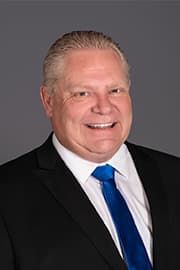
Doug Ford
On June 22, 2026, while visiting Thunder Bay, Premier Ford disparaged his own government's new, roughly $1.2-billion Thunder Bay Correctional Complex as a "fancy-dancey jail," compared it to "the Four Seasons hotel," said "I'm not sold on that," and would not commit to permanently closing the century-old Thunder Bay District Jail — days after the coroner's inquest into Kevin Mamakwa's death concluded.

Sol Mamakwa
NDP MPP for Kiiwetinoong and Kevin Mamakwa's uncle. He responded that Ford's comments mean "his thought is that we do not deserve anything good. We do not deserve anything nice," called the jail "a death trap" that "needs to go," and said it should have been closed after his nephew's death. He has renewed his call to permanently close the Thunder Bay District Jail.

Michael Kerzner
As Solicitor General responsible for corrections, Kerzner is the minister whose ministry the Mamakwa inquest jury's 22 recommendations are directed at — including publicly releasing a plan to decommission the Thunder Bay District Jail within five years of the new Complex opening, mandatory Indigenous cultural training, 24/7 nursing, and minimum out-of-cell time.

Shawn Bradshaw
As president of OPSEU Local 708, Bradshaw warned about overcrowding, violence, and chronic understaffing at Thunder Bay corrections facilities, where inmate-on-inmate assaults rose to 167 in 2024 from 90 in 2021.
Kevin Mamakwa
A 27-year-old man from Kingfisher Lake First Nation who died by suicide in the Thunder Bay District Jail on June 2, 2020. His death was the subject of the coroner's inquest that concluded in June 2026 with 22 recommendations, days before Ford called the new replacement facility a "fancy-dancey jail."

Anna Betty Achneepineskum
Deputy Grand Chief of Nishnawbe Aski Nation and a witness at the coroner's inquest into Kevin Mamakwa's death in the Thunder Bay District Jail.
Why It Matters
On June 22, 2026, Premier Doug Ford stood in Thunder Bay and disparaged a facility his own government spent roughly $1.2 billion to build. He compared the new Thunder Bay Correctional Complex to "the Four Seasons hotel" and told reporters, "When people commit crimes, they shouldn't be in this fancy-dancey jail." He said "I'm not sold on that" and would not commit to permanently closing the century-old Thunder Bay District Jail. The timing is what makes the remark indefensible: it came just days after a coroner's inquest concluded into the death of Kevin Mamakwa, a 27-year-old man from Kingfisher Lake First Nation who died by suicide in that same district jail on June 2, 2020.
The inquest jury delivered its verdict on June 11–12, 2026, finding the death was a suicide and issuing 22 recommendations directed at the Ministry of the Solicitor General. Among them: publicly release a plan to decommission the Thunder Bay District Jail within five years of the new Complex opening, mandatory Indigenous cultural training, 24/7 nursing, and a minimum of five hours per day of out-of-cell time. The jury heard evidence about a jail where there have been nine deaths since 2002 and which is chronically understaffed. Witnesses and family called it a "death trap."
Sol Mamakwa, the NDP MPP for Kiiwetinoong and Kevin's uncle, responded that Ford's comments mean "his thought is that we do not deserve anything good. We do not deserve anything nice." He called the jail "a death trap" that "needs to go," and said it should have been closed after his nephew's death. For Ford to call a humane, modern correctional facility "fancy-dancey" — days after a jury examined a death inside the old one — frames basic standards of safety and dignity for Indigenous people in custody as an undeserved luxury.
The "fancy-dancey" line is not a one-off. In April 2026, Ford defended his jail-expansion plan by insisting the province is "not building Four Seasons hotels." The June remark repeats that rhetoric, now aimed at a facility already built. And it lands against a worsening backdrop: at Thunder Bay's corrections facilities, inmate-on-inmate assaults rose to 167 in 2024 from 90 in 2021, according to OPSEU data, as overcrowding and violence climbed. The same Ministry of the Solicitor General is at the centre of a separate accountability failure, where 157 inmates were improperly released from Ontario's overcrowded jails and the minister was caught misstating the facts to the legislature (see the Ontario jails improper-releases coverup).
The new Complex on Highway 61 is expected to be operational in 2027. But in January 2026, the province decided to keep both the old Thunder Bay District Jail and the old Thunder Bay Correctional Centre open after the new Complex opens — contradicting the original rationale that the new facility would replace them. Ford's refusal to commit to closing the district jail is therefore not idle musing; it tracks a decision his government has already quietly made. The cost, the inquest, and the nine deaths all point in one direction. The Premier pointed the other way.
Legal Actions
Rippling Effects
The most concrete consequence in play is whether the Thunder Bay District Jail closes at all. The inquest jury's first and most pointed recommendation asks the Ministry of the Solicitor General to publicly release a plan to decommission the jail within five years of the new Complex opening. Ford's refusal to commit — and the province's January 2026 decision to keep the old facilities running — put the government on a collision course with the jury's findings. Sol Mamakwa has renewed his call to permanently close the jail, arguing it should have been shut after his nephew's death in 2020.
Inquest recommendations are not binding, which is precisely why the political response matters. The jury directed all 22 recommendations at the Ministry of the Solicitor General; the minister responsible, Michael Kerzner, now owns the question of whether they are implemented or shelved. Mandatory Indigenous cultural training, 24/7 nursing, and minimum out-of-cell time are concrete safeguards aimed at preventing the next death — and each requires staffing and funding the government has so far been slow to provide at a chronically understaffed jail.
The overcrowding data points to a system already under strain. Inmate-on-inmate assaults at Thunder Bay corrections facilities rose to 167 in 2024 from 90 in 2021. The new Complex was meant to relieve that pressure by replacing aging facilities; keeping the old jail and the old correctional centre open instead means the province absorbs the operating cost of three facilities while the conditions that the inquest examined persist in the oldest of them.
There is also a reputational and trust cost specific to Indigenous communities. Kevin Mamakwa was from Kingfisher Lake First Nation, one of the remote Nishnawbe Aski Nation communities whose members are routinely held far from home in the Thunder Bay system. When the Premier characterizes safe, modern custody as "fancy-dancey" days after a jury examines an Indigenous man's death, it signals to those communities — as Sol Mamakwa put it — that the government does not believe they "deserve anything nice." That message complicates every future negotiation over corrections, policing, and health services in the north.