Family Responsibility Office Failures: 8.5-Month Wait for Child Support, $2.1B in Arrears, 43 Ex-Staff Still Have Database Access
May 12, 2026
TL;DR
Ontario's child support enforcement agency takes an average of 8.5 months to register a court order and issue a first payment, has allowed $2.1 billion in arrears to accumulate, and left 43 former employees with live access to a database of vulnerable Ontarians' personal information — all findings confirmed by the Auditor General in May 2026.
The Web
4 connections
Doug Ford
As Premier of Ontario, Ford holds ultimate accountability for the Family Responsibility Office; the Auditor General confirmed in May 2026 that the agency takes 8.5 months on average to issue a first child-support payment and left $2.1 billion in arrears uncollected.
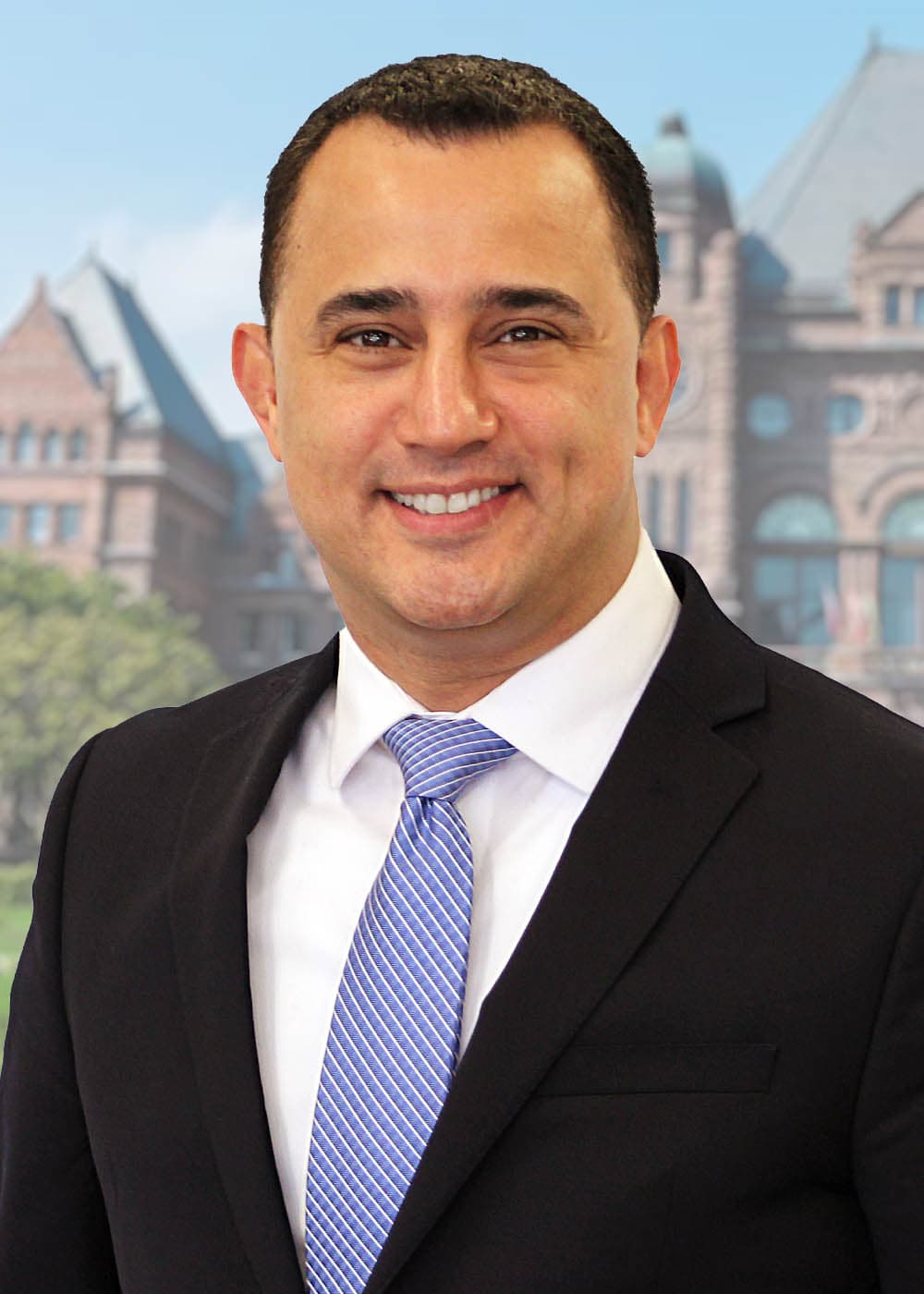
Michael Parsa
As Minister responsible for the Family Responsibility Office, Parsa's ministry presides over an agency that leaves families waiting 8.5 months for legally owed child support and has allowed $2.1 billion in arrears to accumulate. The ministry also failed to revoke database access for 43 former employees.

Shelley Spence
As Auditor General, Spence authored the May 12, 2026 special report on the Family Responsibility Office, documenting the 8.5-month average wait for a first child support payment, $2.1B in outstanding arrears, and 43 former employees with live database access to personal information.

Barbara Finlay
As Acting Ombudsman, Finlay's 2025-26 annual report documented record complaint volumes about social benefit programs, part of a caseload that hit a record 35,023 cases — up 43% in three years.
Why It Matters
The people who rely on Ontario's Family Responsibility Office are overwhelmingly single mothers and their children, seeking court-ordered support from non-custodial parents. These are not applicants asking for a favour — a judge has already ruled that money is owed. The 8.5-month average wait for a first payment means families go without legally owed income for nearly a year after a court has already decided in their favour. Rent, groceries, childcare, and school costs do not pause while the FRO processes paperwork. The delay is not an administrative inconvenience; it is an eight-month economic penalty imposed on the most financially precarious households in the province.
The $2.1 billion in outstanding arrears is not an abstract accounting figure. It represents money that specific Ontarians are owed — money that courts have ordered to be paid and that the FRO has failed to collect. Every dollar in that figure is a dollar a support recipient has gone without, often for years. The scale of the arrears — $2.1 billion across active cases as of March 31, 2025 — reflects chronic enforcement failure, not a temporary backlog. The FRO has tools available to compel payment: licence suspension, asset seizure, garnishment. The Auditor General's finding that enforcement was applied inconsistently means those tools are not being deployed systematically.
The enforcement inconsistency finding deserves particular attention. Families in legally identical situations — same type of court order, same payor behaviour — are receiving different enforcement responses from the FRO. This is not just a question of efficiency; it is a question of fairness. A system that enforces court orders selectively is a system in which outcomes depend on factors other than the law. That is a fundamental breach of the FRO's mandate. The Auditor General's report found no documented rationale for the differential treatment, which makes it impossible to determine whether the inconsistency reflects resource constraints, system design failures, or something else.
The data security finding is a textbook access control failure. 43 former employees — people who no longer work at the FRO — retained live database access to the personal and financial information of Ontarians registered with the agency. The FRO's database contains highly sensitive information: home addresses, employment details, banking information, income records, and custody arrangements. Each of those 43 former employees represents a potential vector for unauthorized access, data theft, or harassment of vulnerable individuals by someone who may no longer be bound by the conditions of government employment. There is no benign explanation for this failure.
Ministerial accountability sits squarely with the Ministry of Community and Social Services under the Ford government, which has responsibility for the FRO. The ministry has been aware of performance problems at the FRO — similar findings appeared in previous Auditor General work — and the 8.5-month wait, the $2.1 billion in arrears, and the access control failure are not new problems that emerged overnight. They are the product of sustained underinvestment and managerial failure on the ministry's watch. The Ford government cannot claim ignorance.
Rippling Effects
An 8.5-month gap between court order and first payment is not merely a bureaucratic delay — it is an economic crisis for the families experiencing it. Single parents waiting for FRO-administered support are not living on credit; they are turning to food banks, falling behind on rent, withdrawing children from paid childcare to reduce costs, and in some cases losing housing. The economic harm cascades: a parent who cannot pay for childcare cannot maintain stable employment, which compounds the financial damage the FRO delay has already caused. The FRO's failure to process court orders quickly does not create poverty, but it deepens it.
There is a direct interaction between FRO failure and Ontario's social assistance system. A single parent who cannot collect court-ordered support and cannot maintain stable employment may apply for Ontario Works — meaning taxpayers effectively fund the financial gap created by a payor who faces no immediate consequence for non-payment. The FRO's $2.1 billion in arrears does not disappear when support recipients exhaust their savings; the cost is transferred to the public, while the payor continues to benefit from non-enforcement. This is a subsidy to non-paying parents at the expense of recipients and taxpayers simultaneously.
The 43 former employees with live database access represent an unresolved privacy emergency. Ontario's Information and Privacy Commissioner should be formally notified if a notification has not already been made — and the public has no assurance that it has been. The individuals whose records may have been accessed cannot be notified because, in most cases, it is not possible to determine whether access occurred or by whom. The FRO's database contains information that could be used to locate and harm vulnerable individuals, including those who may have separated from abusive partners. The Auditor General's May 2026 report tabled this finding publicly; what remediation has actually been taken remains unclear.
The FRO is not a new agency experiencing growing pains. It has been the subject of critical Auditor General findings in prior years, and the 8.5-month processing time and arrears accumulation reflect chronic underfunding rather than a single management failure. This is a pattern: identify the problem, receive the audit finding, fail to resource the fix, receive the next audit finding. The systemic underfunding of the FRO is a political choice. Enforcement of child support court orders is not a visible constituency; the people harmed by FRO delays are rarely in a position to mount a sustained public campaign. That invisibility has made it safe, politically, to allow the agency to deteriorate. This scandal is the cost of that choice.
The FRO's inconsistent enforcement pattern raises a question the Auditor General did not fully resolve: whether enforcement disparities correlate with payor income or other demographic factors. Licence suspension and asset seizure are more impactful against payors with professional licences and significant assets; wage garnishment requires that the payor have reported employment income. Uniform enforcement across income levels is legally required but practically absent when the tools available are inherently more effective against some payors than others. This is a broader structural problem than any single ministry can fix unilaterally — but the FRO's inconsistent application of even the tools it has compounds the inequity. Compare this pattern of ministry-level failure to protect vulnerable Ontarians to the documented suppression at /scandals/child-welfare-death-reports-suppressed, where a different ministry chose data invisibility over accountability for deaths in care.