Ontario FOI Request Freeze — May 2026
May 21, 2026
TL;DR
The Ford government secretly ordered Ontario civil servants to halt all freedom-of-information request processing for more than a week in May 2026, without notifying the province's Information and Privacy Commissioner — then Ford dismissed public concern by calling critics "the media party," despite his own government's data showing 96% of FOI requestors are not media.
The Web
4 connections
Sylvia Jones
As Deputy Premier and Minister of Health, Jones was a direct beneficiary of the FOI freeze. On May 14, 2026 — two days before the freeze began — the new FIPPA law had already been used to block an FOI request for her hospital budget-cut records. The province-wide processing freeze from May 16–23 extended the shield around active requests targeting her ministry.
Doug Ford
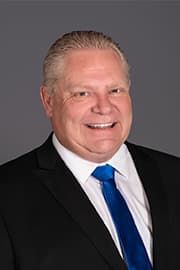
Ford's office was among those shielded by the province-wide freeze on FOI request processing from May 16–23, 2026. After the freeze was lifted, Ford publicly dismissed critics calling for accountability as "the media party" — despite his government's own data showing 96% of FOI requestors are not media. The freeze occurred in the same month a new FIPPA law permanently exempted the Premier's records from FOI.

Marit Stiles
As NDP Leader, Stiles publicly challenged the Ford government over the FOI freeze, connecting it to the broader pattern of the government's dismantling of transparency mechanisms — including the FIPPA overhaul that passed the month before. She called for accountability over a freeze that affected thousands of pending public records requests.
Patricia Kosseim
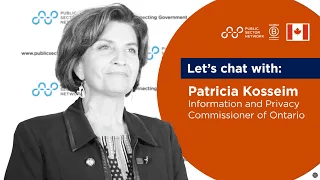
As Ontario's Information and Privacy Commissioner, Kosseim was not notified of the province-wide FOI freeze before it took effect on May 16, 2026. She publicly stated the freeze raised "significant concerns about the public's right of access to government information." Her office's independent oversight role was circumvented by the government's unilateral decision to halt all FOI processing for seven days.
Why It Matters
The FOI freeze was not a minor administrative hiccup — it was a province-wide halt affecting every ministry and institution covered by FIPPA. Global News revealed on May 21, 2026 that senior civil servants had received instructions via Microsoft Teams to immediately stop processing all in-flight freedom-of-information requests, including fee estimates, extension notices, decision letters, and document releases. The freeze was triggered by the government's scramble to operationalize the retroactive Bill 97 FOI exemptions for the premier's office and cabinet — passed weeks earlier without public hearings. Businesses, lawyers, patients, and ordinary Ontarians with pending requests were given no notice and no recourse. Their requests — some months in the making — simply stopped moving.
Most damaging to the government's credibility is who bore the cost of the freeze. Premier Ford dismissed concern about the freeze by calling critics "the media party," suggesting only journalists care about freedom of information. His own government's data tells a different story: of the approximately 27,000 FOI requests filed annually in Ontario, only about 4% — roughly 1,100 — come from media. Global News reported on May 23 that nearly 11,000 requests per year come from businesses, and more than 7,000 from members of the public. The people harmed by the freeze were contractors seeking procurement records, patients seeking health files, lawyers seeking government documents for litigation, and citizens exercising their basic statutory right of access — not journalists.
The Information and Privacy Commissioner of Ontario was not officially notified of the freeze. The IPC — a constitutional officer of the legislature whose sole mandate is to oversee government compliance with FIPPA — learned that the entire provincial FOI system had been suspended only through media reports. The IPC publicly stated the freeze raised "significant concerns about the public's right of access." This is not a procedural oversight; the IPC exists precisely to prevent this kind of unilateral, secret suspension of access rights. The Trillium documented the government's failure to coordinate with the office constitutionally responsible for enforcing the act the government had just suspended.
The freeze is a direct downstream consequence of the Ford government's decision to pass retroactive Bill 97 FOI immunity provisions without public hearings in April 2026 — and then scramble to implement them in secret. By burying the exemptions in an omnibus budget bill and ramming them through without legislative guidance, the government created the operational confusion that led to the freeze. The whole episode is inseparable from the broader FIPPA overhaul that the Ford government pushed through over the objections of the IPC, civil society, and 60% of Ontarians polled. The freeze is what happens when accountability law is dismantled by the people it was designed to hold accountable.
Legal Actions
Democracy Watch announced a constitutional challenge to Bill 97 provisions exempting the Premier, cabinet ministers, and their offices from freedom-of-information requests. The FOI freeze of May 2026 is a direct consequence of the government operationalizing those exemptions without legislative or IPC guidance. Challenge details are still being finalized as of late May 2026.
Rippling Effects
The freeze created a real and immediate operational backlog for every requester with an in-flight file. Unlike a court adjournment, which is public, the freeze was secret — requestors were simply left waiting with no explanation. Fee deposits already paid, legal timelines, and statutory deadlines tied to pending requests were all suspended without notice. For businesses relying on government records for commercial due diligence, for patients seeking health information, and for lawyers litigating cases that depend on government documents, the week-plus freeze was not an abstraction. Global News confirmed the freeze affected the full spectrum of in-flight processing across Ontario ministries — and the backlog created will take weeks to clear even after normal operations resumed on May 23, 2026.
The freeze signals clearly that the Ford government is willing to use the new Bill 97 FOI law aggressively to suppress inconvenient records — and that it will act unilaterally and secretly when doing so. The IPC was excluded from planning an operational change to the very statute the IPC is mandated to enforce. If the government is willing to suspend the entire FOI system for a week without telling the oversight body, there is every reason to expect further administrative measures — extended response timelines, broad application of new exclusions, and informal obstruction — that will be harder to document than an overt freeze. Ford's dismissal of critics as "the media party" confirms the government views FOI accountability as a partisan irritant rather than a public right.
Democracy Watch has announced a constitutional challenge to the underlying Bill 97 FOI immunity provisions — and the freeze has added new factual weight to that challenge. Democracy Watch's legal challenge targets the constitutional validity of retroactively exempting the premier and cabinet from FOI, and the freeze demonstrates exactly how the government intends to operationalize those exemptions: secretly, without IPC oversight, and at the expense of requestors who had no notice. The constitutional challenge remains ongoing as of late May 2026, with the freeze now part of the documented record of how the government has used Bill 97 in practice.