Metrolinx Writes Off $504 Million on GO Expansion Signalling Work
June 22, 2026
TL;DR
Metrolinx's draft annual report quietly discloses that the agency is writing off $504 million spent on Union Station signalling work begun in 2013 — work it paused in 2023 after discovering it was incompatible with the GO Expansion program it was meant to serve.
The Web
7 connections
Prabmeet Sarkaria
As Minister of Transportation, Sarkaria is the minister responsible for Metrolinx, the agency that wrote off $504 million on GO Expansion signalling work.
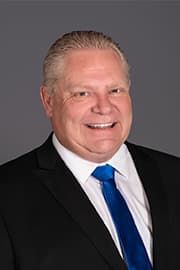
Doug Ford
As Premier of Ontario, Ford holds ultimate accountability for Metrolinx, a provincial transit agency that wrote off $504 million on GO Expansion signalling work.

Marit Stiles
NDP leader who wrote to the Auditor General on April 2, 2026, requesting a value-for-money audit of Metrolinx following the $504 million GO Expansion write-off.

Andrea Hazell
Liberal MPP who also wrote to the Auditor General requesting scrutiny of Metrolinx over the $504 million GO Expansion write-off.

Michael Lindsay
As President and CEO of Metrolinx (permanent since July 1, 2025), Lindsay leads the agency that disclosed the $504 million write-off on GO Expansion signalling work.

Jennifer French
As the NDP's transit and infrastructure critic, French pressed for Metrolinx accountability over the GO Expansion, calling the procurement collapse a secret and demanding transparency after lawsuits emerged.

Doly Begum
As the NDP's public transit critic, Begum called for accountability and an inquiry into Metrolinx over the GO Expansion procurement collapse and subsequent lawsuits.
Why It Matters
A $504 million write-off is not an accounting footnote — it is half a billion dollars of public money spent on infrastructure that the agency now concedes does not fit the program it was building toward. The signalling modernization began in 2013 and continued for a decade before being paused in 2023 when it was found to be incompatible with GO Expansion. The disclosure that this loss is "about 1%" of Metrolinx's capital asset balance underscores the sheer scale of the agency's spending — and the magnitude of what can be lost when planning and delivery fall out of alignment.
The write-off is the latest signal of disorder inside Ontario's flagship transit program. On May 17, 2025, Metrolinx terminated its operations agreement with the ONxpress consortium — which included Alstom, Deutsche Bahn International Operations, Aecon, and FCC Construcción — that held the GO Expansion On-Corridor Works contract. As reported by the Global News coverage of the write-off, the electrification program has since been scaled back to a "minimum viable product" concentrated on the Lakeshore East and West lines, a sharp narrowing of what was once promised as network-wide transformation.
Opposition critics have spent more than a year pressing Metrolinx for answers. NDP MPPs Jennifer French (Oshawa, transit and infrastructure critic) and Doly Begum (Scarborough Southwest, public transit critic) argued in a June 11, 2025 statement that GO Expansion had "collapsed in secret," and the NDP noted on July 24, 2025 that the agency was facing lawsuits tied to the program. The signalling write-off gives concrete shape to those warnings.
The accountability gap is structural. Metrolinx operates at arm's length from the Ministry of Transportation, led by Minister Prabmeet Sarkaria, with Michael Lindsay installed as permanent President and CEO since July 1, 2025. Yet a decade of signalling spend was written off only when it surfaced in a draft annual report — not flagged in advance to the public or the legislature. This is the second major Metrolinx controversy this project documents: the agency is also the subject of the Craft Kingsmen air rights settlement, where Metrolinx paid an undisclosed sum to a politically connected developer over a confidential expropriation claim.
Legal Actions
On April 2, 2026, NDP leader Marit Stiles wrote to Auditor General Shelley Spence requesting a value-for-money audit of Metrolinx, covering the planning and delivery of infrastructure, safety, oversight of the board and Ministry of Transportation, and the accuracy of Metrolinx's public communications about its performance. Liberal MPP Andrea Hazell sent a similar request. The Auditor General's office said its 2026 audit slate had already been chosen but that it would consider the request for future subjects, and did not accept it into the 2026 slate.
Rippling Effects
The write-off intensifies long-standing calls for independent scrutiny of Metrolinx. Separately and earlier — on April 2, 2026, predating this disclosure — NDP leader Marit Stiles wrote to Auditor General Shelley Spence requesting a value-for-money audit of Metrolinx, covering the planning and delivery of infrastructure, safety, oversight of the board and the Ministry of Transportation, and the accuracy of Metrolinx's own public communications about its performance. Liberal MPP Andrea Hazell sent a similar letter. The Auditor General's office said its 2026 audits had already been chosen but would consider the request for future subjects. The audit request was a distinct event from the write-off and was not triggered by it.
For taxpayers, the practical effect is that a decade of investment in Union Station signalling has been largely sunk, with only "a usable portion" salvageable into the agency's revised plans. Money spent between 2013 and 2023 on a system rendered incompatible with GO Expansion cannot be recovered, and the loss compounds the broader cost of a program that has been repeatedly re-scoped — from network-wide electrification down to a "minimum viable product" on two lines.
The pattern matters because Metrolinx is responsible for the largest transit build in Ontario's history. Each re-scoping, terminated contract, and write-off raises the question of whether the agency's planning kept pace with its spending. The termination of the ONxpress operations agreement in May 2025 and the $504 million signalling write-off in June 2026 are not isolated events but data points in a program critics describe as having "collapsed in secret."
This scandal connects to the Craft Kingsmen air rights settlement as part of a broader accountability concern at Metrolinx: large sums of public money moving through the agency with limited transparency, surfacing only through draft reports, tribunal filings, or opposition pressure rather than proactive disclosure. The pending request for an Auditor General value-for-money audit, if eventually taken up, would be the first independent assessment of whether Ontarians are getting value from the billions Metrolinx is spending.