Special Education Funding Crisis: Ford Government Cuts Staffing Fund While Auditor Finds $397M Shortfall
May 12, 2026
TL;DR
Ontario's Auditor General found that 46 of 72 school boards collectively overspent their special education funding by $397.9 million in 2023–24, while the Ford government's response was to increase funding by just 0.1% and simultaneously cut the Classroom Staffing Fund by $56.2 million — leaving some of Ontario's most vulnerable students to be sent home with no documentation when schools can't accommodate them.
The Web
3 connections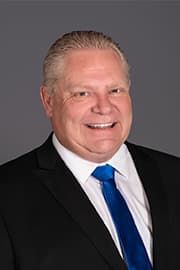
Doug Ford
As Premier, Ford's government responded to an Auditor General finding of a $397.9 million special education funding shortfall by increasing funding just 0.1% while cutting the Classroom Staffing Fund by $56.2 million.

Shelley Spence
As Auditor General, Spence authored the May 12, 2026 special report documenting Ontario's special education funding shortfall — finding that 46 of 72 school boards overspent by $397.9M while the Ford government cut the Classroom Staffing Fund and raised special ed funding by only 0.1%.

Stephen Lecce
As Minister of Education, Lecce is responsible for the funding formula that determines special education allocations. The Auditor General's May 2026 report found the funding structurally inadequate while his 2026–27 budget increased special ed funding by only 0.1% and cut the Classroom Staffing Fund by $56.2 million.
Why It Matters
The students being failed here are not an abstraction — they are children with the greatest learning needs, a group with explicit legal protections under the Ontario Human Rights Code and entitlements under the Education Act. When 46 of Ontario's 72 school boards collectively run a $397.9 million deficit on their special education allocations in a single year, that is not a budgeting anomaly — it is structural proof that the province's funding formula is set below the actual cost of its legal obligations.
The educational assistant vacancy crisis is acute and largely invisible to the public. When an EA is absent, qualified substitutes are unavailable 49–72% of the time — meaning students with complex needs frequently arrive at school to find their designated support worker is gone and no replacement has been arranged. There is no Ministry protocol for this. No contingency plan. No tracking. The Auditor General's report found the Ministry had not responded to this systemic gap in any meaningful way.
Ontario's assessment system has fractured into two tiers along economic lines. Families with means can pay for private psychological and specialist assessments, receiving results in weeks. Families without means wait in the publicly funded queue — where one-third of students wait over one year. An Individual Education Plan cannot be properly written without assessment data; delayed assessments mean delayed support, and in many cases, delayed support means permanent academic harm in the years when early intervention matters most.
The Auditor General documented students with special needs being informally sent home when their school could not accommodate them — with no written record, no formal process, no justification provided to families, and no Ministry tracking. This practice is not merely a service failure. A child who cannot access school because the province has failed to staff it adequately is a child whose right to education is being violated. It also potentially constitutes discrimination on the basis of disability under the Human Rights Code and the Education Act duty to provide an appropriate program.
The Ford government's 2026–27 budget response to this documented crisis was a 0.1% increase to Special Education funding — a rounding error in any inflation-adjusted analysis — paired with a $56.2 million cut to the Classroom Staffing Fund. The Auditor General quantified the gap. The government's answer was to make it wider. As the Globe and Mail reported, education funding is simply not keeping pace with the soaring number of students who need it.
Rippling Effects
The structural gap between need and funding widens every year by design — special education needs grew at 7% between 2014 and 2024 while enrolment grew at 4%, yet funding grew only 15% over 2019–2024 against a 19% increase in board spending. These are compounding divergences. Each year the province underfunds, boards absorb losses from their general operating budgets, reducing resources available for all students. The Auditor General's findings make clear this is not a temporary shortfall but a structural misalignment that will worsen without deliberate government action.
Without adequate EA staffing, the burden lands directly on classroom teachers. General education teachers are expected to absorb the additional instruction, supervision, and behavioural management demands of students whose needs exceed what the classroom is resourced to support — while simultaneously teaching a full class. This is not a marginal stress. It degrades educational outcomes for all students in the room, accelerates teacher burnout, and makes recruitment and retention in high-needs schools harder. The Ministry has not publicly acknowledged this knock-on effect.
Individual Education Plans are the legal cornerstone of special education delivery — but the Auditor General found that many IEPs lack measurable goals, making it impossible to determine whether a student is progressing, whether supports are working, or whether a school board is meeting its obligations. IEPs without accountability mechanisms are paper documents. They protect no one, and they give families no basis to challenge inadequate delivery. This is not incidental; it is a governance failure that insulates the system from scrutiny.
Sending students home without documentation creates significant legal exposure for school boards and the province. Families whose children are turned away from school without a formal process have potential claims before the Human Rights Tribunal of Ontario on grounds of disability discrimination. There is also a live question of whether the practice constitutes a breach of the Canadian Charter of Rights and Freedoms, section 15, equality rights. To date, the Ministry under Stephen Lecce has not directed boards to cease the practice, establish documentation requirements, or report its incidence — a silence that, legally and politically, is difficult to defend.
This scandal does not stand alone. It is part of a pattern of Ford government education disinvestment that includes the seizure of financial control from elected school boards — see /scandals/ontario-school-board-takeovers. The consistent thread is a government that centralizes authority over education while reducing the resources flowing into classrooms, accountability for outcomes, and transparency about the consequences. Stephen Lecce, as Minister of Education, bears direct ministerial responsibility for funding decisions that the province's own Auditor General has now documented as structurally inadequate and harmful to Ontario's most vulnerable students.