CityNews Fires Queen's Park Reporter After Ford Government Coverage
April 13, 2026
TL;DR
CityNews Queen's Park reporter Tina Yazdani was fired without explanation in April 2026 — days after a confrontational on-camera exchange with Education Minister Paul Calandra, and after at least two of her Ford government stories were quietly deleted from the Rogers-owned network's website in apparent violation of Rogers' own editorial standards.
The Web
4 connections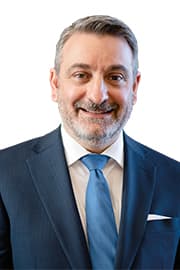
Paul Calandra
As Ontario Minister of Education, Calandra had a confrontational on-camera exchange with Yazdani on March 25, 2026, telling her "Don't interrupt me" during her coverage of his memo to school boards. The story was removed from the CityNews website without explanation shortly after airing. Yazdani was terminated weeks later.

Kory Teneycke
Ford's campaign manager and principal of Rubicon Strategy. Teneycke's brother-in-law Dennis Matthews (Creative Currency) produces both Ontario government and PC party advertising, creating a documented overlap between the government's $111.9 million annual advertising machine and the Ford political network. No direct Rogers/Teneycke link has been confirmed in connection with the Yazdani firing.
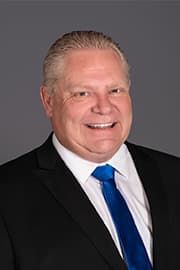
Doug Ford
As Premier of Ontario, Ford leads the government whose coverage Yazdani reported on for eight years at Queen's Park. The firing follows a pattern of the Ford government's documented use of the province's $111.9 million annual advertising machine — a structural financial dependency between large Ontario broadcasters and government goodwill. No direct order from Ford's office has been confirmed.

Charmaine Khan
As CityNews spokesperson, Khan issued the sole official statement on Yazdani's firing and attributed deleted stories to an "editorial standards review" — without specifying what editorial standards were violated or why no corrections or retractions were published in accordance with Rogers' stated editorial policy.
Why It Matters
Press freedom in Ontario has never operated in a vacuum — it operates inside a financial ecosystem where the Ford government is the province's single largest advertiser, spending a record $111.9 million in taxpayer money on advertising in 2024-25. That money flows to broadcasters, including Rogers-owned CityNews. When a Queen's Park political reporter who spent eight years covering the Ford government is terminated without explanation — days after a testy on-camera confrontation with a Ford cabinet minister, and after her stories about that minister were quietly deleted from the website — the question of editorial independence cannot be dismissed as mere speculation.
Tina Yazdani was not a fringe voice. She was a credentialed Queen's Park journalist who won a 2023 RNAO Media Award for her coverage of Ford government healthcare privatization. She covered education, housing, and health policy from the legislature press gallery for eight years. CityNews spokesperson Charmaine Khan's response — "Tina is no longer with CityNews, and we don't share details on individual employee matters" — offered the public nothing. Rogers' own editorial policy states that stories are only removed when they are "flawed and indefensible." If the Education Minister story was "flawed and indefensible," why did it air? Why were no corrections issued? Why was there no explanation for the removal?
The structural risk is clear. Ontario's Government Advertising Act gives the government enormous leverage over broadcasters who depend on advertising revenue. Rogers is one of Canada's largest regulated media companies, entirely dependent on federal and provincial goodwill for spectrum, licensing, and regulatory accommodation. When large media companies fire political reporters without explanation in the context of documented government pressure on journalism — whether or not direct pressure is proven in this case — the chilling effect on every remaining journalist in every other Ontario newsroom is real and immediate.
The pattern matters. Ontario has documented the Ford government's attempt to permanently exempt itself from freedom-of-information requests, going back to 1988. It has built the most aggressive government advertising machine in Ontario history. Its Education Minister told a journalist "Don't interrupt me" on camera — and then that story disappeared. These are not isolated incidents. They form a picture of a government that is systematically dismantling the accountability infrastructure around it, and a media ecosystem that is, at minimum, failing to resist.
Yazdani's statement — "I am proud of my journalism at CityNews and I stand by my reporting" — is not the statement of someone who accepts that her work was "flawed and indefensible." It is the statement of a journalist who knows exactly why she was fired and is choosing her words carefully. Until CityNews or Rogers provides a credible public explanation for both the firing and the story removals, the public is left to draw its own conclusions about what it means when Ontario's political reporters disappear from air.
Rippling Effects
The immediate effect of Yazdani's firing — regardless of the reason — is a Queen's Park press gallery with one fewer adversarial political reporter covering the Ford government. That absence is not easily replaced. Queen's Park reporters build sources, institutional knowledge, and beat-specific credibility over years. Yazdani had eight. Her coverage of healthcare privatization, education policy, and housing had a documented record of holding ministers to account. CityNews audiences who relied on her reporting will now receive coverage from whoever replaces her — or no replacement at all, if Rogers treats this as an opportunity to reduce Queen's Park staff.
The chilling effect on remaining CityNews journalists — and on journalists at other Ontario broadcasters — is the harder-to-measure but potentially larger consequence. If the visible outcome of aggressive Ford government coverage is termination without explanation, the rational response for a journalist who wants to keep their job is to soften their questions, avoid confrontational exchanges on camera, and spike stories that might upset a cabinet minister. This is the definition of structural censorship: no law is broken, no explicit order is given, but the editorial culture shifts. Sources go unreported. Questions don't get asked.
The story removals set a troubling precedent in their own right. Rogers' own editorial policy specifies that stories are only deleted when "flawed and indefensible." If CityNews can delete broadcast-quality, multi-editor-reviewed stories about the Education Minister without public explanation, it can do so again — and will. The stories are simply gone: no correction, no retraction, no archived version with a note. This is a form of editorial memory-holing that is directly contrary to best practices in journalism ethics. The Canadian Association of Journalists' ethics guidelines require transparency about corrections and retractions; silent deletion meets none of those standards.
The Rogers-Ford financial relationship deserves scrutiny it has not yet received. Rogers is the parent company of CityNews, Sportsnet, and multiple Ontario radio stations. The Ford government's advertising machine — documented by the Auditor General as spending $111.9 million in 2024-25, 38% of which was found to promote the governing party rather than inform the public — distributes that money across television, radio, and digital platforms. Rogers benefits from that spending. What registered lobbying Rogers Communications may have conducted with Ontario government ministries during this period remains an open investigative question.
The broader context is a Ford government that has, since 2018, moved to exempt itself from FOI requests, weaponized advertising spending, prorogued the legislature to avoid accountability, and used omnibus budget bills to bury sweeping policy changes. The disappearance of a Queen's Park reporter who asked uncomfortable questions is consistent with that pattern. What would constitute proof of direct coordination: documentary evidence that Rogers received communications from Ford government officials about Yazdani's reporting, lobbyist registration records showing Rogers was actively cultivating Ontario government relationships during this period, or whistleblower testimony from inside CityNews' editorial chain of command. None of that evidence has emerged publicly.