Northern Shield Pipeline Announcement
July 6, 2026
TL;DR
Ford and Danielle Smith announced a 3,300-km oil pipeline with no price tag, no timeline, no builder and no First Nations consent.
The Web
2 connections
Danielle Smith
As Premier of Alberta, Smith co-announced the proposed "Northern Shield" west–east oil pipeline with Doug Ford on July 6, 2026, jointly unveiling the proposed route and championing the project.
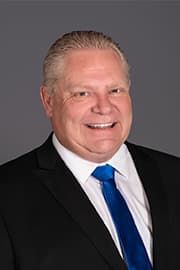
Doug Ford
Ford co-announced the proposed "Northern Shield" west–east oil pipeline with Alberta Premier Danielle Smith on July 6, 2026, jointly unveiling the proposed route across Ontario.
Why It Matters
On July 6, 2026, Doug Ford and Alberta Premier Danielle Smith stood on a Stampede-week stage in Calgary and announced a 3,300-kilometre oil pipeline — the "Northern Shield Energy Corridor," from Hardisty, Alberta to Sarnia, Ontario — with, as Global News reported, no cost estimate, no timeline and no private-sector proponent willing to build it. The feasibility study will not even be finished before the end of 2026, and Manitoba, whose territory the route crosses, has not confirmed its participation.
A mega-project announced with no builder attached is a mega-project whose risk sits, by default, with taxpayers. When no private company has committed capital, the implicit promise behind the podium is that public money will bridge the gap — through subsidies, loan guarantees or direct provincial investment. Ontarians have watched this government make large commitments to headline projects before the numbers exist, and the "Northern Shield" announcement asks them to do it again, at a scale of 500,000 barrels per day, expandable to 800,000.
The route runs through Northwestern Ontario and Treaty territories, and as APTN News reported, questions about First Nations consultation were raised the day it was announced. The Ford government's record here is the live context: the Ring of Fire push has proceeded over the objections of First Nations asserting treaty rights, and Bill 5's special economic zone powers were built precisely to let cabinet exempt favoured projects from environmental and consultation requirements. Announcing a trans-provincial pipeline before consulting the nations whose territories it would cross repeats the pattern at continental scale.
None of this means a west–east pipeline can never be built. It means that announcing one with no price, no proponent, no timeline and no consent is not a plan — it is a press conference. The government that delivered the Highway 413 and Bradford Bypass playbook of announce-first, study-later is now applying it to one of the largest infrastructure undertakings in Canadian history.
Rippling Effects
The most immediate collision course is with the Crown's duty to consult. The proposed corridor crosses Treaty territories across Northwestern Ontario, and APTN News reported consultation questions from the moment the route map appeared. First Nations already litigating and protesting the Ring of Fire road projects now face a second linear mega-project through the same region — announced, again, before they were meaningfully engaged.
The announcement also creates pressure to reach for Bill 5's special-economic-zone powers. A pipeline with no proponent and no completed feasibility study cannot survive ordinary environmental assessment timelines and commercial diligence; the tool the Ford government built for exactly this situation is the power to designate a zone and switch the rules off. Every week the project stays commercially unviable increases the temptation to make it politically viable by regulation instead.
There is also the fiscal exposure. With no private-sector proponent identified, as Global News noted, any path forward runs through public financing — feasibility money now, and potentially far more later. Ontario taxpayers are being positioned as the backstop for a project whose cost the government cannot or will not state.
Finally, the announcement locks Ontario's political capital into new oil infrastructure at the very moment the province's own climate commitments — and the federal government's — point the other way. A government that has already gutted environmental oversight through Bill 5 and pushed exempted highway projects is now championing half a million barrels a day of new pipeline capacity with no assessment of the climate consequences on the table.