Better Regional Governance Act — Ford Appoints Unelected Chairs, Slashes Regional Councils
April 2, 2026
TL;DR
On April 2, 2026, Doug Ford introduced Bill 100, giving his Minister of Municipal Affairs power to directly appoint regional chairs across eight Ontario regions — unelected officials who will have the power to hire and fire senior staff, veto bylaws, and set budgets. Niagara's council would be slashed from 32 to 13 seats. Opposition MPPs called it a continuation of Ford's pattern of replacing elected local democracy with provincial Conservative loyalists.
The Web
2 connections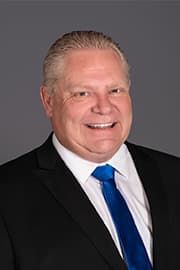
Doug Ford
As Premier of Ontario, Ford championed Bill 100, giving his own Minister of Municipal Affairs the power to directly appoint unelected regional chairs across eight regions, with veto powers over local bylaws and staff decisions. The legislation continues Ford's documented pattern of replacing elected local democracy with provincially appointed officials.
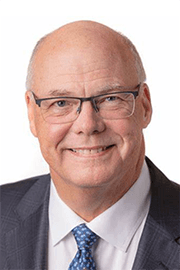
Rob Flack
As Minister of Municipal Affairs and Housing, Flack introduced Bill 100 and is the named official with authority to appoint regional chairs across eight Ontario regions under the new legislation.
Why It Matters
Bill 100, the Better Regional Governance Act, grants appointed chairs executive powers modelled on Toronto's Strong Mayor reforms. An appointed chair can fire the regional CAO, override bylaws (requiring a two-thirds supermajority of council to reverse), control the budget proposal, and direct staff without council approval. These are not ceremonial roles — they are executive powers over billion-dollar regional governments, handed to individuals who have never appeared on a ballot. The full text of the bill is available at the Legislative Assembly of Ontario.
The democracy deficit is structural, not incidental. Appointed chairs are provincial appointees, not accountable to municipal voters — they cannot be removed at the ballot box. NDP leader Marit Stiles documented that Ford's previous appointments to Niagara, Peel, and York were "almost always failed Conservative candidates." Interim Liberal leader John Fraser put it plainly: "It's a pattern. It's about consolidating power." That pattern includes a pattern of bypassing elected bodies and the waterfront power grab — each step removing a layer of democratic accountability and replacing it with provincial executive control. Global News reported on the scope of the legislation and opposition reaction.
The council seat reductions compound the problem. Niagara's council drops from 32 to 13 — eliminating representation for smaller communities within the region — and weighted voting by population further concentrates decision-making in large municipalities. Simcoe County drops from 32 to 17. Eight regions are affected, spanning the most densely populated parts of Ontario — the Greater Golden Horseshoe. NDP critic Jeff Burch: "Doug Ford doing anything he can to try to control local democracy." CBC News reported on the scale of the council size reductions and regional reactions.
The timing sharpens the concern. Bill 100 was introduced while municipalities are planning for October 2026 elections, forcing candidates to run under a governance structure that may be in legal flux. Ford's previous regional chair appointments in Peel and York generated their own controversies, and Niagara's appointed chair was connected to controversies documented in the Niagara amalgamation scandal. Combined with the FIPPA overhaul making ministerial records permanently secret, decisions by appointed chairs will be harder to scrutinize through freedom-of-information requests — creating an accountability gap precisely where one is most needed. CP24 reported on the bill's introduction and municipal reaction.
Rippling Effects
Eight regions and millions of Ontario residents will be governed by unelected chairs holding veto powers over municipal bylaws. Appointed chairs could fast-track development decisions — zoning changes, infrastructure approvals, land use amendments — without democratic accountability to the communities affected. No public criteria exist for who gets appointed, creating conditions for partisan patronage at regional scale. Every region with significant development pressure in the Greater Golden Horseshoe — York, Peel, Durham, Halton, Waterloo — now faces the prospect of an executive appointed by the Minister of Municipal Affairs, not chosen by local voters.
The precedent compounds a decade of democratic erosion. Ford slashed Toronto council from 47 to 25 members in 2018, appointed chairs in Peel, Niagara, and York, and granted strong-mayor powers to 26 municipalities. Each step removed a layer of local accountability. Bill 100 completes the circuit for the regions with the most development pressure: York and Peel now have provincially appointed executives who answer to the Minister, not to voters. When a provincial government controls both the planning rules (through Minister's Zoning Orders and the Greenbelt process) and the regional executives who implement them, the conditions for self-dealing without accountability are fully assembled.
The accountability gap compounds existing patterns documented across this government. FIPPA changes shielding ministerial decisions from freedom-of-information requests, combined with appointed chairs executing those decisions in regions across Ontario, combined with prorogation and bypassed legislative hearings, produces a governance structure with almost no external check. Regional governments that previously had at least formal democratic accountability to their communities will now be run by executives who serve at the pleasure of the provincial cabinet. The Morrisburg Leader editorial board called it a systematic expansion of provincial control over local government with no democratic mandate.