Truck Driver Training Fraud: Ontario Ministry Failed to Inspect a Quarter of Commercial Driver Colleges
May 12, 2026
TL;DR
Ontario's Ministry of Colleges let unregistered private career colleges issue commercial truck driver certificates for years — a public safety failure the Auditor General confirmed in May 2026, finding that 25% of registered colleges were never inspected and unregistered operators had booked over 3,200 road tests with no legal authority.
The Web
3 connections
Shelley Spence
As Auditor General, Spence authored the May 12, 2026 special report that documented the Ministry's failure to inspect 25% of commercial truck driver training colleges and the continued operation of unregistered colleges issuing fraudulent certificates.
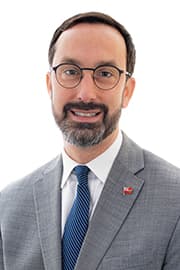
Nolan Quinn
As Minister of MCURES, Quinn's ministry was responsible for registering, inspecting, and enforcing standards at private career colleges offering commercial truck driver training. The Auditor General found that 25% of colleges had never been inspected on his ministry's watch.
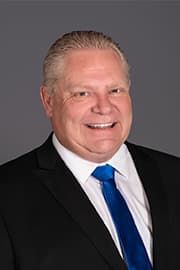
Doug Ford
As Premier of Ontario, Ford holds ultimate accountability for the Ministry of Colleges; the Auditor General found in May 2026 that the ministry let unregistered career colleges issue commercial truck driver certificates for years, with a quarter of registered colleges never inspected.
Why It Matters
Entry Level Training (ELT) for commercial truck drivers was introduced in Ontario precisely because under-qualified drivers were causing fatal crashes. The federal and provincial governments mandated a minimum 103.5 hours of structured instruction — including specific on-road maneuvers with a qualified instructor — before a candidate could sit a commercial road test. The entire premise of ELT is that the certificate is a meaningful signal of competency. The Auditor General's special report found that signal has been systematically corrupted.
The scale of the oversight failure is stark: 25% of registered colleges offering ELT had never been inspected by MCURES. Not inspected once and found acceptable — never inspected at all. This means the ministry collected registration fees and approved these colleges to issue certificates without ever verifying whether a single hour of training had been properly delivered. The inspection regime was, in practice, largely theoretical.
The fraud details are more alarming still. Six colleges that had been previously investigated for operating without registration were still issuing certificates and booking road tests. Twenty-nine schools that had never registered at all successfully booked over 3,200 road tests through DriveTest Ontario — meaning the province's own licensing infrastructure was unknowingly processing appointments for fraudulently credentialled candidates. Eleven more colleges with expired or suspended registrations also booked exams. Some programs delivered as few as 59.5 and 81 hours against the 103.5-hour minimum, falsified student attendance records, and used instructors who lacked the required qualifications.
The people who bear the risk of this failure are not ministry officials — they are other drivers on Ontario highways. Large commercial trucks account for 12% of fatal collision vehicles in Ontario between 2019 and 2023, despite representing only 3% of registered road vehicles. A driver who received 60 hours of training instead of 103.5 hours, or who was taught by an unqualified instructor, or whose attendance records were falsified, is now operating a vehicle that weighs up to 40 tonnes on shared roads. The gap between credential and competency is measured in lives.
This failure fits a documented pattern under the Ford government of defunding and deprioritizing the regulatory bodies that inspect private career colleges. MCURES — the ministry responsible — has faced years of budget pressure and staffing constraints that have stretched its compliance capacity thin. When a ministry responsible for public safety oversight cannot inspect one in four colleges in a program tied directly to road fatalities, the question is not whether the system failed, but whether it was ever adequately resourced to succeed.
Rippling Effects
The ministry's public response to the Auditor General's report was a promise: all 216 registered commercial truck driver training colleges would be inspected within six weeks. On the surface this sounds decisive. In context, it underscores the prior failure — a six-week blitz to accomplish what years of routine oversight did not. It also raises an obvious question: what happens in week seven? A one-time inspection campaign does not rebuild a functional compliance regime; it photographs a snapshot of what colleges look like while they know inspectors are coming.
Critically, the ministry has made no announcement about the certificates already issued by non-compliant, unregistered, or fraudulent colleges. Those certificates are not being recalled or invalidated. Drivers who completed shortened programs, attended colleges with falsified records, or trained under unqualified instructors continue to hold valid Ontario commercial licences. There is currently no mechanism in place to identify which licence holders received sub-standard training, no audit of DriveTest records to match the 3,200+ road test bookings by unregistered operators to specific licence holders, and no public commitment to create one. The fraudulent credentials have already entered the system.
This scandal does not exist in isolation. Ontario's oversight of private career colleges has been a recurring failure point under the Ford government. The Conestoga College executive mismanagement scandal exposed how colleges can expand rapidly and aggressively without adequate ministry scrutiny of governance or program quality. The truck driver training fraud shows the same pattern applied to public safety: a ministry that has the statutory authority to inspect and revoke registrations but lacks — or chooses not to deploy — the capacity to exercise it systematically.
What accountability remains outstanding is substantial. No unregistered operator has been criminally charged for issuing fraudulent certificates, despite the fact that issuing a certificate from an unregistered college is a violation of the Private Career Colleges Act. The ministry has not publicly committed to referring any cases to the Ontario Provincial Police or the Ministry of the Attorney General. The operators who booked 3,200+ road tests under false pretenses — generating revenue from students who believed they were enrolled in a legitimate program — have faced no announced consequences beyond the possibility of future deregistration.
Meaningful accountability would require at minimum: a public registry of which colleges were found non-compliant and what sanctions were applied; a mechanism for DriveTest Ontario to flag licences obtained via road tests booked by unregistered operators; criminal referrals for fraudulent operators; and a structural fix to MCURES's inspection capacity that does not depend on a crisis to trigger action. Without these steps, the six-week inspection blitz is political damage control, not systemic reform.