WSIB Cuts 466 Jobs and Closes Nine Branch Offices
August 20, 2026
TL;DR
On August 20, 2026 the WSIB announced 466 job cuts and the closure of nine branch offices — Sudbury, Windsor, Thunder Bay, St. Catharines, Guelph, Sault Ste. Marie, Kingston, North Bay and Timmins — with a further 155 Waterloo positions to go within a year, and nearly 200 of the losses concentrated in northern Ontario. The cuts came 15 days after Treasury Board President Peter Bethlenfalvy ordered "efficiency and productivity" reviews of eight public agencies, WSIB included, with savings targets given to the agencies but never disclosed publicly.
The Web
5 connections
Peter Bethlenfalvy
President of the Treasury Board; announced "efficiency and productivity" reviews of eight public agencies including WSIB on August 5, 2026, with savings targets given to the agencies but not disclosed publicly.
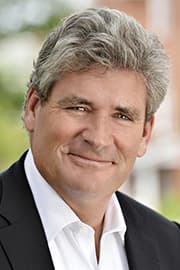
John Fraser
Interim Liberal leader; critic of the government agency review process that preceded the WSIB cuts.

Marit Stiles
NDP leader; critic of the government agency review process that preceded the WSIB cuts.

Lise Vaugeois
NDP MPP and northern critic; criticized the WSIB job cuts and branch office closures, nearly 200 of which fall on northern Ontario.

Harry Goslin
President of the Ontario Compensation Employees Union (CUPE); criticized the WSIB decision to cut 466 jobs and close nine branch offices announced August 20, 2026.
Why It Matters
The WSIB is the agency injured workers deal with when they cannot work. On August 20, 2026 it announced 466 job cuts and the closure of nine branch offices — Sudbury, Windsor, Thunder Bay, St. Catharines, Guelph, Sault Ste. Marie, Kingston, North Bay and Timmins — with a further 155 Waterloo positions to go within a year, as CP24 reported. That is a service network being dismantled in a single announcement, not a rounding error in a staffing plan.
The geography is the story. Nearly 200 of the losses are concentrated in northern Ontario, and five of the nine closing offices — Sudbury, Thunder Bay, Sault Ste. Marie, North Bay and Timmins — are northern. Those are the regions with the mining, forestry and heavy industry workforces most likely to file a workplace injury claim in the first place. Removing the in-person counter from all of them at once concentrates the loss on the workers with the most claims and the fewest alternatives.
WSIB's own framing was a "difficult business decision to consolidate" back-office roles. Harry Goslin, President of the Ontario Compensation Employees Union (CUPE), criticized the cuts. The gap between "back-office consolidation" and closing every northern branch office is the point of contention: back-office language describes the payroll line, not what an injured worker in Timmins encounters when the local office is gone.
The timing ties the decision directly to Queen's Park. On August 5, 2026, Treasury Board President Peter Bethlenfalvy announced "efficiency and productivity" reviews of eight public agencies, WSIB among them, according to Global News. Savings targets were given to those agencies but were not disclosed publicly. Fifteen days later, one of the reviewed agencies cut 466 jobs. The public can see the consequence without being permitted to see the target that produced it.
That non-disclosure is what makes this hard to hold anyone to account for. If the savings target is secret, no one outside government can say whether 466 jobs was the number required, the number chosen, or the number that happened to be convenient — and the government can point at WSIB's "business decision" while WSIB points at a target it was handed.
Rippling Effects
The most direct effect falls on northern Ontario, which absorbs nearly 200 of the 466 losses and loses branch offices in Sudbury, Thunder Bay, Sault Ste. Marie, North Bay and Timmins simultaneously. These are single-employer and resource-industry towns where a few dozen public-sector jobs are a meaningful share of stable local employment, and where the nearest remaining WSIB office may be hundreds of kilometres away. The closures compound a pattern of northern service capacity being reduced from Toronto — the same region that was told its wildfire response would be topped up as needed in the 2026 wildfire underfunding episode.
For injured workers, the loss is procedural rather than headline-grabbing, which is precisely why it is durable. WSIB claims involve medical documentation, appeals and disputes over benefit levels; the branch office is where a worker without reliable internet, without English as a first language, or without an employer advocating for them could get a file resolved in person. Removing that channel does not reduce the number of claims — it moves them to phone and online queues staffed by 466 fewer people.
The 155 Waterloo positions slated to go within a year mean this is not a completed action. A second tranche of losses is already scheduled, which gives the government and WSIB a year in which the full scale of the reduction remains partly unannounced and partly deniable, and gives affected staff a year of notice without certainty.
The undisclosed savings targets set a precedent that extends past WSIB. Peter Bethlenfalvy ordered reviews of eight public agencies on August 5, 2026, per Global News. WSIB is the first of the reviewed agencies known to announce cuts. The other seven are operating against targets the public has not seen, meaning further cuts can arrive the same way — announced by the agency as its own business decision, weeks after a review the government ordered.
Politically, the episode reinforces a familiar contrast in how public money is accounted for. The government has declined to disclose what it asked WSIB to save while 466 people lose their jobs, in the same period that scrutiny of discretionary spending at Queen's Park — including the MPP hotel expenses — has centred on far smaller sums. The asymmetry between what is made public when workers pay and when politicians spend is the part of this that will outlast the closures themselves.