Skip to content
Independent · Sourced
← All individuals
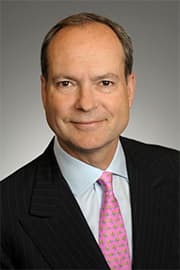
Peter Bethlenfalvy

Peter Bethlenfalvy

Government of Ontario

MPP for Pickering—Uxbridge: voting record

InstigatorBeneficiary

Ontario's Finance Minister and former Treasury Board President. In 2019, explicitly refused to disclose the cost of the Ford government's anti-carbon tax advertising campaign, saying only "We've got a budget for letting the people of Ontario know exactly what is going on." The Auditor General later revealed the campaign cost $4 million and would have been rejected as partisan under the original Government Advertising Act. As Finance Minister, Bethlenfalvy has defended record advertising spending, stating: "I am never going to apologize for promoting Ontario." He also oversees the Building Ontario Fund under the Building Ontario Fund Act, 2024 — the Crown agency that committed $300 million in mezzanine debt to High Art Capital in February 2026 to buy unsold GTA condo units, with no disclosed competitive selection process.

Connected scandals

  • The Ford government has spent $452 million in taxpayer-funded advertising since 2018 — repeatedly refusing to disclose campaign costs until forced by FOI — while the Auditor General found 38% of spending was designed to promote the governing party, and the firm behind the most controversial ad is run by Doug Ford's campaign manager's brother-in-law.

    As Treasury Board President in 2019, Bethlenfalvy explicitly refused to disclose the cost of Ontario's anti-carbon tax advertising campaign — a $4 million spend later revealed by the Auditor General to be partisan. As Finance Minister, he has defended the government's record $111.9 million annual advertising budget and refused to acknowledge accountability concerns raised by the Auditor General.

  • Ontario promised $5 billion to protect workers and businesses from U.S. tariffs, but by September 2026 only about $140 million had gone out, and the $4 billion it redirected into a privately managed investment fund with no named manager is "not advancing."

    As Ontario Finance Minister, Bethlenfalvy designed and tabled the 2026 budget that redirected $4 billion from the Protecting Ontario Account tariff relief reserve into a privately managed investment fund. He brings 25+ years of private capital markets experience — including roles at TD Securities, DBRS, and Manulife — to the design of a fund structure that defers all governance and transparency details until after an unnamed private general partner is selected.

  • The Ford government buried amendments inside the 2026 Budget Bill that would permanently exempt the Premier, all cabinet ministers, and their staff from freedom-of-information requests — retroactive to 1988 — nullifying every pending FOI request and active court case, including those seeking Doug Ford's personal cellphone records and Greenbelt-related emails. Ontario's own privacy watchdog publicly called three of Ford's stated justifications factually incorrect.

    As Finance Minister and sponsor of Bill 97 (the Plan to Protect Ontario Act, Budget Measures, 2026), Bethlenfalvy is responsible for the omnibus legislation that contains the FIPPA amendments permanently exempting the Premier and all cabinet ministers from FOI requests, retroactive to 1988. The bill passed Third Reading on April 23, 2026.

  • The Ford government's Building Ontario Fund quietly committed $300 million in public mezzanine debt to High Art Capital — a little-known private fund — to buy unsold GTA condos from developers and convert them to rentals. Only 25% of the 2,200 units will be "affordable," the developers being bailed out are also paid to manage the properties, and the deal closed in secret two weeks before the public found out.

    As Minister of Finance and the minister responsible for the Building Ontario Fund, Bethlenfalvy oversees the Crown agency that committed $300M in mezzanine debt to High Art Capital — a deal closed before public announcement, with no disclosed competitive process, anchoring a $1.3B private fund to absorb developer losses.

  • The Ford government's Building Ontario Fund quietly committed $300 million in public mezzanine debt to High Art Capital — a little-known private fund — to buy unsold GTA condos from developers and convert them to rentals. Only 25% of the 2,200 units will be "affordable," the developers being bailed out are also paid to manage the properties, and the deal closed in secret two weeks before the public found out.

    Ontario Finance Minister who oversaw the Building Ontario Fund's $300M commitment to the High Art Capital condo conversion initiative, characterized by financial analysts as a developer bailout.

  • Honda indefinitely suspended its $15-billion Ontario EV complex in May 2026, leaving $5 billion in combined federal-provincial subsidies committed but undeployed — and no confirmed clawback provisions to recover taxpayer money if the project never proceeds.

    As Finance Minister, Bethlenfalvy was responsible for the provincial budget commitment to the Honda EV subsidy. The suspension leaves $5B in committed public funds undeployed with no confirmed accountability mechanism, while his ministry has simultaneously enacted austerity measures in social services.

  • Ford's ministry wrote it down in 2024: the 1.5-million-homes promise won't be met. They kept campaigning on it anyway.

    As Minister of Finance, Bethlenfalvy called the government's pledge to build 1.5 million homes by 2031 a "soft target" as the government quietly walked away from the commitment.

  • Bill 34 gave MPPs a 35% pay raise and scrapped their old pension plan — but the new plan failed to credit members' prior legislative service, leaving many facing personal buyback bills over $200,000. Ford scrapped a planned $35 million taxpayer top-up fund amid backlash over a separate $28.9 million government jet purchase, then fired PC caucus chair Will Bouma after Bouma confronted him about it.

    Minister of Finance who sponsored Bill 34, the MPP Pension and Compensation Act, 2025, which raised MPP pay 35% and restructured the MPP pension plan.

  • On August 20, 2026 the WSIB announced 466 job cuts and the closure of nine branch offices — Sudbury, Windsor, Thunder Bay, St. Catharines, Guelph, Sault Ste. Marie, Kingston, North Bay and Timmins — with a further 155 Waterloo positions to go within a year, and nearly 200 of the losses concentrated in northern Ontario. The cuts came 15 days after Treasury Board President Peter Bethlenfalvy ordered "efficiency and productivity" reviews of eight public agencies, WSIB included, with savings targets given to the agencies but never disclosed publicly.

    President of the Treasury Board; announced "efficiency and productivity" reviews of eight public agencies including WSIB on August 5, 2026, with savings targets given to the agencies but not disclosed publicly.

  • The Ford government has spent $452 million in taxpayer-funded advertising since 2018 — repeatedly refusing to disclose campaign costs until forced by FOI — while the Auditor General found 38% of spending was designed to promote the governing party, and the firm behind the most controversial ad is run by Doug Ford's campaign manager's brother-in-law.

    Questions about the $12.08M in mines advertising were referred from the Ministry of Energy and Mines to Bethlenfalvy's Treasury Board office, which replied in a single sentence: "As is the case every year, final spending on government advertising will be reflected in the province's public accounts."
Bills

Promises (11)

Not yet due

Bethlenfalvy's 2026 fall statement projected a balanced budget in 2029-30

“Ontario’s fiscal outlook, presented in the 2026 Ontario Economic and Fiscal Review, projects a path to a balanced budget in 2029-30.”

Ontario government news release, · News release on the 2026 fall economic statement

What happened · Nov 10, 2026

Not yet due. On Nov. 10, 2026 S&P Global revised Ontario’s credit outlook to negative, saying deficits and debt exceeded its expectations and that the government had “again postponed the timeline to balance to fiscal 2030.”

The Oct. 29, 2026 release projects a deficit of $16.9 billion in 2026-27, $12.7 billion in 2027-28 and $6.7 billion in 2028-29 before returning to balance in 2029-30. CBC reports the previous forecast had been a $13.8 billion deficit. CBC reports Bethlenfalvy said: "While I'd like to balance today, I'm also a realist." On Nov. 10, 2026 S&P Global Ratings revised Ontario’s outlook to negative from stable and affirmed its ‘AA-’ rating, citing “operating deficits and a rise in debt that exceeded our expectations.” S&P wrote that “The government has again postponed the timeline to balance to fiscal 2030”; its own base case is “operating balance by fiscal 2029.” A negative outlook means there is “at least a one-in-three chance” of a downgrade within two years.

Kept

2024 Ontario Budget promised hospitals a 4% base funding increase

“Helping more people access convenient health care by investing an additional $965 million in operating funding in 2024–25, including through a four per cent increase in total base hospital operations for an unprecedented second year in a row.”

2024 Ontario Budget (Finance Minister Peter Bethlenfalvy), · 2024 Ontario Budget

What happened · Jul 30, 2024

The $965 million, four per cent increase was allocated to hospitals in 2024-25, and the 2026 budget announced another four per cent increase.

The Ontario Hospital Association's 2024-25 review says the March 2024 budget allocated 'a four per cent increase ($965 million) in base funding for hospitals', and in July 2024 the province announced allocations to individual hospitals, with every hospital getting at least two per cent. In January 2026 the OHA said sector costs have been rising about six per cent a year, leaving a structural deficit of about $1 billion, and in March 2026 the province gave another four per cent ($1.1 billion). In September 2026 the FAO projected that the 2026 budget plan would fund 33,443 hospital beds in 2028-29, 2,407 fewer than the 35,850 funded in 2025-26. The same month, Hamilton Health Sciences said it planned to cut about 413 positions to close a projected $150 million deficit.

Broken

Peter Bethlenfalvy promised a return to balanced budgets, with a surplus in 2024–25

“To be clear, a return to balanced budgets would not have happened under a Liberal or NDP government, but it is happening under our government.”

· 2023 budget speech, Legislative Assembly

What happened · Sep 26, 2025

The planned 2024–25 surplus was dropped in the next budget, and the audited 2024–25 result was a deficit.

The 2023 budget projected surpluses of $0.2 billion in 2024–25 and $4.4 billion in 2025–26. The 2024 budget, tabled March 26, 2024, replaced the 2024–25 surplus with a projected $9.8 billion deficit. The 2024–25 Public Accounts, released September 26, 2025, recorded a $1.1 billion deficit. In its note on the 2026 budget, the Financial Accountability Office said the 2026 budget was the third in a row to push back the balanced-budget date. That date has moved from 2024–25 to 2026–27, then 2027–28, then 2028–29.

Kept

The 2022 budget promised a bigger LIFT tax credit for 1.1 million lower-income workers and a new seniors' home-care tax credit

“$300 in additional tax relief in 2022, on average, for 1.1 million lower-income workers through the proposed Low-income Individuals and Families Tax Credit enhancement”

2022 Ontario Budget (PC platform), · 2022 Ontario Budget, Highlights

What happened · Sep 8, 2022

Bill 2, the Plan to Build Act (Budget Measures), 2022, received Royal Assent on September 8, 2022. It raised the LIFT credit maximum from $850 to $875 and created the Ontario Seniors Care at Home Tax Credit, both from the 2022 tax year.

After the election, the government reintroduced the budget's tax measures as Bill 2 in August 2022, and it received Royal Assent on September 8, 2022. Bill 2 changed the Low-income Individuals and Families Tax (LIFT) Credit from the 2022 tax year: the most a person can deduct rose from $850 to $875. CityNews reported that it also raised the income limit for qualifying from $38,000 to $50,000. Bill 2 also created a refundable Ontario Seniors Care at Home Tax Credit worth up to $1,500 a year, based on eligible medical expenses. The '$300 on average' for 1.1 million workers was the government's own estimate, and no later figure confirming it was found.

Kept

The 2022 budget promised two new GTA medical schools, including one in Brampton

“Ontario is also investing in two new medical schools in the Greater Toronto Area, including one located in Brampton, so medical students can study in the community they may choose to serve.”

2022 Ontario Budget (PC platform), · 2022 Ontario Budget, Chapter 1E

What happened · Sep 3, 2025

Toronto Metropolitan University's School of Medicine opened in Brampton in 2025: postgraduate residents in July, and the first class of 94 MD students in September.

On September 3, 2025, the province announced it had opened the new medical school at Toronto Metropolitan University's Brampton campus, built with nearly $180 million in provincial money. The province said 176 students would start that fall. TMU says its first MD class has 94 students, chosen from more than 6,400 applicants; postgraduate residents started in July 2025. At full capacity the school is to have 94 undergraduate seats per year and 117 postgraduate entry positions. CBC reported that workers were still finishing parts of the building as the first class arrived in September 2025. The second GTA school in the budget, the University of Toronto's Scarborough Academy of Medicine and Integrated Health, is not yet open. U of T said in 2022 it was 'scheduled to open in 2025'. Scarborough Health Network now says its first undergraduate MD cohort at UTSC will start in 2027.

Kept

The 2022 budget promised a Learn and Stay grant for up to 2,500 health students, launching in spring 2023

“Starting in spring 2023, the government will launch the new $61 million Learn and Stay Grant. Applications will open for up to 2,500 eligible postsecondary students who enrol in priority programs, such as nursing, to work in underserved communities in the region where they studied after graduation.”

2022 Ontario Budget (PC platform), · 2022 Ontario Budget, Chapter 1E

What happened · May 16, 2023

Applications for the Ontario Learn and Stay Grant opened on May 16, 2023, for the 2023–24 year, as promised for spring 2023.

On January 20, 2023, the government said applications for the 2023–24 year would open that spring, 'targeting 2,500 postsecondary students'. It also widened eligibility beyond nursing to paramedic and medical laboratory technology programs. Applications opened on May 16, 2023, with $61 million set aside. The grant pays tuition, books and other direct costs up front for students in eligible programs in northern, eastern and southwestern Ontario. In return, students commit to work in the region where they studied after graduating. Applications have reopened each year since, and the program now also has a medical education stream.

Kept

The 2022 budget promised to cut the gas tax by 5.7 cents a litre for six months from July 1, 2022

“5.7 cents per litre cut to the gas tax for six months starting July 1”

2022 Ontario Budget (PC platform), · 2022 Ontario Budget, Highlights

What happened · Jul 1, 2022

The 5.7-cent gas tax cut and the 5.3-cent fuel tax cut took effect on July 1, 2022. They were extended four times and made permanent from July 1, 2025.

Bill 111, the Tax Relief at the Pumps Act, 2022, received Royal Assent on April 14, 2022. It cut the gasoline tax by 5.7 cents a litre and the diesel fuel tax by 5.3 cents for July 1 to December 31, 2022. The cuts took effect on July 1, 2022, which left Ontario's rate at 9 cents a litre. The government extended the cut four times. The 2025 budget then introduced legislation to keep the rate at 9 cents permanently, effective July 1, 2025. The province estimated the temporary cuts saved households and businesses $1.7 billion through June 2025. It now says the cut has saved households an average of $435 since 2022.

Not yet due

The 2022 budget said Ontario was on track to build more than 30,000 net new long-term care beds by 2028

“Ontario now has over 31,000 new and over 28,000 upgraded beds in the development pipeline — and is on track to build more than 30,000 net new beds across the province by 2028.”

2022 Ontario Budget (PC platform), · 2022 Ontario Budget, Chapter 1E

What happened · Sep 23, 2026

The 2028 deadline has not arrived. The government's own figures show it is far behind the pace its 2022 budget projected.

The 2022 budget included a chart projecting cumulative new long-term care beds opening: 13,075 by 2024, 24,399 by 2025, 30,549 by 2026 and 31,705 by 2028. The Ministry of Long-Term Care's 2025–26 published plan reported that 322 net new beds opened between April 1, 2024 and March 31, 2025. It counted 13,052 net new beds as 'opened, under construction or approved to construct' since 2018. That combines open beds with beds not yet built. CBC reported on November 6, 2025 that the fall economic statement showed nearly 6,700 beds built, with about 18,000 more in the pipeline. That is against the wider goal of 58,000 new or upgraded beds by 2028. CBC also reported that the Financial Accountability Office counted 79,212 long-term care beds in 2024–25 and projected an increase of only 4,276 beds by 2027–28 under the province's spending plans. Finance Minister Peter Bethlenfalvy said the province would 'not waver from achieving that goal.' As of September 2026, the Financial Accountability Office counted 82,128 long-term care beds in 2025-26 and projected that the 2026 budget plan would increase this by 6,196, to 88,324 beds, by 2028-29. The government said that as of July 2026, 165 projects with 26,421 new and redeveloped spaces were completed, under construction or approved, against a goal of 58,000 new and upgraded spaces; it gave no net-new count.

Broken

The 2022 budget said the new electric Wolfe Island and Amherst Island ferries were expected in service by late June 2022

“These new electric ferries are expected to be in service in late June 2022.”

2022 Ontario Budget (PC platform), · 2022 Ontario Budget, Chapter 1C

What happened · Aug 17, 2024

Neither ferry was in service in June 2022. The Wolfe Islander IV started full-time service on August 17, 2024, more than two years late. The Amherst Islander II made its first passenger crossing, a training trip, on July 2, 2024.

The 2022 budget said the Wolfe Islander IV and Amherst Islander II, which arrived in Canada in September 2021, were 'expected to be in service in late June 2022.' Kingstonist reported that start dates were pushed back repeatedly. The Wolfe Islander IV began full-time service on August 17, 2024, more than 1,000 days after it arrived in Kingston. It sailed from the old Dawson Point dock because the new Marysville terminal was not ready. The Amherst Islander II made its first trip with passengers on July 2, 2024. Loyalist Township's deputy mayor described that trip as 'the beginning of another phase of training'. Since entering service, the Wolfe Islander IV has been out of service for long stretches. CTV reported hull damage in 2024 and electrical problems in 2025. An electrical failure in December 2025 knocked out half its power and steering and kept it off the route until August 31, 2026. CBC reported that it has spent 'more time damaged, undergoing repairs, or docked than it has transporting people' in its roughly two years of official service. While it was out, the 50-year-old diesel Wolfe Islander III covered the route.

Kept

Bethlenfalvy's fall statement promised a 2022 Ontario Staycation Tax Credit

“To help the tourism and hospitality sectors recover, and encourage Ontario families to explore the province, the government is proposing a new temporary Ontario Staycation Tax Credit for 2022. The credit would provide an estimated $270 million to support over one-and-a-half million families to further discover Ontario.”

Ontario government (2021 Fall Economic Statement news release), · 2021 Fall Economic Statement (Build Ontario)

What happened · Dec 9, 2021

The credit was legislated in Bill 43 (Royal Assent December 9, 2021) and claimed on 2022 tax returns. The tourism ministry later said it paid about $180 million to just over 900,000 families, less than the $270 million and 1.5 million families first estimated.

The refundable credit was 20 per cent of eligible 2022 Ontario accommodation costs, up to $200 for an individual and $400 for a family. It was enacted through the Build Ontario Act (Budget Measures), 2021, which received Royal Assent on December 9, 2021. On March 10, 2022, the government confirmed that stays from January 1 to December 31, 2022 qualified and that residents would claim the credit on their 2022 returns. In March 2025, a tourism ministry spokesperson told CBC the credit "provided about $180 million to just over 900,000 families". That was about two-thirds of the $270 million estimate and fewer families than projected. The credit was temporary as announced and was not renewed after 2022, despite industry requests in 2025.

Kept

Durham PC candidates promised to push for removing tolls on Highways 412 and 418

“if the PC Party forms government the first priority of Durham Region PC MPPs will be to advocate strongly for the removal of the tolls from the 412 and 418 Highways”

Ontario PC campaign release, five Durham candidates, · Ontario PC campaign news release, Whitby

What happened · Apr 5, 2022

The tolls came off Highways 412 and 418 on April 5, 2022, nearly four years after the 2018 campaign commitment and two months before the next election.

Ministry briefing notes obtained by Global News show ministers discussed removing the tolls on October 22, 2018 and put it off, with the minister committing to revisit once the budget was balanced; staff put the lost revenue at more than $665 million over 30 years (about $22 million a year). The 2018 release had also said Highway 418 should not be tolled, but it opened in 2019 under the Ford government with tolls of up to 48 cents per kilometre (inSauga). In December 2021 Transportation Minister Caroline Mulroney said the tolls could not be lifted because of an agreement signed by the previous government. Ford announced the removal on February 18, 2022, Bill 84 passed on March 3, 2022, and both highways went toll-free on April 5, 2022, about eight weeks before the June 2 election; Oshawa NDP MPP Jennifer French said Ford waited "until just before an election" to do it.

Sources

↑↓ move↵ focus⌘↵ open page→ start a path from here