Honda EV Alliston Subsidy Collapse: $5 Billion in Public Money Committed, Zero EVs Produced
May 15, 2026
TL;DR
Honda indefinitely suspended its $15-billion Ontario EV complex in May 2026, leaving $5 billion in combined federal-provincial subsidies committed but undeployed — and no confirmed clawback provisions to recover taxpayer money if the project never proceeds.
The Web
3 connections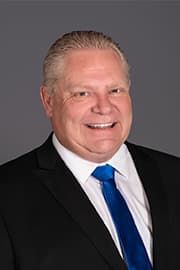
Doug Ford
As Premier, Ford championed the $15B Honda EV complex as a signature industrial policy win and participated in the joint federal-provincial $5B subsidy commitment. When Honda indefinitely suspended the project in May 2026, his government failed to disclose whether any clawback or performance guarantees exist in the subsidy agreement.
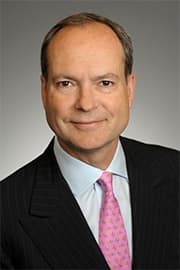
Peter Bethlenfalvy
As Finance Minister, Bethlenfalvy was responsible for the provincial budget commitment to the Honda EV subsidy. The suspension leaves $5B in committed public funds undeployed with no confirmed accountability mechanism, while his ministry has simultaneously enacted austerity measures in social services.
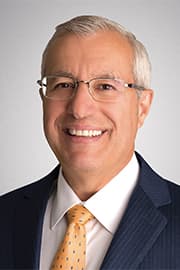
Vic Fedeli
As Ontario's Minister of Economic Development, Job Creation and Trade, Fedeli was the lead provincial minister on the Honda EV subsidy deal. His ministry negotiated and announced the investment; it is his file that is now suspended indefinitely with public money at risk and no confirmed performance guarantees.
Why It Matters
The accountability vacuum at the heart of this scandal is simple: the Ford government and the federal government jointly committed $5 billion of public money to a private company's project with no publicly disclosed performance guarantees or clawback provisions — and that project is now suspended indefinitely. Peter Bethlenfalvy, Ontario's Finance Minister, and Doug Ford have not confirmed whether the subsidy agreement contains any binding conditions requiring Honda to actually build anything before the money flows, or any mechanism to recover the commitment if it never does. The public has no way to assess the risk because the agreement has not been disclosed.
This is not the first time the Ford government has made enormous subsidy commitments without robust public accountability mechanisms. The Protect Ontario Investment Fund and the Skills Development Fund scandals both revealed a pattern: large sums committed to private interests, weak or nonexistent performance conditions, and government resistance to disclosure when things went wrong. The Honda EV suspension fits that pattern precisely — but at a scale that dwarfs both of those cases.
The FOI wall makes independent accountability nearly impossible. Under Bill 97's overhaul of FIPPA, the subsidy agreement itself may be permanently shielded from freedom-of-information requests if it was negotiated through ministerial private communications, Google Docs, or other channels now exempt under the amended Act. Journalists and opposition MPPs have no guaranteed right to see the terms of a $5-billion public commitment — and the Ford government has shown no inclination to volunteer them.
The industrial policy failure here is real and distinct from whether the EV market recovers. Ontario and Canada made a massive strategic bet on EV manufacturing — and that bet may yet pay off. But the accountability failure is separate: committing $5 billion without confirmed performance conditions is the problem, regardless of what Honda does next. If the project resumes, the accountability gap remains. If it doesn't, taxpayers are left holding the risk with no confirmed mechanism to recover anything. That is a governance failure, not a market failure.
What accountability would actually look like: the full subsidy agreement — including any performance milestones, disbursement triggers, and clawback provisions — must be publicly disclosed. If clawback provisions exist, they should be tabled in the legislature immediately. If they do not exist, the minister responsible — Doug Ford and Peter Bethlenfalvy — must explain to Ontarians why $5 billion was committed to a single private company with no confirmed strings attached, and what legal recourse the province has now that the project is suspended. A timeline for Honda's decision must also be disclosed. Indefinite is not a plan.
Rippling Effects
The community of Alliston — a small manufacturing city of roughly 20,000 people in Simcoe County — planned infrastructure, workforce development programs, and economic growth around the EV complex. Local institutions, trades training programs, and supply chain businesses positioned themselves for the project's anticipated 1,000 new jobs and the broader industrial activity it would have generated. Those plans now face indefinite uncertainty, with no confirmed timeline from Honda, no government-led transition support announced, and no public disclosure of whether the $5-billion commitment could be redirected to other regional industrial development if the project does not proceed.
The federal-provincial accountability gap compounds the problem. The $5-billion commitment was a joint federal-provincial investment, but neither level of government has publicly disclosed who bears what financial risk, whether the contributions were structured as grants or conditionally repayable loans, or what triggers — if any — govern disbursement. Canadians and Ontarians are entitled to know the precise terms of their governments' exposure. The silence from both Ottawa and Queen's Park suggests neither wants to be first to answer.
The precedent being set here is dangerous for future subsidy negotiations. If governments can commit $5 billion to a private company with no confirmed performance strings, face no accountability when the project collapses, and successfully resist public disclosure of the agreement's terms, every future subsidy bid will be designed around exploiting that same playbook. Companies will negotiate knowing that vague commitments carry no real consequences, that FOI shields will protect the terms from scrutiny, and that governments will absorb the political and financial risk while private shareholders bear none of it. This is not how responsible industrial policy works.
The contrast with the Ford government's fiscal rhetoric is stark. This is the same government that cut $397 million from special education funding, repeatedly invoked fiscal discipline to justify cuts to social services, and presented itself as a responsible steward of public finances. That government was apparently willing to commit $5 billion to a single private company — Honda, a global automaker with a market capitalization exceeding $40 billion — with no confirmed performance guarantees. The asymmetry between austerity for public services and generosity without accountability for large corporate partners is not a fiscal policy; it is a political one.
What needs to happen is straightforward: the subsidy agreement must be tabled in the Ontario legislature and released publicly in full. Any clawback provisions must be disclosed and, if triggered by the suspension, immediately activated. If no clawback provisions exist, the responsible ministers must appear before a legislative committee to explain why, and an independent review of the province's subsidy agreement framework must be commissioned. The Ford government's industrial policy ambitions are not the problem — the complete absence of accountability mechanisms for $5 billion in public money is.