Locked Alone for Years: Waypoint Seclusion and the Ministry That Looked Away
April 23, 2026
TL;DR
Ontario's only maximum-security psychiatric hospital has kept severely mentally ill patients locked alone in rooms for years — one man for about 20 years — in conditions an independent reviewer found akin to what the UN "deemed to constitute torture." The Ford government was warned in 2018 and responded with a single phone call.
The Web
16 connections
Doug Ford
Ford’s government was warned in December 2018 that patients at Waypoint were being held in long-term isolation. The Ministry of Health’s follow-up in 2019 involved no site visit.
Sylvia Jones
As Deputy Premier and Minister of Health, Jones heads the ministry responsible for Ontario’s forensic mental health system. Her office has not responded to any Toronto Star request about the Waypoint seclusion coverage.

Dianna Cochrane
A civil servant, not an elected official. As manager of the ministry’s forensics and justice unit, Cochrane was involved in the ministry’s 2019 follow-up to the December 2018 warning, and in February 2026 made the requests that participants in the ministry’s confidential review of the forensic mental health system sign non-disclosure agreements.
Dr. Nadiya Sunderji
As Waypoint’s president and CEO, Sunderji says the hospital "categorically" disagrees with the independent review’s findings, arguing there is a "significant difference" between seclusion in a hospital and solitary confinement in a prison. The creators of the "six core strategies" she says Waypoint has adopted say that claim is not true.
Dr. John Bradford
Warned the Ontario government in December 2018 about "horrific conditions" at Waypoint. The ministry’s follow-up in 2019 amounted to a single phone call to a hospital executive, with no site visit.

Anita Szigeti
Counsel to the patients. Refused to sign the Ministry of Health’s non-disclosure agreement for its confidential review of the forensic mental health system, saying she had never heard of such a thing in three decades.
Andrea Monteiro
Author of the 109-page independent report finding that Waypoint violates its own seclusion policy and holds patients in conditions the UN has "deemed to constitute torture."
Howard Sapers
Called for a public independent review extending beyond Waypoint to other hospitals and to the Ontario Review Board itself: "We have a systemic issue here."
Kevin Ann Huckshorn
Co-author of the "six core strategies" Waypoint says it has adopted. Says Waypoint’s use of seclusion is "completely inconsistent with recovery-oriented, trauma-informed care."
Janice LeBel
Co-author of the "six core strategies." Said in May 2026 that Waypoint’s claim to have adopted the strategies is not true, calling it an "abrogation of duty."
Camelott Hamblett
Held in seclusion at Waypoint since roughly 2004 — about two decades. The subject of the Toronto Star’s "20 Years in Isolation" investigation. A court has ruled he must be reassessed.
Andrew Azevedo
Held in continuous seclusion at Waypoint for nearly five years. He was declared on the verge of release from seclusion days after the independent review’s report became public.
Ruben Stolove
Named lead plaintiff in the proposed class action, which was dismissed at certification. The Supreme Court of Canada refused leave to appeal in April 2026 (SCC docket 41947).
Cheyenne Phillip
Camelott Hamblett’s sister. Spoke on the record to the Toronto Star about her brother’s two decades in seclusion at Waypoint and the court ruling that he must be reassessed.

Jacques Gallant
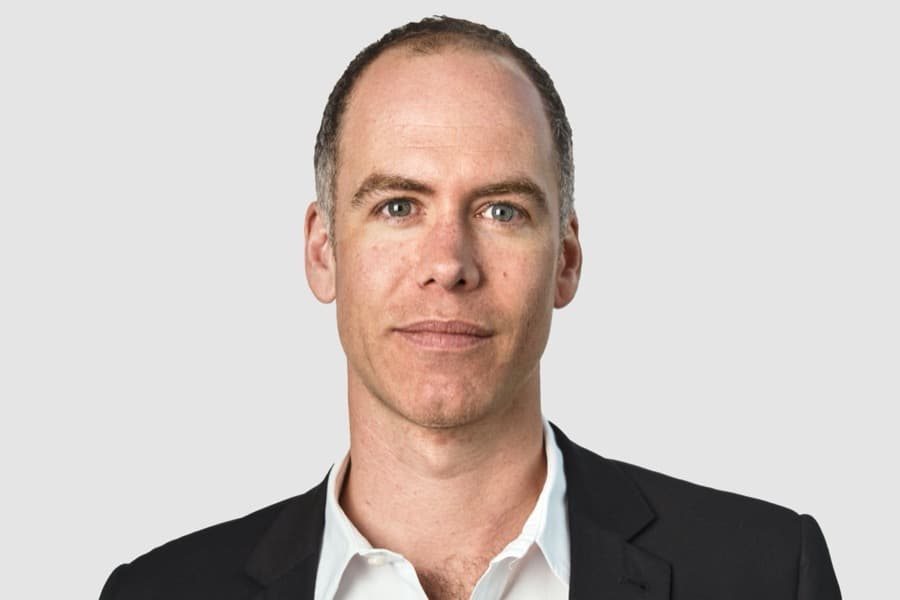
Authored the Toronto Star’s "20 Years in Isolation" investigation into the use of long-term seclusion at the Waypoint Centre for Mental Health Care, and the follow-up reporting on the independent review, the ministry’s NDA-bound confidential review, and the 2018 warning to the Ford government.
David Ebner
Covered the Ontario Court of Appeal ruling on the psychiatric assessment of a patient held in long-term isolation at Waypoint for The Globe and Mail.
Why It Matters
The subject of this page is not a patient. It is a provincial government that was told, in writing, what was happening inside a hospital it funds and regulates — and did effectively nothing for seven years. Forensic psychiatrist Dr. John Bradford warned the Ontario government in December 2018, months after the Ford government took office, about "horrific conditions" at the Waypoint Centre for Mental Health Care. The Ministry of Health's 2019 follow-up did not visit the facility and spoke to only one hospital executive by phone before concluding that no further action was necessary (Toronto Star). That is the entire recorded provincial response to a psychiatrist's alarm about Ontario's only maximum-security psychiatric hospital.
What was left unexamined has since been examined by someone else. A 109-page independent report by Andrea Monteiro, a former senior correctional official, was made public at an Ontario Review Board hearing in August 2026. Monteiro found that Waypoint violates its own seclusion policy; that seclusion is used "pre-emptively" rather than as a last resort; that daily seclusion orders are "perfunctory" and made without in-person assessment; that the 15-minute well-being checks amount to little more than looking into the room; and that staffing shortages mean patients can go an entire day without leaving their room. She concluded that the Mandela Rules apply and that patients are held in conditions the UN has "deemed to constitute torture" (Toronto Star). Waypoint President and CEO Dr. Nadiya Sunderji says the hospital "categorically" disagrees, arguing there is a "significant difference" between hospital seclusion and prison solitary confinement.
The scale is documented and, at the same time, deliberately obscured. Camelott Hamblett, 43, of Toronto, has spent roughly 20 years — since roughly 2004 — in seclusion at Waypoint after being found not criminally responsible for a sexual assault; he may be the person who has spent the most time in psychiatric seclusion in any Ontario hospital (Toronto Star). Waypoint refuses to disclose how many patients are in long-term seclusion, but an August 2026 Review Board hearing revealed at least 11 secluded patients in a single 20-bed unit (Toronto Star). A hospital that will not count publicly cannot be held publicly to a number — the same information problem that runs through Ontario's freedom-of-information failures and the suppression of child welfare death reports.
The courts have said their piece. On 2026-01-09 the Ontario Court of Appeal overturned the Ontario Review Board and ordered an independent assessment of Hamblett. Justice Grant Huscroft, for a unanimous panel, wrote that "no meaningful progress has been made with his treatment… After 20 years, this will not do," and found the Board's refusal of an independent assessment "plainly unreasonable" (The Globe and Mail; Law360 Canada). Those quotes come from the reporting on the decision — the ruling itself could not be read directly, and what became of the court-ordered assessment of Hamblett is not established in any available source. It is a distinct matter from Monteiro's report, which concerned a different patient.
None of this is new ground for the site in Penetanguishene. The facility now operated as Waypoint is the former Oak Ridge, and in Barker v. Barker, 2022 ONCA 567, the Court of Appeal upheld a trial finding that Oak Ridge clinical directors breached fiduciary duties to 28 patients treated between 1966 and 1983 (Hull & Hull LLP). Health Minister Sylvia Jones's office has not responded to any Toronto Star request about its Waypoint seclusion coverage.
Legal Actions
A proposed class action filed in 2020, with lead plaintiff Ruben Stolove, alleged systemic negligence, breach of fiduciary duty, and breaches of sections 7 and 12 of the Charter arising from the routine solitary confinement of involuntary patients at Waypoint (Rochon Genova LLP).
Certification was denied on 2024-06-25 (2024 ONSC 3639), despite the judge finding "more than some basis in fact for many prima facie cases of negligence, breach of fiduciary duty, or breaches of the Charter." The Court of Appeal affirmed that denial on 2025-05-21 (2025 ONCA 376).
The Supreme Court of Canada dismissed leave with costs on 2026-04-09 (docket 41947); the file was closed on 2026-06-29 (Supreme Court of Canada docket; Supreme Advocacy). With no class proceeding available, patients must now sue individually. The dollar figures attached to the cost award could not be independently confirmed and are deliberately omitted here.
On 2026-01-09 the Ontario Court of Appeal allowed Camelott Hamblett's appeal, overturned the Ontario Review Board, and ordered an independent assessment. Justice Grant Huscroft, writing for a unanimous panel, said that "no meaningful progress has been made with his treatment… After 20 years, this will not do," and found the Board's refusal of an independent assessment "plainly unreasonable."
Important sourcing caveat: the decision itself could not be read directly — the case-law database blocks automated access — so every quotation above is taken from news reporting on the ruling, not from a reading of the judgment (The Globe and Mail; Toronto Star; Law360 Canada).
The underlying Review Board detention continues. What became of the court-ordered independent assessment is not established in any available source — it is a separate matter from the Monteiro report, which concerned a different patient.
At an Ontario Review Board hearing in August 2026, the Board is deciding whether to order Waypoint to adopt the recommendations of Andrea Monteiro's 109-page independent report, which was made public at that hearing.
Andrew Azevedo, 39, held in continuous seclusion for nearly five years, was abruptly declared on the verge of release days after the report became public. His psychiatrist insisted the improvement was purely medication-related, while family and counsel point to care-plan changes made after the Toronto Star series (Toronto Star).
Rippling Effects
The clearest downstream effect is that the province's answer to public scrutiny has been more secrecy. In February 2026 the Ministry of Health quietly launched a confidential review of Ontario's forensic mental health system, asking participants to sign non-disclosure agreements stating that "the interests of the province may be impacted." Ministry manager Dianna Cochrane made the requests — the same official involved in the 2019 follow-up that consisted of one phone call. Hamblett's lawyer Anita Szigeti refused to sign, saying she had never heard of such a thing in three decades. The ministry would not say what prompted the review, what its terms of reference are, or whether the results would ever be public (Toronto Star). Whether that review was ever published remains unknown. Binding participants to silence about a public system is the same instinct that runs through the province's rewrite of access-to-information law.
The legal route to accountability has, for now, closed. A proposed class action filed in 2020 with lead plaintiff Ruben Stolove was denied certification on 2024-06-25 (2024 ONSC 3639) — despite the judge finding "more than some basis in fact for many prima facie cases of negligence, breach of fiduciary duty, or breaches of the Charter" — a ruling upheld by the Court of Appeal on 2025-05-21 (2025 ONCA 376). The Supreme Court of Canada dismissed leave with costs on 2026-04-09 (docket 41947), and the file closed on 2026-06-29 (Supreme Court of Canada; Rochon Genova LLP; Supreme Advocacy). Patients must now sue individually — one at a time, from inside a locked room. The cost figures attached to that outcome could not be confirmed and are omitted here.
Publication moved faster than seven years of oversight did. Andrew Azevedo, 39, held in continuous seclusion for nearly five years, was abruptly declared on the verge of release days after the Monteiro report became public. His psychiatrist insisted the improvement was purely medication-related, while family and counsel point to care-plan changes made after the Star series (Toronto Star). Reporting is not a substitute for a regulator, and a system in which a newspaper is the fastest-acting oversight body is a system that has already failed.
The hospital's own claimed safeguards have been disowned by the people who wrote them. Kevin Ann Huckshorn, a US mental health nurse, and Janice LeBel, a US psychologist — authors of the "six core strategies" Waypoint claims to follow — wrote in an expert report that Waypoint's use of seclusion is "completely inconsistent with recovery-oriented, trauma-informed care," and that no U.S. facility uses seclusion the way Waypoint does. In May 2026 they said Sunderji's claim to have adopted their strategies is not true, and called her stance an "abrogation of duty" (Toronto Star). Monteiro's own finding that staffing shortages can keep a patient in their room for an entire day places this in the same frame as the province's health sector staffing cuts: the people who could unlock the door are not there.
Howard Sapers, the former federal Correctional Investigator and now executive director of the Canadian Civil Liberties Association, has called for a public independent review covering not just Waypoint but other hospitals and the Ontario Review Board itself: "We have a systemic issue here" (Toronto Star). The pattern he is describing — indefinite institutional confinement that the province declines to look at directly — is visible elsewhere in Ontario's custodial system, from the Thunder Bay jail inquest to improper jail releases and the effort to conceal them. The common element is not a diagnosis or a sentence. It is a government that would rather not know.