The 'Fake Poll' Legal Letter
June 19, 2026
TL;DR
Ford called an independent poll showing him at 21% approval 'fake' — and got a lawyer's letter from Canada's best-known pollster.
The Web
2 connections
Shachi Kurl
As President of the Angus Reid Institute, Kurl sent a legal letter to Ford's office on June 19, 2026, demanding a retraction after Ford dismissed the Institute's poll showing him at 21% approval as "fake".
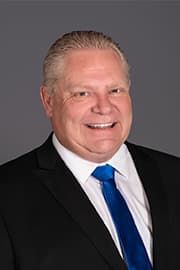
Doug Ford
Ford publicly called the Angus Reid Institute poll showing him at 21% approval "fake", prompting the Institute's president to send his office a legal letter on June 19, 2026, demanding he correct the record.
Why It Matters
On June 11, 2026, the Angus Reid Institute measured Doug Ford's approval at 21 per cent — the lowest of any premier in Canada and his own lowest in eight years. Ford's response, a week later, was not to engage with the finding but to declare it a "fake poll," claiming the institute had "polled the NDP and Liberal caucus" in "hardcore NDP neighbourhoods." Those claims were false enough that one of Canada's most established pollsters felt compelled to send the premier's office a legal letter demanding a correction, with president Shachi Kurl stating plainly: "we do believe the public record should be corrected."
A premier attacking an independent measurement of public opinion is not a routine political spat. Polling firms, like newsrooms and statistical agencies, are part of the infrastructure that lets citizens know what is actually happening. When the head of a government responds to an unwelcome number by inventing a story about how it was produced, he is telling Ontarians that any measurement he dislikes can be dismissed as fabricated — and telling every research organization that publishing unflattering findings carries a reputational price imposed from the premier's podium.
The episode does not stand alone. This is the same government implicated in the doctoring of a Ford Fest crowd photo, the fallout that followed a reporter's questioning of the premier, and record government advertising spending that floods the information environment with the government's own preferred numbers. Taken together, as The Trillium's reporting on the legal letter underscores, the pattern is one of information control: amplify friendly narratives, attack independent ones.
It should be extraordinary for a national polling institute to need lawyers to defend its work from a sitting premier. That it happened — and that the premier's office, not the pollster, is the party being asked to correct the record — says more about the state of political discourse under this government than the poll number itself.
Legal Actions
On June 19, 2026, the Angus Reid Institute sent Premier Doug Ford's office a legal letter demanding that he correct the public record after he called the institute's June 11 poll — which put his approval at 21 per cent — a "fake poll" and falsely claimed it had "polled the NDP and Liberal caucus" in "hardcore NDP neighbourhoods." Institute president Shachi Kurl said "we do believe the public record should be corrected," as reported by Global News. No litigation has been filed; the demand remains outstanding.
Rippling Effects
The first casualty is the polling and research environment itself. If publishing an unflattering approval number earns a public accusation of fabrication from the Premier of Ontario, smaller research shops without the Angus Reid Institute's resources and public profile will think twice before releasing provincial political work at all. The institute could afford to send a legal letter; most firms would simply absorb the hit or steer clear of Ontario politics.
The second is the broader chill on scrutiny. Journalists, academics and pollsters all now have a data point: this premier responds to independent measurement with public attacks on the measurer. Combined with the media-access retaliation documented elsewhere on this site and the government's use of public advertising dollars to push its own messaging, the incentive structure for anyone whose job is to report inconvenient facts about the Ford government keeps tilting toward silence.
Finally, there is the precedent left on the public record itself. As of the institute's June 19 letter, reported by The Trillium, the premier's false characterization of the poll's methodology stood uncorrected. Every day it stands, it normalizes the idea that a head of government can simply assert that independent data is "fake" and move on — a habit with consequences that outlast any single poll, any single premier and any single news cycle.